
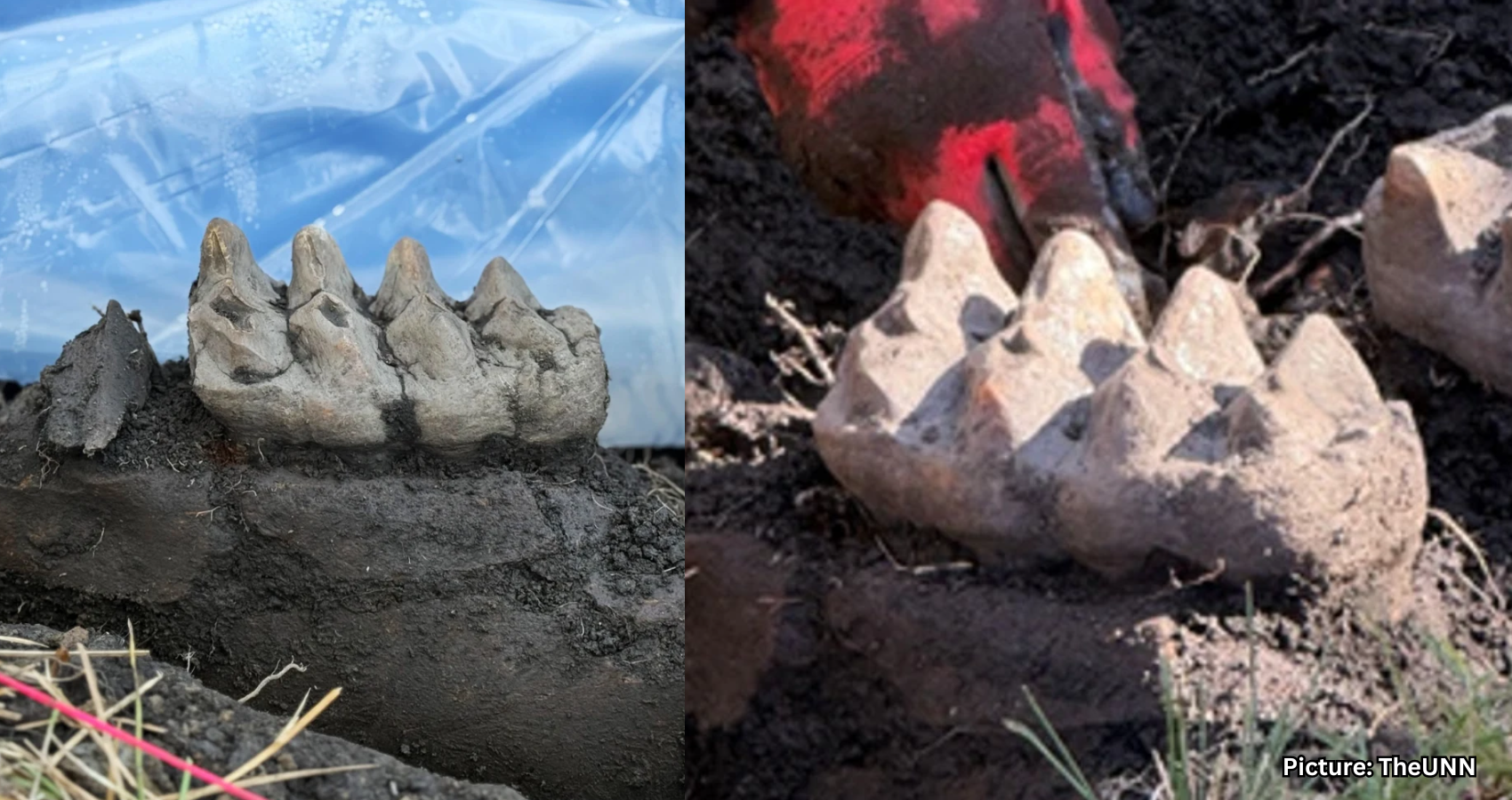
A complete mastodon jaw discovered in a New York backyard will undergo scientific analysis before being displayed to the public in 2025.
A remarkable discovery was made by a homeowner in Scotchtown, New York, who unearthed a complete mastodon jaw in their backyard. This extinct mammal, closely related to modern elephants, was found alongside several bone fragments during an excavation conducted by researchers from the New York State Museum and SUNY Orange.
The New York State Museum announced that the fossils will undergo carbon dating and extensive scientific analysis to ascertain the mastodon’s age, diet, and habitat. Once preserved and studied, the jaw and associated findings are set to be showcased in public programming in 2025, providing visitors with insights into New York’s rich Ice Age history.
The jaw was first spotted by the homeowner, who noticed “two unusual teeth concealed by plant fronds.” Intrigued, they dug deeper and uncovered two additional teeth just inches beneath the surface. “When I found the teeth and examined them in my hands, I knew they were something special and decided to call in the experts,” the homeowner remarked. “I’m thrilled that our property has yielded such an important find for the scientific community.”
This discovery is particularly significant, as it marks the first complete mastodon jaw found in New York in 11 years, described by museum officials as a “prehistoric treasure.” Excavation efforts by the New York State Museum and SUNY Orange revealed a well-preserved jaw belonging to an adult mastodon, along with a piece of a toe bone and a rib fragment, which provide additional context about the animal’s life and environment.
According to museum officials, approximately 150 mastodon fossils have been discovered across New York, with a third of those originating from Orange County, where this jaw was found. “While the jaw is the star of the show, the additional toe and rib fragments offer valuable context and the potential for further research,” said Cory Harris, Chair of SUNY Orange’s Behavioral Sciences Department. “We are also hoping to further explore the immediate area for more bones that may have been preserved.”
This exciting find not only contributes to the understanding of mastodons but also highlights the rich prehistoric history of New York. The collaborative efforts of local researchers and the homeowner underscore the importance of community involvement in scientific discoveries.
As the analysis progresses, the scientific community eagerly anticipates the insights that will emerge from this significant find, which promises to enhance knowledge about the Ice Age and the creatures that once roamed the region.
For more information on this discovery, refer to the New York State Museum’s official statements.