
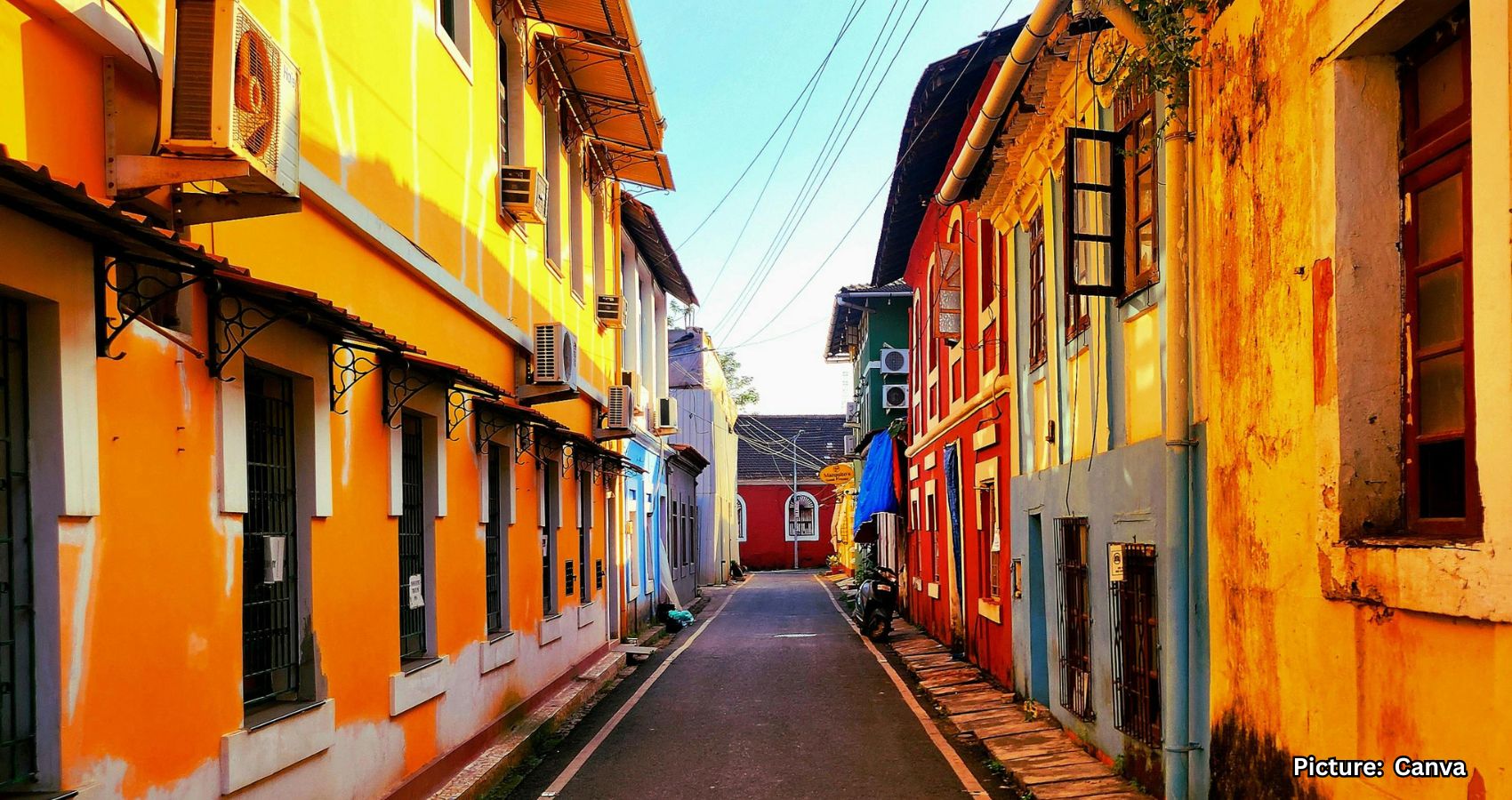
Returning to Goa in September 2025 evoked a vivid tapestry of memories, blending family connections with the enchanting beauty of this coastal paradise.
Goa has a way of slipping under your skin. When we returned in September 2025, it felt like stepping into a beautifully illustrated scrapbook. We stayed at Taj Exotica in Benaulim, my son’s honeymoon destination, where the Portuguese-style façade was washed in whites and blues, and the hallways were adorned with Mario Miranda’s whimsical sketches. A violinist drifted through breakfast, filling the air with the soothing melodies of Schubert.
Our seaside cottage was nestled between swaying palms and hibiscus. Each morning began with tender coconut water on our tiny veranda, where we watched a procession of white geese waddle past the vibrant Mexican petunias. Blue-tailed kingfishers darted over the lawns while oriental magpie-robins played among the birds-of-paradise. At the beachside café, breakfast lingered long past noon, featuring crisp dosas, soft ghee idlis, and Punjabi kadi with the perfect sour taste. There was sourdough toast with freshly churned butter, apricot spread, and tangy marmalade, along with an array of chutneys made from aromatic herbs. The pastries were so delicate they barely survived the short journey from platter to plate. And always, the Goan staples: coconut-rich fish curry, green chilies hidden in creamy cashew gravies, and railway-style cutlets fragrant with the nostalgia of train journeys.
In the evening, we lit oil lamps and blew a conch shell, embracing the slow, deliberate pace of life that mirrored the tides.
Yet, for all the pleasures of this breezy paradise, there was a deeper tug—a memory of the jacuzzi at the Kerala temple Spa Jiva, where my mother once sat with my daughter, and the pool where their nanaji had splashed with her and her brother. I could still hear her calling out, “Mom, look—look at me!” We recalled how we had all stopped Dad from buying a pound of cashews at the Goa airport, fearing it would send his blood sugar soaring, even as he looked at them wistfully, saying, “It would be nice to have some at home for guests.”
Every day, my daughter tugged at my arm with a soft urgency, insisting, “We HAVE to go back to Fort Aguada!” It had been years, but that night—New Year’s Eve at Fort Aguada—was etched in all our memories: terracotta lanterns, music, sea breeze, and one of India’s most unforgettable voices rising over the Arabian Sea.
So, one afternoon, we set off from South Goa to North Goa to revisit that cherished memory from New Year’s Eve, some 25 years ago.
Dad, in his sunhat, looked debonair; Mom, in Christian Dior shades, channeled old-Hollywood glamour. My sister, camera poised like a National Geographic photographer on assignment, captured our gloriously chaotic, curious children.
Fort Aguada had only grown lovelier in our absence. The Arabian Sea glittered as palm trees beckoned, and fishermen waved from their bobbing boats as though they had been waiting all year for us. The aromas drifting from the beach shacks—grilled prawns, garlic bread, and curries cooked in coconut oil—were irresistible. We settled on the emerald lawn beneath a canopy of glowing lanterns, ready for an al fresco indulgence. Our servers brought out one Goan masterpiece after another: chicken xacuti, Goan fish curry (Xitti Kodi), and soft Neer dosa to scoop it all up. Dessert included Bebinca, the multi-layered “queen of Goan sweets,” and dodol, the sticky, Christmas-scented delight infused with jaggery, coconut milk, and cashew.
After our feast, we made our way toward the ancient fort.
Fort Aguada rose before us, its laterite bricks glowing like embers. Built in the early 17th century, it had withstood monsoons, invaders, and centuries of sun. Lanterns swung like fireflies above the lawns and walls, warm beneath our palms, as if they held stories of the past.
My mother, regal in her navy silk georgette with a fresh orchid tucked into her braid, looked like she belonged in a sepia photograph. Our children tore across the ramparts, making royal proclamations.
My father slipped into his favorite role as resident historian, sharing tales of the fort built in 1612, its freshwater supply station, and its role as a bulwark against the Dutch and Marathas, home to one of Asia’s oldest lighthouses.
As the sun sank into the Arabian Sea, Dad inhaled deeply, stretching his arms toward the horizon, and proclaimed, “A million-dollar breeze is blowing—let us stop talking!” He closed his eyes like a mystic communing with the elements.
Then the music began. A soft hum reverberated in the air, and a voice—a deep, velvety contralto—unfurled across the fort.
Mom froze mid-step. Dad blinked, stunned. My sister clutched her camera and mouthed, “NO WAY.”
The legendary Usha Uthup emerged in the evening glow. Her sari shimmered, and her eyes sparkled below her signature giant bindi. Unmistakably charismatic, she seemed larger than life—yet warm enough to make the night feel intimate.
In seconds, the resort transformed from a historic monument into an open-air concert hall. Usha’s bold and fearless voice filled the night as she swung effortlessly from “Hari Om Hari” to “Auva Auva,” each note infused with her trademark exuberance. People who had been calmly sipping their drinks moments earlier were suddenly transformed—arms in the air, hips swaying. With a flourish fit for a Bollywood finale, she launched into “Bambai Se Aaya Mera Dost.”
The crowd erupted. My children whirled like electrified gremlins. Dad unleashed dance moves unseen since the 1980s. Mom clapped with abandon. My sister shrieked, “THIS IS HISTORY!” as she recorded every second.
I laughed until tears blurred my vision. Usha wasn’t just singing; she was summoning joy.
At midnight, the sky erupted, illuminating Usha Uthup like a goddess of music. Behind her, waves crashed in perfect theatrical timing. We hugged one another, sticky with dessert, breathless with laughter, wrapped in that rare, magical feeling that we were exactly where we were meant to be.
Some memories glow because the night was extraordinary. Others glow because the people in them were. That New Year’s Eve had both.
According to India Currents.