
Advanced thorium molten salt reactors could provide a sustainable energy solution for data centers, addressing concerns over their environmental impact and electricity demands, according to Dr. Ajay Kothari.
As artificial intelligence propels an unprecedented expansion of data centers across the United States, concerns regarding their substantial electricity consumption, water usage, and impact on local communities are intensifying opposition to new facilities. While some have proposed relocating data centers to orbit, this solution presents significant challenges in terms of cost and maintenance compared to terrestrial options.
Critics argue that communities are resistant to data centers, but with a U.S. land area of approximately 3.53 million square miles, it seems feasible to identify 39 to 386 square miles to accommodate 100 new facilities, even if half of the land is deemed unusable. For perspective, a data center measuring 1,640 by 1,640 feet occupies just 0.1 square mile, and many facilities have even smaller footprints.
The opposition to data centers is often rooted in emotional responses, though concerns about electricity costs, water consumption, and safety are valid. However, these issues could be alleviated by finding ways to operate data centers safely while providing affordable electricity to nearby communities. The solution may not lie in placing data centers in orbit, but rather in improving how we power them here on Earth.
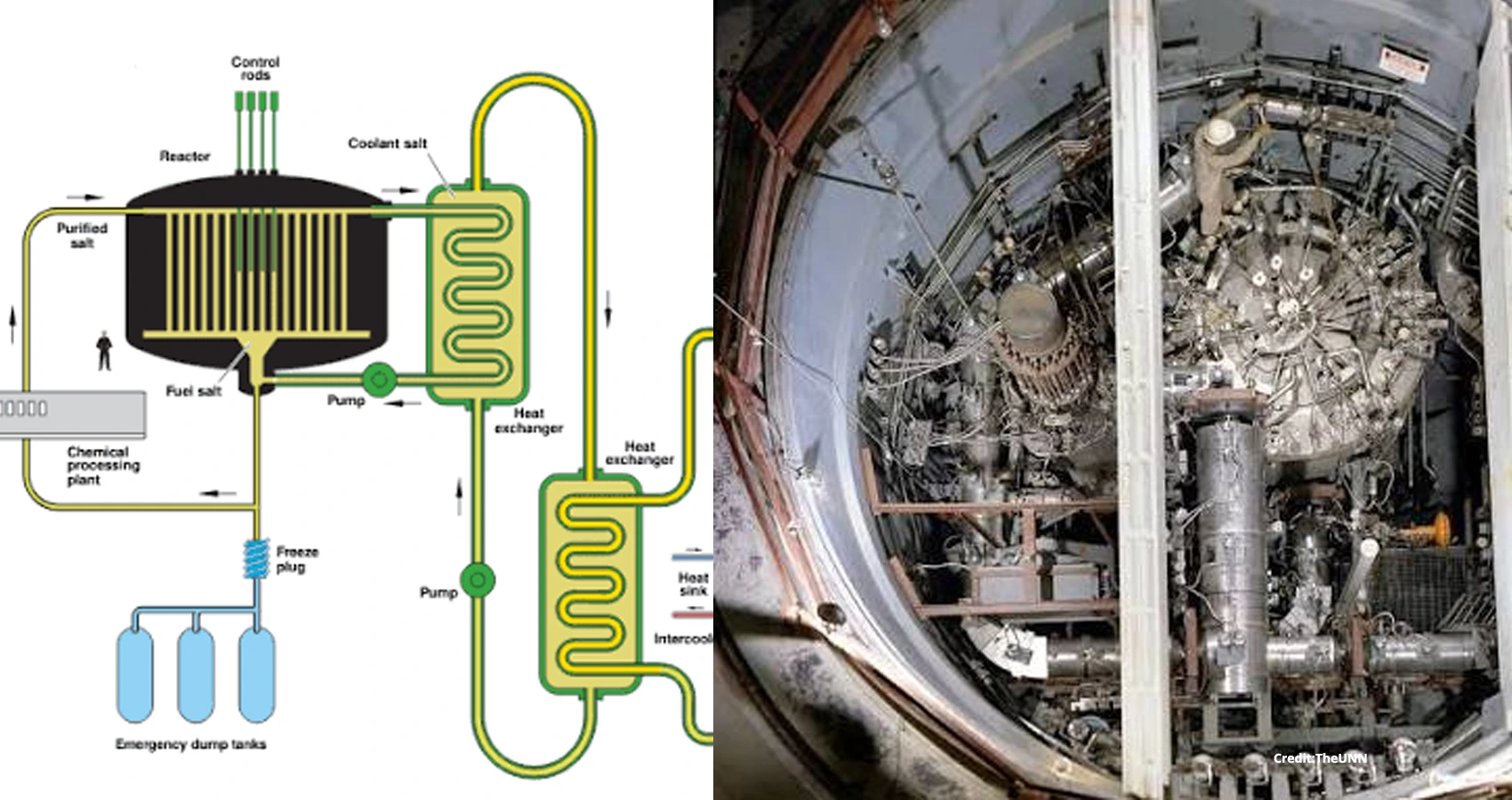
Dr. Ajay Kothari advocates for the adoption of thorium molten salt reactors (TMSRs) as a viable energy source for data centers. These advanced Generation IV nuclear reactors utilize molten salt as both a coolant and a carrier for thorium fuel, making them significantly more efficient than traditional pressurized water reactors (PWRs).
Thorium-232 is 500 times more abundant than uranium-235, and the United States possesses approximately 600,000 tons of thorium, primarily located in Lemhi Pass on the Idaho-Montana border. This supply could potentially provide electricity and heat for the entire country for 400 to 500 years at lower costs.
The technology for TMSRs was partially developed in the late 1960s at Oak Ridge National Laboratory (ORNL) but was abandoned due to its inability to produce plutonium for nuclear weapons. However, this characteristic could now be seen as an advantage. TMSRs have the potential to power not only data centers but also a significant portion of the country, possibly at half the cost of current energy sources.
China has already utilized ORNL data to construct a small TMSR-LF1 reactor in the Gobi Desert, which has been operational for the past two years. The safety features of TMSRs are noteworthy; they operate at atmospheric pressure, eliminating the risk of high-pressure explosions. Additionally, they possess inherent safety mechanisms, such as negative temperature coefficients of reactivity and passive safety features like freeze valves.
Compared to PWRs, TMSRs could achieve twice the efficiency in converting heat into electricity and generate less than 1% of the radioactive waste produced by conventional reactors. Furthermore, TMSRs do not require high-assay low-enriched uranium (HALEU), which is currently in short supply, and they can be deployed in locations far from water sources, including arid regions.
These reactors can be designed as small modular reactors (SMRs) with electrical capacities ranging from 10 to 50 megawatts. U-233, bred from thorium, could be produced at a central facility and transported to data center locations in a form that cannot sustain fission, ensuring safety during transport.
The historical stigma surrounding nuclear energy stems from earlier reactor designs that relied on solid uranium-235 fuel, primarily developed for plutonium production. However, the current energy landscape necessitates a reevaluation of nuclear technology, particularly in light of climate change and energy security concerns.
In the 1950s, nuclear energy was heralded as a nearly limitless source of power. Yet, the dangers associated with high-pressure systems have led to increased costs and safety concerns, exacerbated by accidents at Three Mile Island, Chernobyl, and Fukushima. It is time to consider whether the way we harness nuclear energy has been flawed rather than the energy source itself.
The potential of nuclear energy is immense. The strong nuclear force provides nearly a million times more energy per kilogram than chemical energy from fossil fuels. One ton of thorium is equivalent to five million barrels of oil, capable of powering a thermal power plant for an entire year without the need for HALEU.
With a 50% efficiency rate for electricity conversion, a single thorium-based power plant could generate 1.3 gigawatts of electric power. The United States could potentially meet its energy needs with 600 to 800 such plants, requiring approximately 1,000 tons of thorium annually, all while avoiding CO2 emissions during operation.
This vision could address not only the challenges posed by data centers but also broader energy issues, offering a sustainable solution without the environmental impact associated with fossil fuels. The time has come to embrace this technological advancement and explore its potential for a cleaner energy future.
Over the past five decades, reliance on fossil fuels has contributed to significant CO2 emissions and air pollution. With thorium molten salt reactors, we could provide continuous energy while integrating renewable sources like solar and wind power, ultimately solving our energy needs for centuries without further environmental degradation.
In summary, thorium molten salt reactors present a compelling alternative to conventional nuclear technology, offering abundant energy supplies, inherent safety features, and the potential for reduced waste. As we rethink our approach to energy production, it is crucial to consider the benefits of this innovative technology.
Dr. Ajay Kothari is the President and Founder of Astrox Corporation, an aerospace R&D company based in suburban Washington, D.C. He holds a PhD and MS in Aerospace Engineering from the University of Maryland and a BSc in Physics from Bombay University. He is an Associate Fellow of AIAA and a member of the AIAA Aerospace Power Technical Committee, with over 40 professional publications and extensive experience in NASA and DOD contracts.