
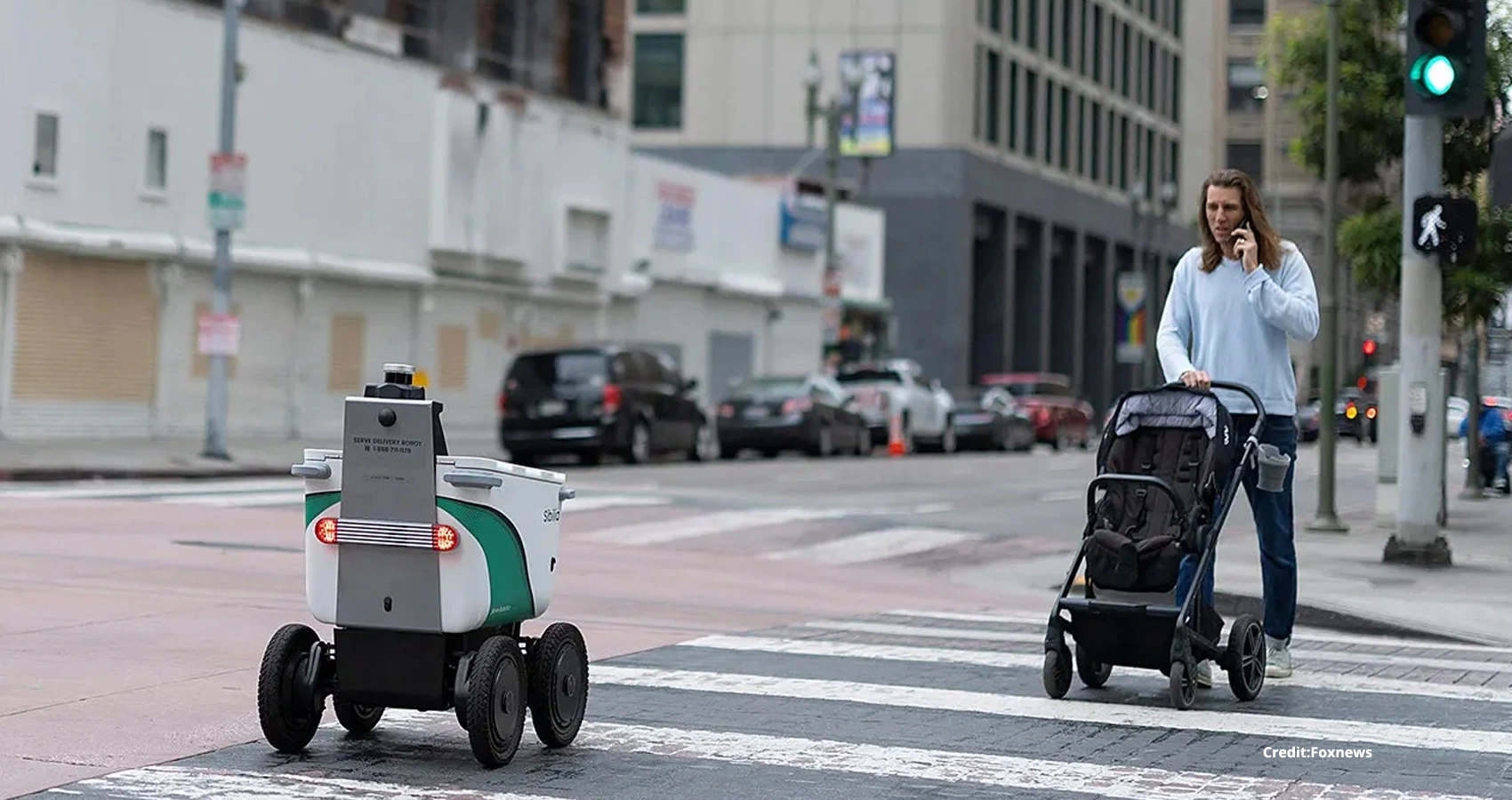
Recent incidents of people attacking food delivery robots in cities like Philadelphia and Los Angeles highlight growing frustrations with automation and its impact on jobs and public spaces.
Across American sidewalks, an unusual phenomenon is unfolding: people are attacking food delivery robots. These small, four-wheeled machines, which transport meals for services like Uber Eats, have been kicked and knocked over in cities such as Philadelphia and Los Angeles. Some individuals have even filmed themselves engaging in these acts, turning them into viral moments on social media.
While curiosity about these robots is understandable—after all, watching a machine navigate city streets with a bag of food can be quite impressive—there is an underlying frustration that seems to be driving these attacks. Many Americans are grappling with the increasing presence of artificial intelligence in their daily lives, and food delivery robots are a tangible reminder of this shift.
In late March 2026, an Uber Eats delivery robot in Philadelphia was kicked twice, with the second kick causing it to topple over near a parking garage. Bystanders eventually helped the robot back onto its wheels, but the incident exemplified a growing trend of hostility towards these delivery machines. Similar incidents have been reported in Los Angeles, where videos show robots being deliberately tipped over or kicked, often garnering significant online attention.
What is particularly striking about these encounters is that robots, which typically move at walking speed and often feature friendly digital displays, are becoming targets for frustration. Unlike humans, these machines cannot defend themselves or engage in argument, raising questions about the motivations behind such aggression. It seems that the anger directed at these robots may stem from broader concerns regarding the role of artificial intelligence in society, particularly in relation to employment.
As automation increasingly takes over tasks traditionally performed by humans, individuals who rely on jobs in delivery services may feel threatened. For instance, each order completed by a robot could mean one less opportunity for a human worker. While companies tout the efficiency of automation, the implications for those whose livelihoods depend on these jobs are significant.
This tension came to a head in Philadelphia when 78-year-old Carolyn Marvin, a retired professor from the University of Pennsylvania, was arrested for blocking an Uber Eats delivery robot in protest of the replacement of human workers with machines. Marvin’s arrest raised important questions about the legality of protesting against these robots, especially considering that Pennsylvania law mandates that delivery robots yield to pedestrians in pedestrian areas.
While it is understandable to feel frustrated about the potential loss of jobs to technology, such feelings do not justify damaging property. Companies deploying these robots must recognize that they are introducing technology into neighborhoods where residents may already feel anxious about automation.
Not all complaints about delivery robots stem from job-related concerns. Sometimes, the robots themselves can create logistical challenges. In September 2026, a video captured a traffic jam of Coco delivery robots in Chicago, where multiple machines became stuck on a sidewalk near Lincoln Park. Although the company quickly addressed the issue, the incident highlighted the potential for these robots to obstruct pedestrian pathways, particularly for individuals with mobility challenges.
Moreover, there have been reports of delivery robots behaving erratically. In May 2026, one robot reportedly entered a crosswalk against a traffic signal and was struck by a truck, continuing to move despite the collision. While the technology behind these robots is impressive, their ability to navigate complex urban environments raises questions about their readiness for crowded sidewalks.
For many, artificial intelligence exists within the confines of a computer or smartphone, often without a physical presence. However, delivery robots bring AI into the public sphere, making it more tangible and, for some, more alarming. As people become increasingly frustrated with the encroachment of technology into their lives, these robots can become convenient targets for that anger.
Social media exacerbates the situation, as videos of outrageous encounters with robots can quickly go viral, encouraging others to mimic such behavior. However, it is essential to maintain perspective. According to Serve Robotics CEO Ali Kashani, incidents of mistreatment occur in fewer than 1% of the approximately 100,000 trips made by their robots, suggesting that while negative encounters are highlighted, they may not represent the overall experience.
Despite the challenges, companies are continuing to expand their fleets of delivery robots. Serve Robotics reported deploying 2,000 robots by the end of 2025, collaborating with delivery platforms like Uber Eats and DoorDash. Other companies, such as Coco and Avride, are also pursuing growth in this sector.
Delivery robots operate using cameras and sensors to navigate sidewalks and avoid obstacles. Customers can track their deliveries through an app and unlock the robot’s compartment upon arrival. This technology can potentially reduce traffic congestion by minimizing the number of delivery vehicles on the road. However, the financial viability of these operations remains uncertain, as companies report substantial losses despite generating revenue.
As cities grapple with the implications of these robots, officials are beginning to ask critical questions about their deployment. In September 2026, Glendale, California, approved a pilot program allowing two delivery robot operators to test their services. The city also established regulations requiring companies to secure operating agreements before deploying robots on public streets and sidewalks. Los Angeles is also reviewing its delivery robot regulations to assess their impact on pedestrian access and safety.
Privacy concerns also arise with the use of delivery robots, as many are equipped with cameras that collect data while navigating neighborhoods. Questions about how this information is used and stored are increasingly relevant as these technologies become more prevalent. On a positive note, some companies are exploring ways to enhance pedestrian safety, such as Coco Robotics’ partnership with BlindSquare, an app designed to assist individuals with visual impairments in navigating their surroundings.
As delivery robots become more common, residents may find themselves encountering these machines on a regular basis. While most people will likely pass by without incident, there may be situations where a robot obstructs a sidewalk or creates a safety hazard. In such cases, it is advisable to report the issue to the company responsible for the robot rather than resorting to vandalism, which can lead to criminal charges.
In conclusion, while the technology behind delivery robots is impressive and offers potential benefits, it is crucial for companies to address the concerns of residents and ensure that their machines operate safely and responsibly in public spaces. As automation continues to evolve, it is essential that communities have a voice in how these technologies are integrated into their neighborhoods. The ongoing debate surrounding food delivery robots underscores the need for a thoughtful approach to the intersection of technology and daily life.
For further insights on this topic, visit CyberGuy.com.