
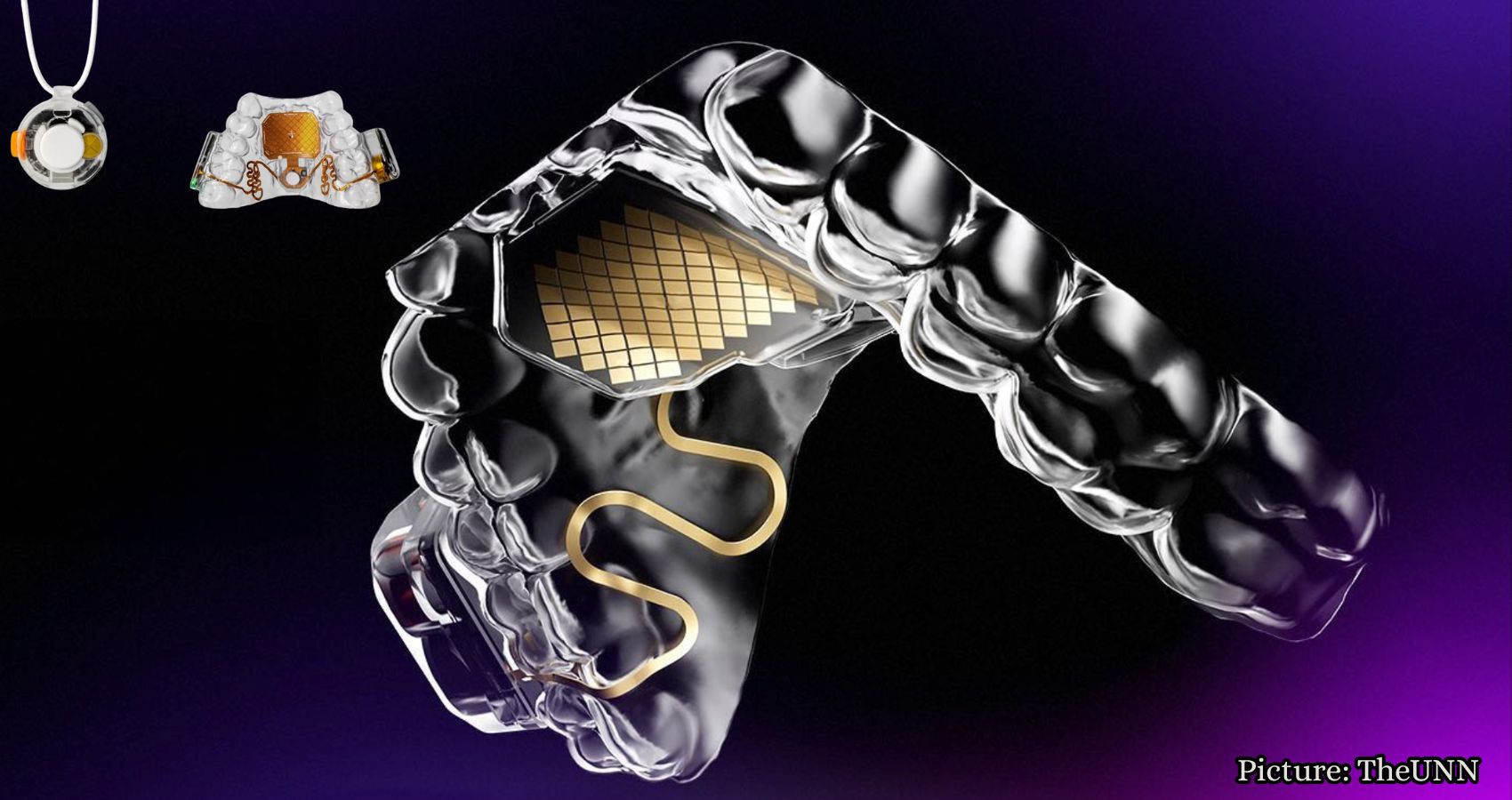
The MouthPad, developed by Augmental Technologies, is a hands-free touchpad that allows users to control devices using their tongue, providing new opportunities for individuals with limited mobility.
In a world where technology continues to evolve, the MouthPad stands out as a groundbreaking innovation. Developed by San Francisco-based Augmental Technologies, this custom-fit touchpad is designed to sit comfortably inside the mouth, enabling users to control a computer, smartphone, or tablet using their tongue or head movements.
The MouthPad is described as the world’s first hands-free touchpad, resembling a slim dental retainer. However, it is equipped with advanced technology that translates subtle movements into cursor control. This device was created with a significant purpose in mind: to provide individuals with limited mobility an alternative means of interacting with everyday technology. Augmental Technologies collaborated with hundreds of users with varying abilities during the development process, ensuring that the MouthPad meets the needs of its intended audience.
So, how does the MouthPad work? The device is positioned over the upper teeth, with a pressure-sensitive touchpad resting against the roof of the mouth. Users can move their tongues across the touchpad to navigate the cursor, while head movements can also be utilized for control. A press of the tongue can perform a left-click or click-and-drag action, while a sip gesture triggers a right-click. Additionally, the MouthPad supports scrolling and swiping, allowing users to perform many tasks typically handled by fingers on a mouse or trackpad.
Connecting wirelessly like a Bluetooth mouse, the MouthPad eliminates the need for a special receiver attached to the computer. It is compatible with a wide range of operating systems, including macOS, Windows, Linux, iOS, and Android. The companion app, available for macOS, Windows, and iOS, allows users to adjust settings such as cursor speed, touch sensitivity, and click strength. Preferences are stored on the MouthPad itself, enabling seamless transitions between multiple devices without the need for reconfiguration.
One of the common concerns regarding devices worn in the mouth is their impact on speech. According to Augmental, the MouthPad’s custom design minimizes any interference with verbal communication. Users can speak or utilize voice recognition software while wearing the device, although individual experiences may vary. Some users may require additional time to adjust to speaking normally with the MouthPad in place. Comfort levels can also differ, with Augmental reporting that team members and early users have worn the device for up to 10 hours a day. The MouthPad weighs approximately 10 grams and is about 1 mm thick, made from durable dental resin.
The MouthPad boasts a battery life of over seven hours of continuous use, with a charging time of around 1.5 hours. It comes with its own charging case and a USB cable. For those who may need a backup device, Augmental offers a two-device package, allowing users to swap devices when one requires charging.
However, acquiring a MouthPad is not as simple as placing an order. Each device is custom-fitted, requiring an intraoral 3D scan from a dentist or local scanning provider. Augmental then uses this scan to manufacture the device, which typically takes about six months to ship after receiving the scan. The cost of the scan varies, with most providers charging between $50 and $150. Once the MouthPad arrives, users must configure it through the company’s online platform and complete a one-time calibration.
Augmental recommends the MouthPad for individuals over 18 who possess sufficient tongue dexterity to operate the device. Good oral health is also a prerequisite, and candidates should not be undergoing active dental or orthodontic treatment. Additionally, users must be able to open their mouths wide enough for the initial 3D scan.
Interest in the MouthPad has extended beyond its original accessibility mission, with over 6,300 individuals reportedly on the waitlist. This includes not only people with disabilities but also professionals who seek to control devices while keeping their hands free for other tasks.
Maintaining hygiene is crucial for a device that resides in the mouth. Augmental advises users to wash the MouthPad by hand with soap and water before and after each use, ensuring it is dry before placing it back in its charging case. While users can drink water while wearing the MouthPad, it should be removed before consuming anything else or sleeping, as hot liquids may affect its fit. Users are also cautioned against biting or chewing the device, as this could damage it and void the warranty.
The MouthPad is priced at $1,400 for a single custom-fit device, with a two-device package available for $1,900. The second device serves as a backup, extending usability between charging sessions. It is important to note that the dental scan cost is separate, and the MouthPad is not currently covered by insurance, Flexible Spending Accounts (FSA), or Health Savings Accounts (HSA).
Currently, Augmental only ships the MouthPad to addresses within the United States, though the device itself is not geo-restricted and can be used internationally.
The MouthPad exemplifies how accessibility technology can transform the way individuals interact with devices. For those unable to use a traditional mouse or touchscreen, the ability to navigate a computer or smartphone through subtle mouth movements can offer newfound independence. While the price and custom fitting process may pose challenges for some, the technology represents a significant step forward in hands-free computing.
As Augmental continues to innovate, they are also developing Vox, a wearable microphone that detects quiet speech through body vibrations. This device aims to complement the MouthPad by handling dictation while the MouthPad manages cursor control.
Ultimately, the MouthPad raises important questions about accessibility and technology. For many, controlling a computer with a device in the mouth may seem unconventional, but for individuals with limited hand mobility, it could be a game-changer. As technology advances, it becomes increasingly vital to consider how it can empower those who face barriers in their daily lives.
For more information on the MouthPad and its capabilities, visit Augmental Technologies’ official website.
According to Fox News, the MouthPad represents a significant advancement in assistive technology, providing a unique solution for those with mobility challenges.