
Streaming access to Bollywood films in the U.S. is limited, leaving many Indian-Americans frustrated as popular titles remain unavailable despite paying for the same subscription services as their relatives in India.
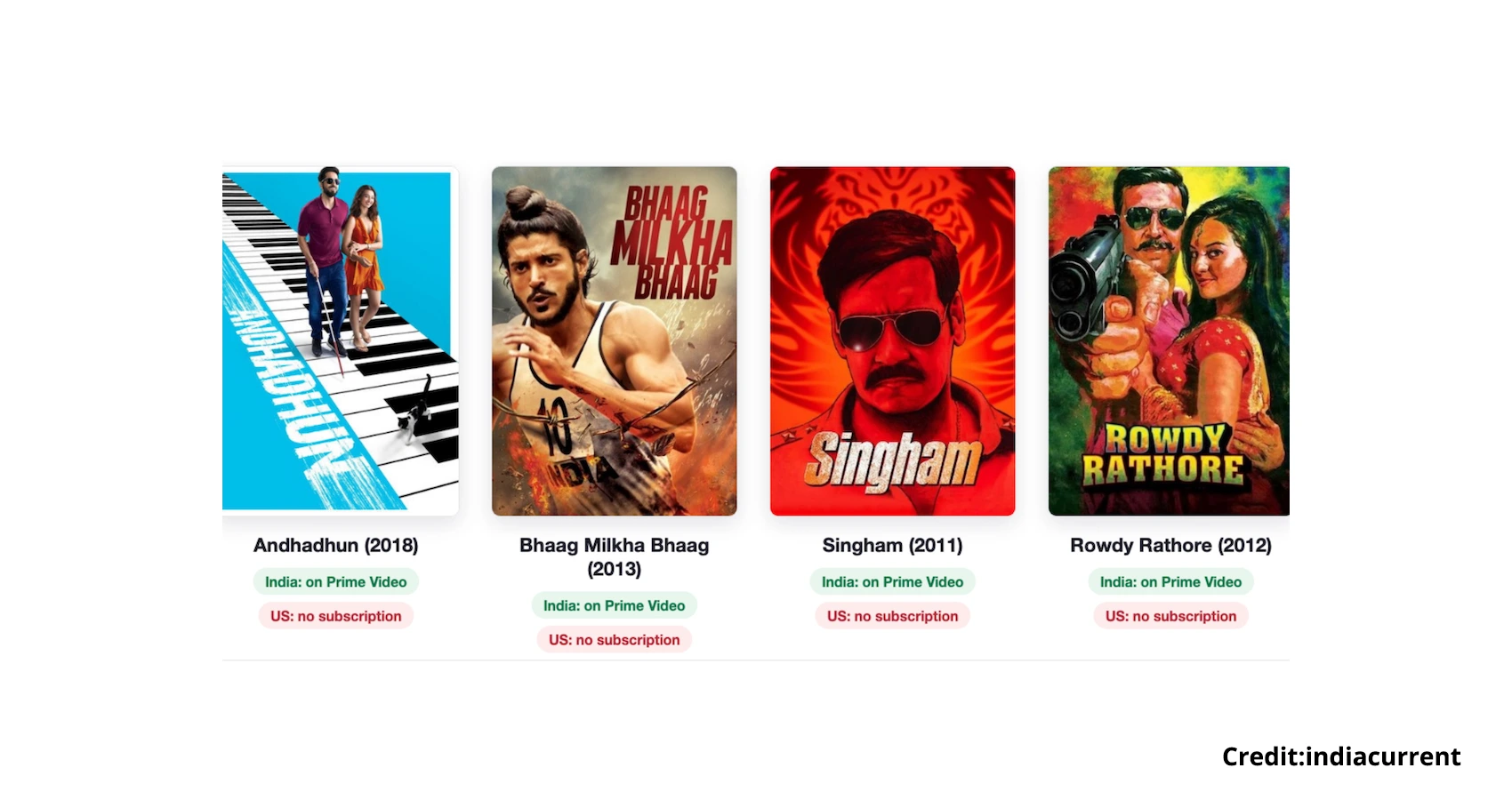
On a Friday night last year, my family decided to rewatch the Bollywood comedy thriller Andhadhun, starring Ayushmann Khurrana. After twenty minutes of searching, we were disappointed to find that Netflix, Prime Video, and Hulu did not offer it.
Meanwhile, my cousin in Mumbai could have started the film with a single tap, using the same Amazon Prime subscription we were paying for in the United States.
This experience led me down a rabbit hole that eventually resulted in a dataset. My team at OTTASIA, a free streaming guide for Asian movies, TV, and anime, analyzed the 200 most popular Hindi films released between 2010 and mid-2025. We tracked where each film could be legally streamed today across five markets: India, the United States, the United Kingdom, Canada, and Australia. The results shed light on a frustration familiar to many Indian-American households, but one that has rarely been quantified.
In India, 184 of those 200 films are included with a streaming subscription service. In contrast, only 51 of those films—more than one in four—are available on any subscription service in the United States. This includes major platforms like Netflix, Prime Video, and Hulu, as well as smaller services. In Canada, 38% of Bollywood films are missing from subscription services; in the United Kingdom, it’s 30%; and in Australia, 21%.
This issue is not confined to obscure films or lesser-known services. Many readers may recognize titles such as Bhaag Milkha Bhaag, Singham, and Rowdy Rathore, which are available on Amazon Prime Video in India but not on its U.S. counterpart or any other U.S. subscription service.
Despite paying for the same service, viewers in the U.S. and India receive vastly different libraries. Your relatives in India are not accessing content you chose not to buy; both parties are paying for the same subscription but receiving different movies.
The reason for this disparity lies in how streaming rights are sold on a country-by-country basis. When a Hindi film is licensed, the rights for India are negotiated carefully and command a significant price. North American rights, however, are often an afterthought, sometimes sold to distributors who fail to place the film anywhere or bundled into deals that expire without notice. It’s not that the diaspora is being deliberately excluded; rather, they are simply not being considered at all.
The implications of this situation extend beyond mere inconvenience. Approximately 14% of the 200 films in our study—roughly one in seven—cannot be legally watched in the United States at any price. This includes options for subscription, rental, or purchase.
For a community eager to introduce its films to American-born children, this creates a cultural supply chain riddled with gaps. When a film is unavailable through legal means, families often resort to pirated streams, which come with incorrect subtitles and potential security risks. This legal gap inadvertently promotes piracy.
There’s another layer to this issue. Even in India, no single streaming service covers the entirety of Bollywood. Netflix offers about half of the 184 films available for streaming, while Prime Video provides around three-quarters. To access all of them, viewers would need to subscribe to eight different services. Thus, the fragmentation that frustrates the diaspora is a more extreme version of the fragmentation experienced by Indian viewers. The key difference is that in India, every film has found a home somewhere, whereas many films abroad never find a platform at all.
So, what can viewers do in the face of this streaming dilemma?
First, check rental stores before assuming a film is unavailable. Of the 200 films in our study, 38 are available for rental or purchase in the United States on platforms like Apple TV and Amazon Video, typically for a few dollars. Second, explore official YouTube channels. Studios and broadcasters are increasingly publishing older films for free with ads, often featuring the titles from the 2000s and 2010s that subscription services overlook. Third, verify if a film is available for your specific country. Availability guides designed for American audiences often provide incorrect information for Indian content, which is why I developed OTTASIA—a free, country-aware guide to where films and shows stream across Asia and the diaspora.
Ultimately, the larger solution lies not in the hands of viewers but within the industry itself. The Indian-American community is one of the highest-income, highest-streaming-spend demographics in the country. The films they wish to watch already exist, are subtitled, and are digitized. It is essential for industry leaders to recognize the diaspora as a viable market rather than a mere rounding error.
Until that recognition occurs, we will continue to pay for subscriptions that deliver less than what our cousins receive, and the films that shaped our childhoods will remain locked away, forgotten in a vault.
According to OTTASIA.