
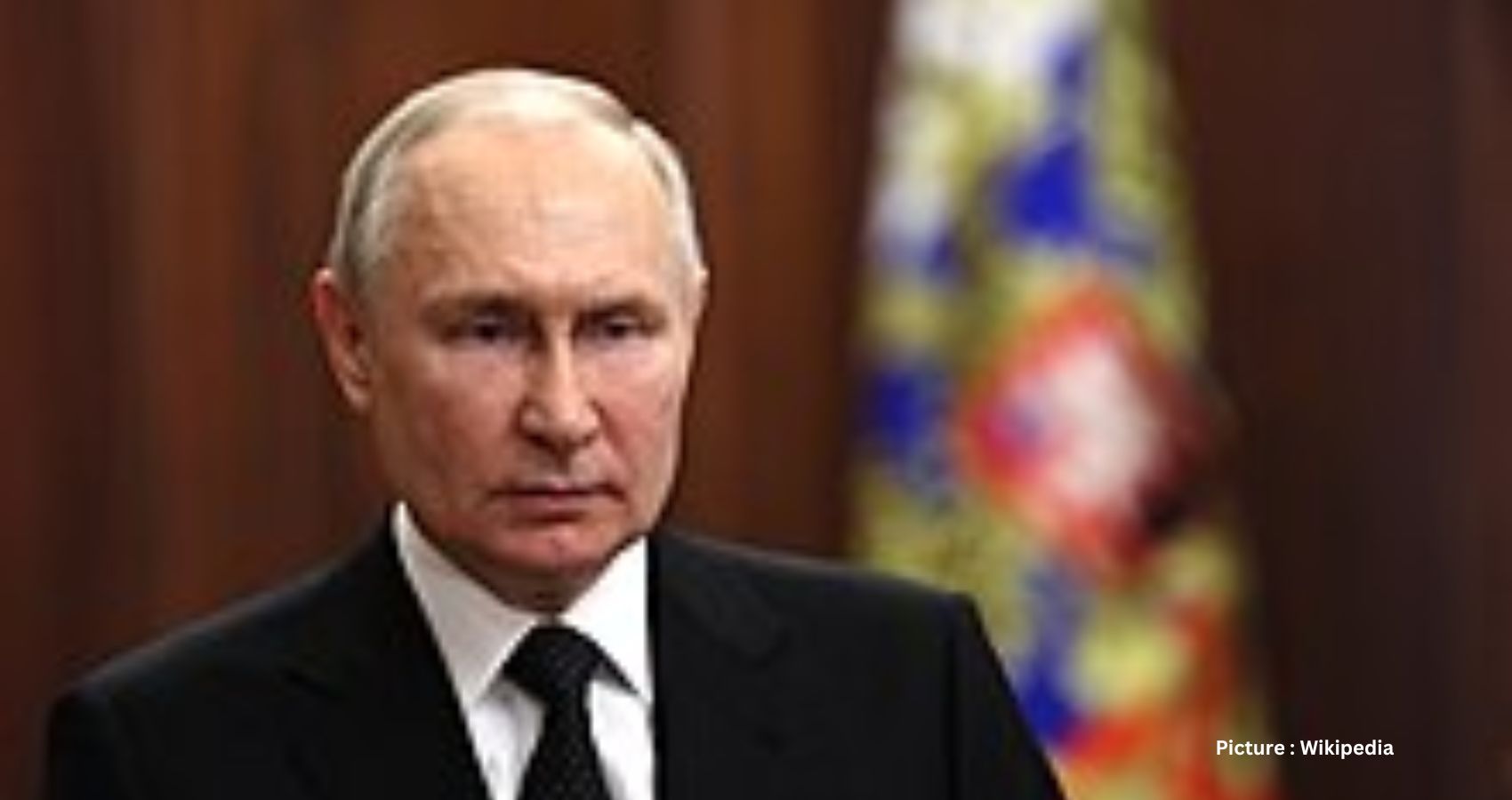
Belarusian President Alexander Lukashenko revealed that he and Russian President Vladimir Putin often engage in lighthearted debates over who is the “bigger dictator” during a recent youth forum in Minsk.
During a recent speech at the “Youth. Belarus. Future.” forum in Minsk, Belarusian President Alexander Lukashenko shared that he and Russian President Vladimir Putin frequently joke and argue about which of them holds the title of the ultimate dictator. This revelation underscores the close ties between the two leaders, both of whom have maintained their grip on power for decades.
Lukashenko, who has been in power since 1994, is known as Europe’s longest-serving head of state. Putin has led Russia since 2012, having previously served as president from 2000 to 2008. In his remarks, Lukashenko addressed the audience, saying, “You know what they say about me?” He continued, “[I am] the last dictator, the second-to-last dictator in Europe. Dictator, dictator. Vladimir Putin and I often joke and argue over which of us is more of a dictator.”
The Belarusian leader, now 72, is recognized as Putin’s closest international ally. While Belarus has not deployed ground troops to the ongoing conflict in Ukraine, it plays a crucial role as a strategic staging ground for Russian military operations. Reports indicate that Belarus provides Russia with essential weapons components and allows its forces to conduct military strikes from its territory.
In August, a report by Ukrainska Pravda highlighted the construction of a new railway in Belarus’ Gomel Oblast, designed to accommodate military trains near the Ukrainian border. This infrastructure development further emphasizes the military cooperation between the two nations amidst the ongoing war in Ukraine.
The relationship between Belarus and Russia has grown stronger as Western officials intensify pressure on Moscow and its allies. Following a meeting in Moscow on August 27, Lukashenko congratulated Putin on September 21 after the Russian elections, praising the “unprecedented turnout of millions of voters” and the majority secured by the United Russia party. He characterized this electoral success as a proper response to “cynical attempts from the outside to discredit the campaign and sow discord.”
At the youth forum, Lukashenko also addressed the topic of political succession in Belarus, asserting that no one is prepared to take over leadership. “Never believe those who say that Lukashenko is ‘clinging to power with blue-knuckled hands’,” he told the audience. “Good Lord, let them say it. I have had my fill of this power to the point where I could not possibly want any more of it.”
He added, “The only question is whether you are capable today of taking over the country and holding on to it. If you are, start tomorrow. To be frank, I cannot yet answer that question positively. Do not take offense.” Lukashenko claimed that he became a dictator because he stood up against the “entire civilized world.”
Despite facing strict economic sanctions from Western nations due to human rights abuses, Lukashenko announced on September 11 that Belarus has begun selling potash, a key export used in fertilizer, to the United States. While U.S. sanctions on Belarusian potash were lifted following the release of political prisoners, European Union sanctions remain in effect.
As the geopolitical landscape continues to shift, the dynamics between Belarus and Russia will likely remain a focal point for international observers, particularly in light of the ongoing conflict in Ukraine and the broader implications for Eastern Europe.
According to Novaya Gazeta, Lukashenko’s comments reflect the ongoing camaraderie and rivalry between the two leaders as they navigate their respective roles on the world stage.