
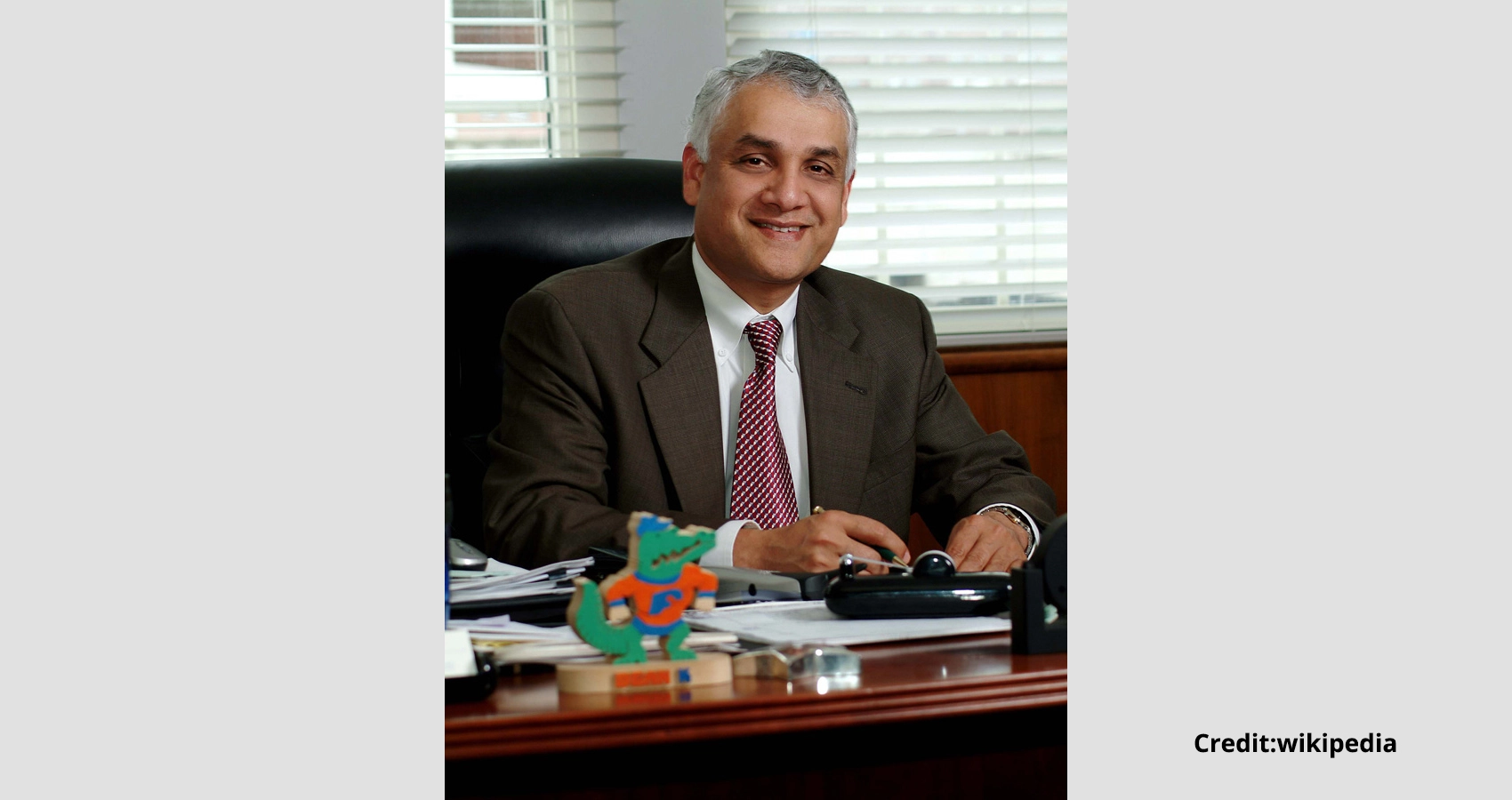
Pramod Khargonekar, a professor at UC Irvine, leads an $8 million NSF initiative aimed at shaping the future of engineering research in the United States.
Pramod Khargonekar, an Indian American professor at the University of California, Irvine, has been appointed as the principal investigator for a significant new five-year project designed to influence the future engineering research agenda in the United States.
The project, funded by the U.S. National Science Foundation (NSF) Engineering Directorate, is part of a cooperative agreement that allocates nearly $8 million in projected funding through August 2031. This initiative supports the Engineering Research Visioning Alliance (ERVA), which aims to convene the engineering community to identify and pursue innovative research directions.
“ERVA has demonstrated that the engineering community can be convened with purpose, challenged to think beyond incremental progress, and mobilized to identify research directions with the power to shape the nation’s future as a technology leader,” Khargonekar stated. He is a Distinguished Professor of Electrical Engineering and Computer Science at UC Irvine.
As the United States faces increasing global competition, rapid technological advancements, and pressing national priorities, Khargonekar emphasized the importance of ERVA as a neutral and agile convener. “ERVA is ready to serve as the neutral, agile, and trusted convener that helps the community see farther and act sooner,” he added.
Administered by the University-Industry Demonstration Partnership (UIDP), ERVA brings together leaders from various sectors, including academia, industry, government, and national laboratories. The alliance aims to identify emerging opportunities and develop strategic research directions that can yield significant national and societal benefits.
Through its visioning activities, ERVA convenes experts from diverse disciplines to tackle complex challenges, pinpoint critical knowledge and technology gaps, and articulate high-impact engineering research opportunities. The reports generated from these activities will provide valuable research frameworks for federal agencies, universities, corporations, national laboratories, and foundations that influence or support the nation’s research landscape.
Khargonekar brings over four decades of experience as a scholar, educator, and leader in both academic institutions and government organizations. His expertise spans control and systems theory, cyber-physical systems, and their applications in manufacturing, renewable energy, smart grids, and biomedical engineering.
He has been actively engaged in the intersection of machine learning and artificial intelligence, focusing on control and estimation. Khargonekar has also contributed to key emerging topics such as the Future of Work, Energy System Transformation, the Food-Energy-Water Nexus, and Resilient Infrastructure Systems and Processes.
Recently, he co-led a chapter on climate change mitigation and adaptation for the publication “Control for Societal-scale Challenges: Road Map 2030,” developed by a large group within the IEEE Control Systems Society.
Khargonekar holds a BTech in Electrical Engineering from the Indian Institute of Technology, Bombay, and earned both his MS in Mathematics and PhD in Electrical Engineering from the University of Florida.
This initiative marks a pivotal moment for engineering research in the United States, as it seeks to harness the collective expertise of the engineering community to address the nation’s most pressing technological challenges.
According to a university release, the project is poised to make a lasting impact on the future of engineering research.