
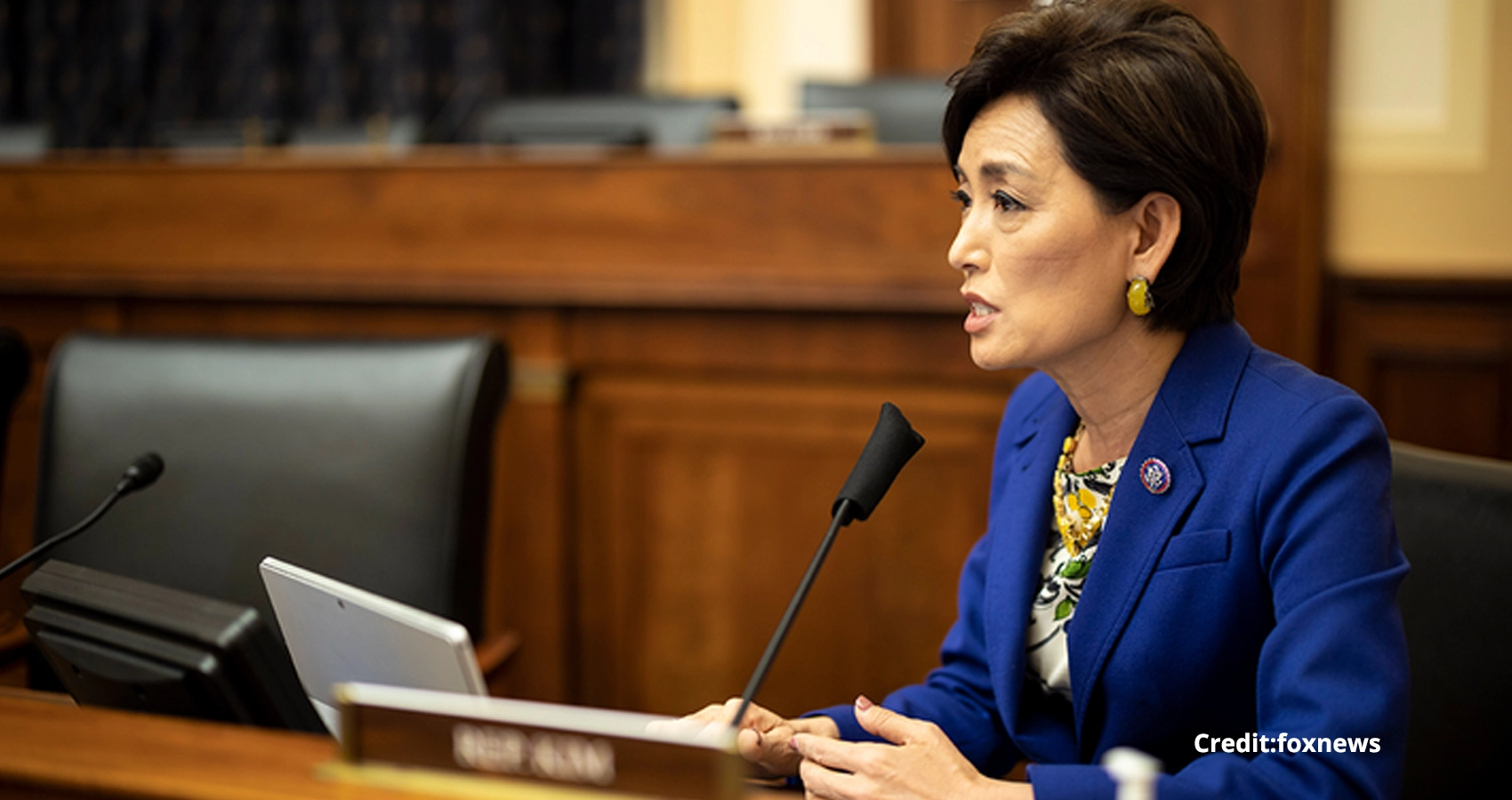
California Republican Young Kim is targeting earmark loopholes that allow lawmakers to indirectly enrich themselves and their families through federal spending, following a recent stock trading ban.
In a move aimed at curbing congressional self-enrichment, California Republican Representative Young Kim has introduced the Stop Congressional Self-Enrichment Resolution. This initiative follows a successful GOP-led effort in July that imposed restrictions on lawmakers’ stock trading, requiring them to provide advance notice before selling stocks. Kim’s resolution seeks to address another avenue through which some members of Congress may be benefiting financially while in office.
Kim’s proposal comes in response to growing public frustration over the increasing wealth of lawmakers during their time in office. “It could be earmarking a nonprofit organization where a member’s spouse sits on the board of directors or board of trustees, so it will indirectly benefit the family,” Kim explained in an interview with Fox News Digital. “Or it could earmark for a park at an apartment building that a member or their family owns.” She emphasized that federal funds could inadvertently raise property values, thereby benefiting lawmakers and their relatives.
The resolution aims to extend current House rules that require members requesting earmarks to certify that neither they nor their spouses have a financial interest in the recipient. Kim’s bill would broaden this requirement to include immediate family members and indirect financial interests, such as property values in the vicinity of funded projects.
“The days of members thinking that ‘I can use the community project funding request or bringing the earmarks for my district and get filthy rich off of it’ — those days are numbered,” Kim stated. She noted that the public is increasingly disillusioned with politicians who seem to profit while average Americans struggle to make ends meet.
Kim cited the infamous “Bridge to Nowhere” project in Alaska as a historical example of earmark abuse, which led to a decade-long moratorium on such practices. While she acknowledged that safeguards implemented after the moratorium have helped, she argued that lawmakers can still find ways to benefit indirectly from earmarks. Importantly, she clarified that her initiative is not aimed at targeting specific individuals.
With the rise of apps like the “Pelosi Stock Tracker,” which allow retail investors to monitor stock transactions by lawmakers, Kim emphasized that her effort is not about singling out any colleague. “This is not in any way discouraging members to fight for their districts and bring in the appropriate taxpayer dollars for projects near their districts,” she said, highlighting her commitment to advocating for her constituents.
Kim pointed to her efforts in securing funding for wildfire prevention and recovery in Orange County as examples of her dedication to her district. “That is so important,” she asserted, while also stressing that lawmakers should not enrich themselves at the expense of their constituents. “There are too many career politicians in Washington looking out for no one but themselves,” she added.
Historically, many lawmakers have faced scrutiny for their earmarking practices. A notable case involved former House Speaker Dennis Hastert, who was criticized in 2006 for a $207 million earmark to build a parkway near property he owned. Hastert’s attorney dismissed the allegations as “libelous,” arguing that the criticism was unfounded.
In 2023, the Boston Globe reported that earmarks secured by Representative Stephen Lynch, a Democrat from Massachusetts, benefited a health center in Boston where his wife was employed. Lynch secured $2 million for the South Boston Community Health Center and an additional $1 million for a foundation where his wife served as an unpaid director. Fox News Digital reached out to Lynch for comment but did not receive a response.
Similarly, Senator Tim Kaine, a Democrat from Virginia, previously secured earmarks totaling $3.5 million for George Mason University, where his wife had served as interim president and later as a professor. A spokesperson for Kaine emphasized that the earmarks were not influenced by his wife’s position, stating, “Secretary Holton has no involvement in the CDS process, and no involvement in the George Mason CDS requests.”
As the Senate prepares to consider stock trading prohibitions, Kim’s bill aims to close a gap in regulations surrounding earmarks, an issue that has garnered bipartisan support. The ongoing dialogue about congressional ethics and financial transparency continues to resonate with the public, as many Americans seek accountability from their elected officials.
According to Fox News Digital, Kim’s initiative reflects a growing demand for reform in how lawmakers manage their financial interests while serving in office.