
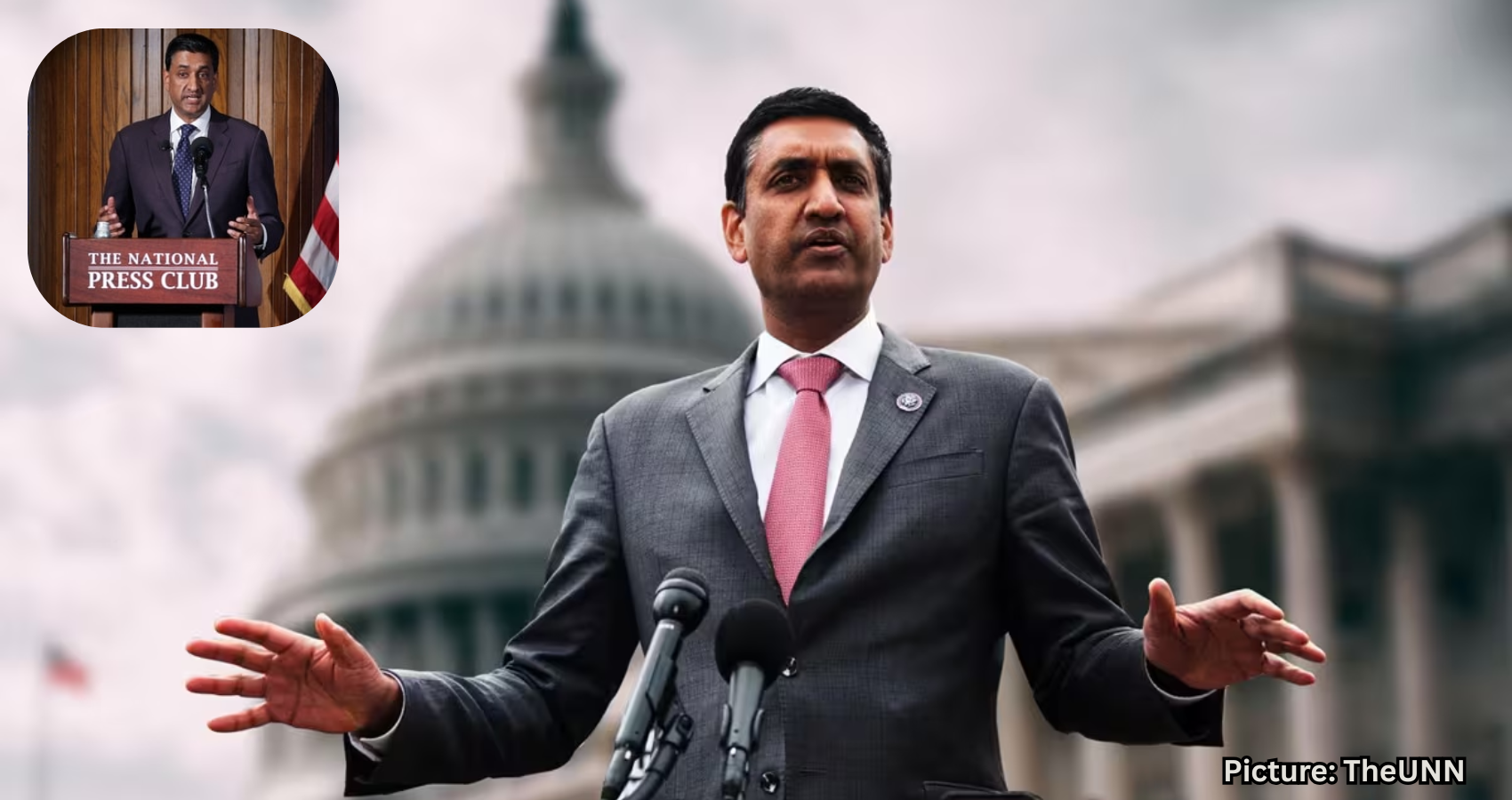
Rep. Ro Khanna advocates for abolishing ICE, while Rep. Pramila Jayapal highlights the alarming rise in arrests and deportations affecting Asian American and Pacific Islander communities.
Rep. Ro Khanna has called for the abolition of Immigration and Customs Enforcement (ICE) and the establishment of a new immigration agency. His remarks were made during a virtual press briefing hosted by Stop AAPI Hate, where Rep. Pramila Jayapal also spoke about the detrimental impact of current immigration policies on Asian American and Pacific Islander (AAPI) immigrants.
The briefing coincided with the launch of a new interactive A/PI ICE Tracker, which examines arrests, detentions, and deportations involving AAPI communities. This tracker is based on ICE data obtained through Freedom of Information Act requests by the Deportation Data Project. According to Stop AAPI Hate, the analysis covers the period from January 20, 2025, to August 6, 2026.
Stop AAPI Hate reported a staggering 436% increase in arrests of individuals from Asian countries compared to a similar timeframe under the previous administration. Detentions surged by 512%, while deportations skyrocketed by 1,103%. These increases far exceed the overall rise in ICE activities during the same period.
Khanna, who represents California’s 17th Congressional District, emphasized the need for fundamental changes to the immigration enforcement system. “In my view, we need to abolish ICE,” he stated during the briefing. “We need to start from scratch. We need a new immigration agency in America like we had from the New Deal to the Bush era.” He proposed that this new agency be placed under the Justice Department, with immigration officers required to adhere to established legal standards.
“We should stand up against this abuse. There is not another dollar to this rogue agency,” Khanna asserted. He highlighted the disproportionate impact on Asian American communities, noting that 25% of the arrests and detentions identified in the report occurred in California. Khanna described the conditions he witnessed during a visit to a California detention facility as “extraordinary” and “inhumane.”
In addition to advocating for systemic change, Khanna underscored the significant contributions of Asian American immigrants to the U.S. economy and technology sector. “We need to talk about what Asian Americans and immigrants contribute to America,” he said, citing their roles in various industries, including artificial intelligence, technology, construction, hospitality, agriculture, and caregiving.
Rep. Pramila Jayapal, a Washington Democrat and ranking member of the House Judiciary Subcommittee on Immigration, Integrity, Security, and Enforcement, focused on the broader implications of immigration enforcement on AAPI communities. “As the top Democrat on the immigration subcommittee, as an immigrant myself, as one of only two dozen naturalized citizens to serve in Congress,” Jayapal stated, “I want you to know that we are doing everything we can to fight back against the cruelty, against the undermining of due process protections and criminalization of all immigrants.”
Jayapal echoed Khanna’s concerns, highlighting the alarming statistics reported by Stop AAPI Hate. “These are stunning numbers, not anecdotal, but patterns of violence and cruelty,” she remarked, referencing the significant increases in arrests, detentions, and deportations.
She shared individual immigration cases to illustrate the human impact of these policies. One case involved Filipino immigrant Maximo Londonio, who was held for two months, including 27 days in solitary confinement, despite being a lawful permanent resident. Jayapal also mentioned Llewellyn Dixon, who had lived in the U.S. for over 50 years before being detained at an airport, and later became a U.S. citizen.
Another case she highlighted was that of Loreto Havar, a 76-year-old green card holder with stage 4 cancer, who was detained after attending required ICE check-ins. She also referenced Chongli Scott Tao, a Hmong grandfather and U.S. citizen whose arrest by ICE in St. Paul was captured on video.
Jayapal recently visited the Stewart Detention Facility in Georgia as part of her congressional oversight work. She called for continued efforts to release detainees and to close for-profit detention facilities. “We will not stop doing the work to advocate for the release of detainees, to demand the closure of these for-profit prisons, and to showcase what is happening through the series of hearings that I’ve been holding,” she stated.
The new A/PI ICE Tracker aims to help communities understand the scale and geographic distribution of immigration enforcement. “This API ICE tracker helps us to educate our communities and the general public about the magnitude of what is happening,” Jayapal said. “It helps us to be strategic about our responses, and it helps us to organize a broad coalition of people to fight back against this.”
The tracker allows users to examine ICE arrests, detentions, and deportations by state, country of origin, age, and gender. Stop AAPI Hate designed this tool to make the data more accessible to journalists, researchers, community organizations, and the public. The lawmakers’ comments come as the new data tool sheds light on the effects of immigration enforcement on Asian and Pacific Islander communities across the United States.
According to Stop AAPI Hate, the tracker is a vital resource for understanding the challenges faced by AAPI immigrants in the current political climate.