
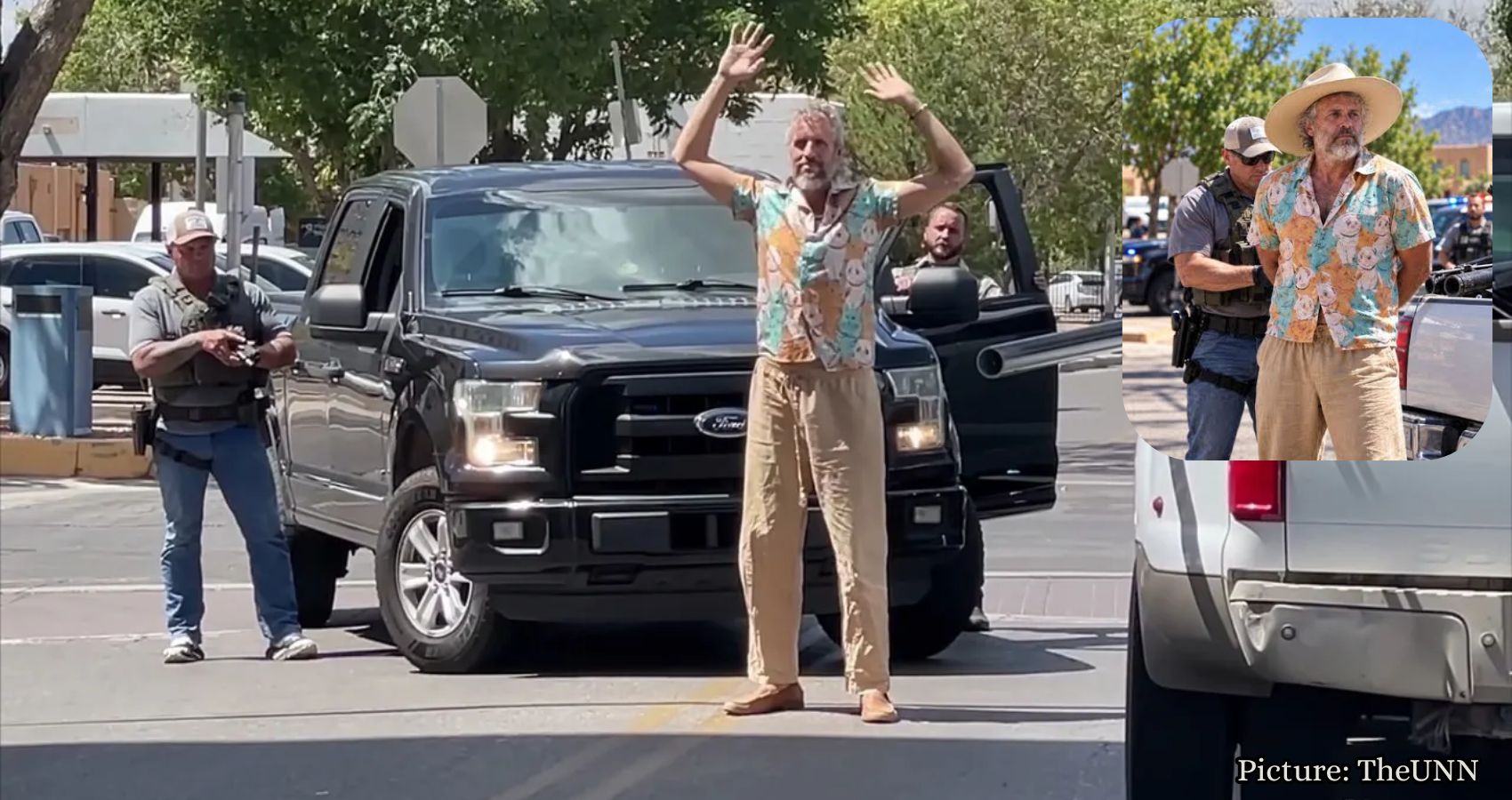
Jevon Martinez livestreamed himself removing surveillance cameras in Bernalillo County, leading to his arrest for allegedly taking equipment owned by neighborhood associations.
Jevon Martinez, a 44-year-old resident of Rio Rancho, New Mexico, livestreamed himself removing ten Flock Safety cameras in Bernalillo County on September 2. In a bold move, he documented the entire process, loading the equipment into his pickup truck while explaining his motivations to viewers online.
The incident unfolded shortly after Bernalillo County Sheriff John Allen announced the termination of the county’s contracts with Flock Safety, citing concerns over privacy, data sharing, and his lack of confidence in the company. Despite his reservations about Flock, Sheriff Allen expressed support for automated license plate reader technology and indicated that he would explore other vendors.
Martinez perceived the remaining cameras as unfinished business. His livestream provided a clear account of his actions, as he stated that he was taking down the equipment to return it to the sheriff’s office. He insisted that he was neither stealing nor destroying the cameras, claiming they were left unattended.
In his social media posts, Martinez emphasized that the Bernalillo County Sheriff’s Office (BCSO) no longer had a contract with Flock and that he was merely assisting by removing the equipment. “Since BCSO is busy, I know you guys are busy, so I went ahead and helped you out,” he said while showing the cameras filling the bed of his truck.
This was not Martinez’s first encounter with law enforcement regarding license plate readers. Earlier in the year, he had been arrested by Rio Rancho police for allegedly damaging and removing three license plate reader systems in a separate case, facing nine felony charges.
Martinez’s livestreams portrayed him as someone unafraid of scrutiny. He boasted about the cameras he had collected, stating, “We got a bunch of these bad boys,” and challenged his viewers to see how much he could gather in one day. He referred to the Flock cameras as “tyranny trees,” reflecting his disdain for automated vehicle surveillance.
However, the situation escalated when authorities revealed that only two of the ten cameras Martinez removed were associated with BCSO, while the other eight belonged to neighborhood associations. This distinction significantly impacted the legal implications of his actions.
Authorities estimated the combined value of the removed equipment at $16,500, emphasizing that the cameras were still the property of the neighborhood associations and that the public had no authorization to remove them. Martinez’s assertion that he was returning the equipment to BCSO did not align with the ownership status of the majority of the cameras.
Despite his claims of intending to return the equipment, investigators reported that Martinez drove past BCSO headquarters three times with the cameras still in his truck. He was ultimately stopped by deputies outside the sheriff’s office, where video footage captured the moment of his arrest, with deputies surrounding his vehicle and drawing their weapons.
Martinez was charged with attempted larceny over $2,500 and interference with communications. He appeared virtually in Bernalillo County Metropolitan Court on September 4, where prosecutors did not request pretrial detention. However, he remained in custody due to a separate case in Sandoval County related to his earlier alleged license plate reader removals. Reports indicate that a grand jury has since indicted him in that case, leaving both matters unresolved.
Adding complexity to the situation, Sheriff Allen had already expressed dissatisfaction with Flock Safety, terminating three contracts with the company. These contracts included five automatic license plate reader cameras, 16 speed cameras, and gunshot detection technology. Allen cited concerns over privacy safeguards and the potential for other law enforcement agencies to access New Mexico plate data.
While Allen criticized Flock as a vendor, he maintained that the underlying technology could be beneficial for law enforcement. This divergence in views between the sheriff and Martinez highlights the broader debate surrounding surveillance technology and privacy concerns.
Flock’s automatic license plate readers collect detailed information about vehicles, including license plate text, date, time, and camera location, as well as basic vehicle characteristics. Critics argue that the accumulation of this data can lead to privacy violations, especially when it becomes searchable by law enforcement agencies.
As the controversy surrounding Flock cameras continues, it raises important questions about who has the authority to collect and manage movement data and what safeguards are in place to protect individual privacy. Residents concerned about surveillance technology should engage with local authorities to understand how data is used and advocate for stronger privacy protections.
Martinez’s case serves as a cautionary tale about the potential consequences of taking matters into one’s own hands regarding surveillance equipment. While he aimed to make a political statement, his actions resulted in criminal charges and further scrutiny of the very technology he opposed.
As the debate over surveillance technology evolves, it is crucial for communities to engage in discussions about privacy, data management, and the role of law enforcement in monitoring public spaces. Understanding the implications of such technology and advocating for responsible use can help ensure that privacy rights are respected in an increasingly surveilled society.
For more information on this case, refer to Fox News.