
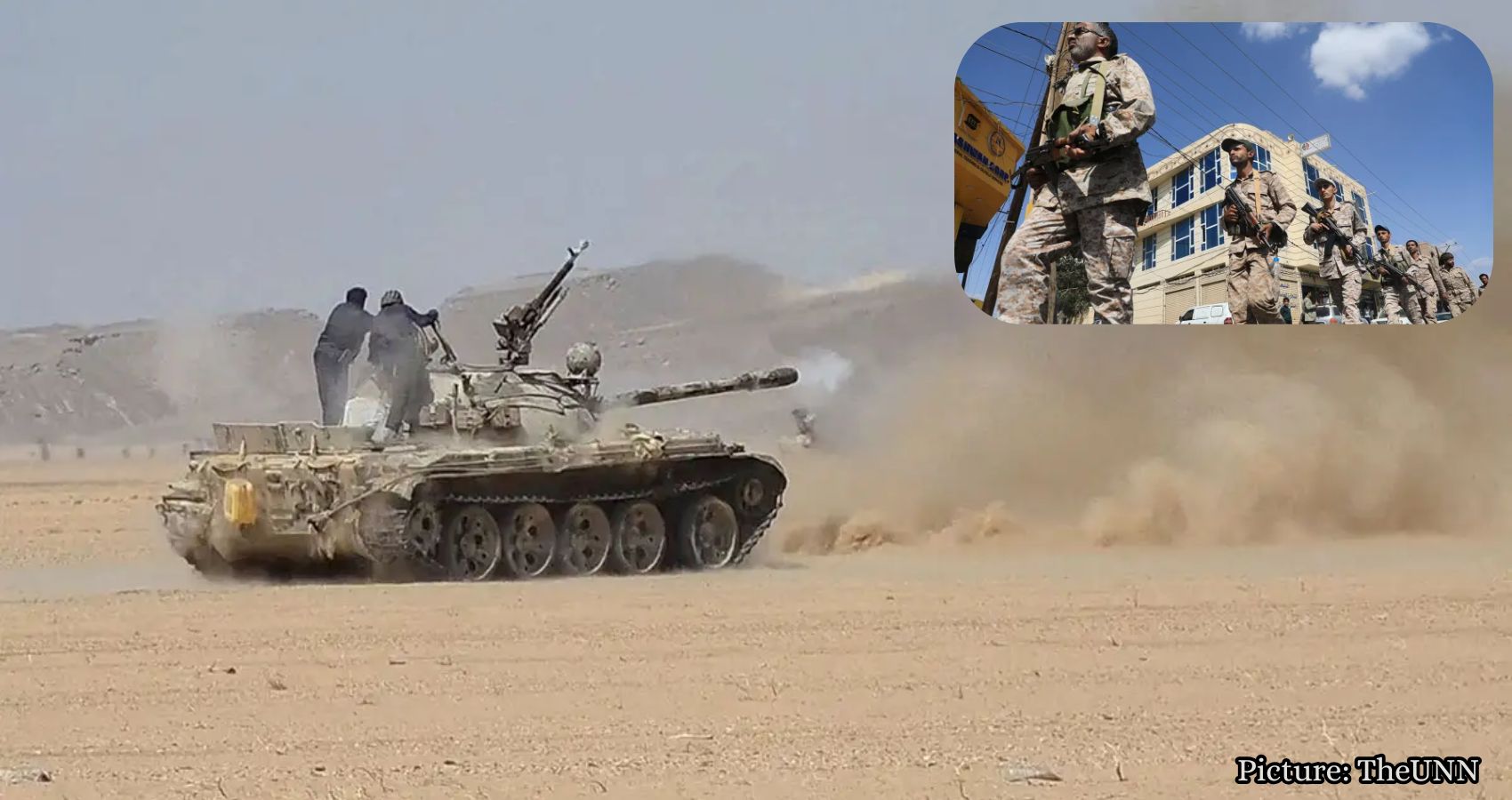
Saudi Arabia is urging the U.S. to take military action against Iran-backed Houthis following their recent territorial gains in Yemen, raising concerns over maritime security in the region.
Saudi Arabia has called on the United States to take direct military action against Iran-backed Houthi forces after the group seized key positions along Yemen’s Bab al-Mandab Strait. This development has raised alarms about the security of one of the world’s most critical shipping routes.
The Houthis’ recent territorial gains include the strategic island of Mayyun, also known as Perim, and the coastal town of Dhubab. These advances occurred after Yemeni government forces withdrew from these areas, according to multiple sources familiar with the situation. The Bab al-Mandab Strait serves as a vital link between the Red Sea and the Gulf of Aden, making it a crucial passage for global shipping, particularly for oil transport.
The rapid Houthi advance prompted urgent discussions between Saudi officials and U.S. President Donald Trump. Crown Prince Mohammed bin Salman reportedly urged Trump to consider military action against the Houthis during their conversations over the past 24 hours. While the U.S. has indicated it is not currently inclined to engage in direct military action, Trump assured bin Salman that Washington would provide intelligence and targeting support to Saudi Arabia.
In a related development, U.S. Central Command commander Admiral Brad Cooper traveled to Saudi Arabia for coordination talks, highlighting the seriousness of the situation. The White House has not commented on these discussions or whether additional military measures are being considered.
A Saudi official emphasized the kingdom’s commitment to supporting the internationally recognized Yemeni government and ensuring the safety of its citizens and borders. The official stated that Saudi Arabia is working closely with its partners, including the United States, to maintain freedom of navigation in the Arabian Gulf and the Red Sea.
The situation is further complicated by the potential for simultaneous pressure on two significant maritime routes. As Iran disrupts traffic through the Strait of Hormuz, the Houthis are strengthening their position around the Bab al-Mandab. Behnam Ben Taleblu, a senior director at the Foundation for Defense of Democracies, noted that Tehran appears to be attempting to regain leverage as the dynamics in the Strait of Hormuz shift.
According to Ben Taleblu, the Houthis have proven capable of impacting shipping in the Red Sea and the Bab al-Mandab Strait in the past. He suggested that Iran is trying to balance diplomacy with Arab states while simultaneously exerting pressure through Houthi offensives.
The recent Houthi advances follow their capture of the strategic Red Sea port of Mocha, previously held by forces aligned with Yemen’s internationally recognized government. Timothy Lenderking, a former U.S. special envoy for Yemen, indicated that the Houthis have been rebuilding their military strength since the 2022 U.N.-brokered truce, which allowed them to regroup and enhance their capabilities.
Lenderking described the Houthis as “extremely entrepreneurial,” using every opportunity to build their military capabilities. He attributed their recent successes to Iranian support, including personnel and equipment supplied via Mahan Air flights into Sanaa earlier this summer, likely involving members of the Iranian Revolutionary Guard Corps (IRGC).
The Houthis are leveraging the broader conflict with Iran to increase their pressure on Saudi Arabia. Lenderking noted that the group has seized the opportunity to consolidate various efforts, putting significant pressure on the Yemeni government and Saudi forces.
A senior Trump administration official reiterated that the U.S. is focused on protecting its core national security interests, particularly ensuring freedom of navigation in the Red Sea. The official emphasized the importance of empowering regional partners to manage and resolve security challenges while maintaining continuous dialogue with Saudi Arabia and the Yemeni government regarding regional stability.
The implications of the Houthi advances extend beyond Yemen. The Bab al-Mandab Strait is only about 18 miles wide at its narrowest point and serves as the southern gateway to the Suez Canal. In June, approximately 7% of global oil output passed through this strait, according to data from Kpler. Disruptions in this area could force ships to reroute around Africa’s Cape of Good Hope, significantly increasing transit times and costs.
Recent reports indicate a stark decline in vessel traffic through the Strait of Hormuz, with only seven vessels transiting the strait on a recent Thursday, compared to a pre-war daily average of 125. This highlights the ongoing pressures facing critical maritime choke points in the region.
Experts warn that the speed of the Houthi advance reveals vulnerabilities in the Saudi-led efforts to contain the group. Ben Taleblu suggested that the U.S. should assist Saudi Arabia in countering the Houthi advance, as the inability to prevent the capture of strategic locations like Mocha raises concerns about future developments.
Hisham Al-Omeisy, a senior Yemen adviser at the European Institute of Peace, pointed out that the retreating Yemeni government forces left behind military equipment that could bolster Houthi capabilities on other fronts. He emphasized that while attention is focused on territorial gains, the military implications of the lost equipment could have far-reaching consequences.
The recent developments mark a significant shift from the relative calm experienced after the 2022 truce and present a growing challenge for Washington and its regional allies. The question remains whether the Houthi advance can be contained without escalating U.S. military involvement, particularly as American forces remain focused on Iran and the Strait of Hormuz.
According to Fox News Digital, the situation continues to evolve, and the implications for regional stability are profound.