
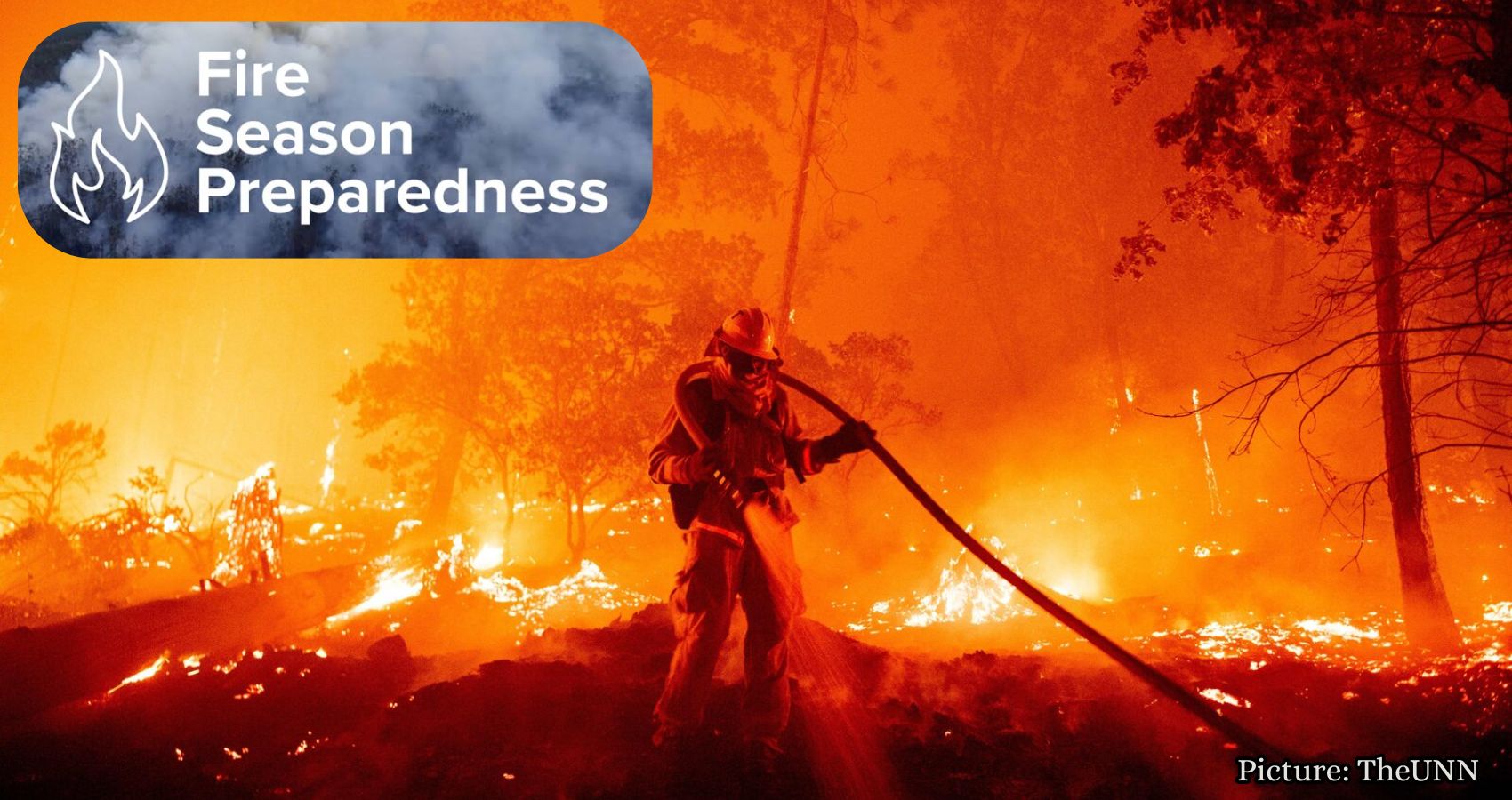
California’s fire season is approaching, prompting officials to emphasize the importance of preparedness for diverse communities across the state.
As California braces for another fire season, the memory of January 2025’s devastating wildfires lingers. Fast-moving flames engulfed Altadena, a picturesque hamlet just 14 miles north of downtown Los Angeles, along with another affluent neighborhood located 20 miles away. Roaring winds swept across parched lands, transforming densely populated urban areas into infernos. The catastrophic event resulted in the destruction of over 18,000 homes and structures, displacing more than 180,000 residents.
In anticipation of the upcoming season, disaster preparedness officials, emergency managers, and grassroots workers gathered for a briefing on August 20. This event was co-hosted by American Community Media (ACoM) and California Black Media, with the aim of urging Californians to take proactive measures in preparing for potential disasters.
Regina Wilson, Executive Director of California Black Media, highlighted that the communities most at risk are often those with limited access to timely and culturally relevant information. To address this issue, the “Ready California” initiative, led by Cal OES, focuses on bridging language, cultural, and accessibility barriers to ensure that vulnerable populations are not overlooked during emergencies.
State leaders underscored the critical role of local media and trusted neighborhood organizations in translating complex alerts into clear, actionable steps. Diana Cross Palio, Chief Deputy Director of Communications for the Governor’s Office, emphasized that state mandates alone cannot protect millions of diverse residents without fostering deep-rooted public trust.
“Trust really comes from the people you know, and in an emergency, that trust can save lives. Resilience isn’t built overnight, which is why programs like Listos California and Ready California are so important,” Palio stated.
Matt Notley, Deputy Director of Crisis Communications and Public Affairs at Cal OES, detailed the extensive logistical infrastructure supporting California’s disaster response. He noted that Cal OES oversees the California Fire and Rescue Mutual Aid System, which connects over 1,000 local fire agencies. Additionally, the agency employs real-time aerial mapping technology, such as the FIRIS program, to monitor fire movement. However, Notley stressed that technology is ineffective if communities cannot act on the warnings issued.
“Your reporting helps close the distance between an official alert and the person who needs to understand what it means for their family,” Notley told the attending media. “You explain unfamiliar emergency terms in plain language and provide context that reflects the culture and lived experience of your audience.”
Ready California has made significant strides since its inception in 2019, providing printed materials in up to 25 languages and reaching nearly 16 million residents through face-to-face outreach and local community-based organizations (CBOs).
Davina Mapes, Public Affairs Manager for Cal OES, introduced the campaign’s newly launched “Ready California Wildfire Initiative.” This initiative features culturally tailored, downloadable toolkits, social media graphics, evacuation checklists, and block-party kits designed to address common psychological and financial barriers to emergency planning.
“Californians broadly understand disaster risks and agree that preparation matters, but they need a little more help to be prepared. People require numbered lists of simple, specific actions that make preparedness feel achievable,” Mapes explained, encouraging residents to visit the central resource hub at ready.ca.gov.
Mapes also addressed critical safety concerns for immigrant and undocumented populations, reassuring the public that emergency shelters operate without immigration checks, ensuring that everyone feels welcome.
Community panelists working directly with impacted populations shared essential insights into tailored disaster outreach. Stephen Vera, representing the Disability Services and Legal Center (DSLC) in Santa Rosa, discussed the complex needs of older adults and individuals with disabilities regarding evacuation planning, transportation, power-dependent medical devices, and service animals.
“We want to really enforce that it’s not preparing for the community, but it’s preparing with the community,” Vera stated. “Our biggest recommendation is simple: ask, don’t assume.”
Omyra Baptista, Community Educator and Promotoras Coordinator at Up Valley Family Centers in Napa County, highlighted the importance of local workshops in alleviating panic among vulnerable immigrant families and farmworkers. She noted that many people’s greatest fear is not just the fire itself, but the feeling of being alone and uninformed.
“Using the tools from Listos California, we saw firsthand that when we explain simple steps in their own language, fear turns into strength,” Baptista said.
As the dry seasonal winds approach, state officials and CBO representatives unanimously urged Californians to assemble go-bags, establish family communication plans, and connect with vulnerable neighbors before the next wildfire ignites.
For more information on disaster preparedness, visit LISTOS CALIFORNIA.
The insights shared during the briefing underscore the importance of community engagement and accessible information in ensuring that all Californians are prepared for the challenges of fire season, according to California Black Media.