
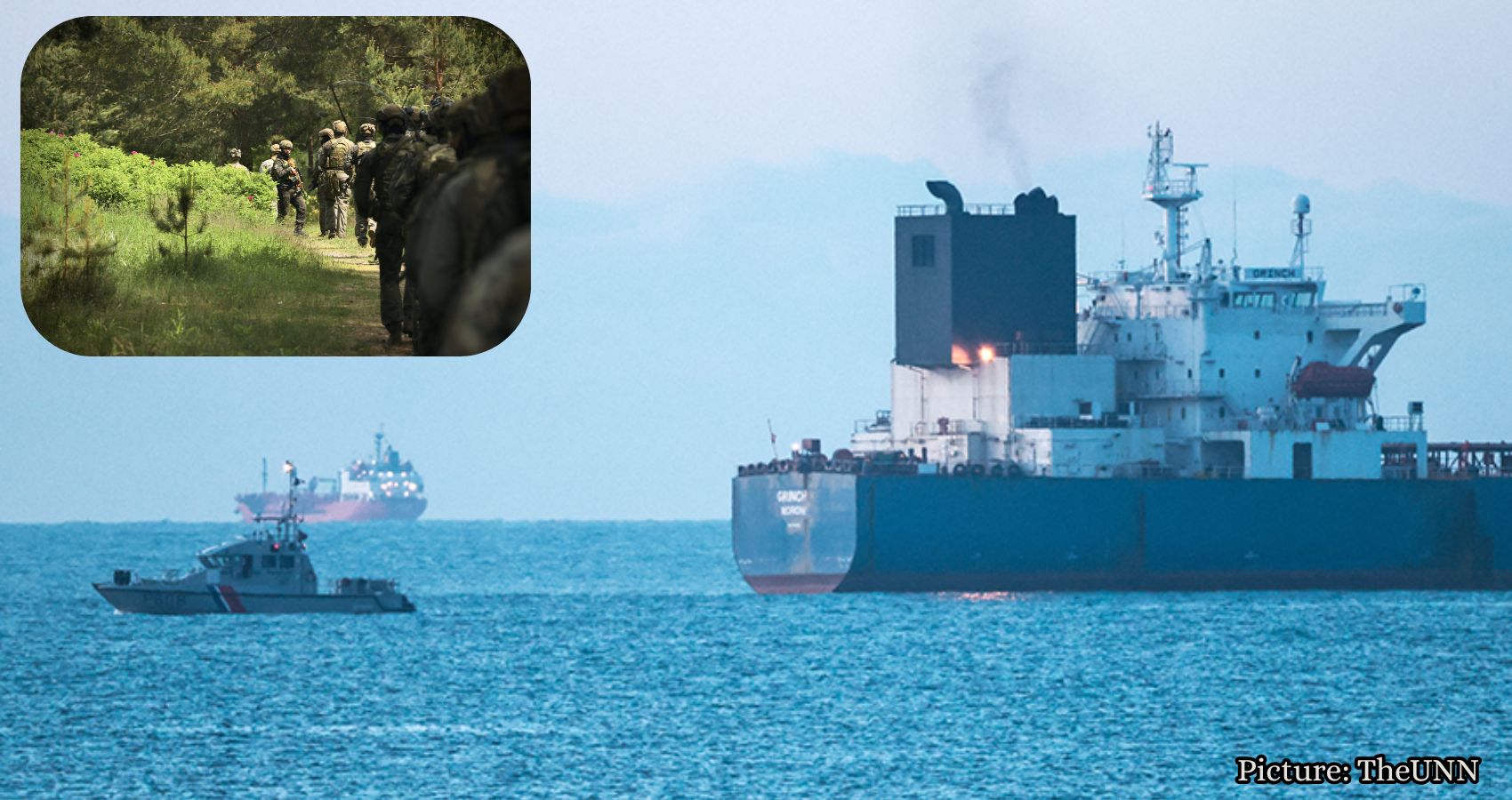
Germany is urging Baltic Sea allies to establish a rapid-response task force in light of increasing Russian hybrid warfare threats, including a recent drone attack on Leipzig/Halle Airport.
Germany is taking significant steps to address what it describes as an escalating campaign of Russian hybrid warfare. This initiative comes in response to a recent drone attack at Leipzig/Halle Airport, one of the country’s key cargo hubs.
Following a meeting in Flensburg on August 28, German Interior Minister Alexander Dobrindt proposed the creation of a rapid-response task force involving Baltic Sea nations. The aim is to enhance coordination and information sharing among these countries to effectively counter hybrid threats, which can include drones, sabotage, cyberattacks, disinformation, and assaults on critical infrastructure.
“We want to turn this shared threat environment into a shared security environment,” Dobrindt stated, emphasizing the increasing frequency and sophistication of hybrid threats.
The urgency of this proposal has intensified after Germany formally accused Russia of being behind an attempted drone attack on August 4 at Leipzig/Halle Airport. The drone was reportedly equipped with explosives, prompting serious concerns about security.
German officials have indicated that police findings, intelligence data, and the methods employed in the attack led them to conclude that Russia was responsible. They noted that the technology used in the drone and explosives aligns with previous Russian hybrid operations and tactics observed in Moscow’s ongoing conflict in Ukraine.
While Germany has not disclosed much of the evidence supporting its claims, officials have withheld details such as information on suspected perpetrators and surveillance footage to protect the integrity of the investigation.
Latvia has reacted strongly to the Leipzig incident, with Foreign Minister Baiba Braže declaring it a clear indication that Russia poses a direct threat to European security. “This was not merely a hybrid attack, but state-sponsored terrorism on German soil,” she asserted, calling for continued support for Ukraine and additional sanctions against Russia to limit its military capabilities.
Retired Air Force Lt. Gen. Richard Newton commented on the broader implications of the incident, describing it as part of a growing trend of hostile activities by Russia across Europe. “We are clearly seeing an escalation in the scope and intensity of Russian gray-zone hostile actions,” he said, noting that Russia has historically employed various covert tactics to disrupt while avoiding direct conflict with NATO.
Germany’s response to the drone attack has included closing Russia’s consulate general in Bonn and terminating the arrangement governing the Russian House cultural center in Berlin. Additionally, Berlin plans to tighten entry controls for Russian nationals and increase scrutiny of Russia’s so-called shadow fleet.
In a related development, German authorities are investigating a series of suspected sabotage incidents targeting the nation’s electricity infrastructure. A suspicious device was discovered near a substation in Dormagen, North Rhine-Westphalia, following similar incidents in Bergheim and Brandenburg. While these incidents temporarily disrupted power generation, German officials have not publicly linked them to Russia.
Newton emphasized the importance of caution when attributing hostile acts, stressing the need for indisputable intelligence to confirm the sources of such actions. “The incidents involving Germany’s power infrastructure are still under investigation and have not been publicly attributed to Russia, or any other source for that matter,” he noted.
Despite the lack of direct evidence linking these incidents to Russia, the German government has stated that the country faces a persistent hybrid threat. “Germany is not at war, but it is a daily target of hybrid warfare,” the government remarked, highlighting ongoing attacks on communication systems and disinformation campaigns.
Retired Gen. Philip Breedlove, former NATO Supreme Allied Commander Europe, pointed out that Russia is increasingly seeking to exert pressure on Western nations while avoiding conventional conflict. “We do know that Russia is trying to fight the Western world below the line of kinetic conflict,” he said, noting the boldness of their methods, which include cyber operations and sabotage.
Breedlove also mentioned that Russian President Vladimir Putin has long aimed to exploit divisions within NATO, particularly between the United States and Europe. “The Western world has got to step up to counter the Russian threat,” he urged.
The proposed Baltic task force aligns with broader NATO efforts to safeguard critical infrastructure in the region, which has become increasingly vulnerable to threats against undersea cables, pipelines, and shipping routes. NATO’s Baltic Sentry initiative, launched in 2025, aims to enhance the protection of critical undersea infrastructure.
In February, several nations, including Denmark, Estonia, Finland, Germany, Latvia, Lithuania, Poland, and Sweden, agreed to accelerate the acquisition and integration of new technologies for Baltic naval operations. This initiative builds on previous testing involving aerial and maritime drones.
Breedlove expressed optimism about Germany’s proposed task force, stating that it could facilitate faster information sharing and improve coordination among regional partners. “Germany’s Baltic initiative makes sense,” he noted, emphasizing the need for swift decision-making to counter any potential Russian advantage.
Newton echoed this sentiment, suggesting that the task force could complement NATO’s existing military activities by enhancing governments’ abilities to share intelligence and coordinate security responses effectively.
Looking ahead, Breedlove warned that Moscow would continue to seek opportunities to exploit uncertainty in the region. “Without question, the Russians will keep looking for places where they can create uncertainty and hesitation,” he said. “We need to get better at recognizing their actions with speed – and responding forcefully with the strength of our allies.”
Fox News Digital reached out to both the German and Russian embassies in Washington, D.C., for comments but did not receive responses by the time of publication.
According to Fox News, the situation underscores the growing urgency for European nations to bolster their defenses against hybrid threats.