
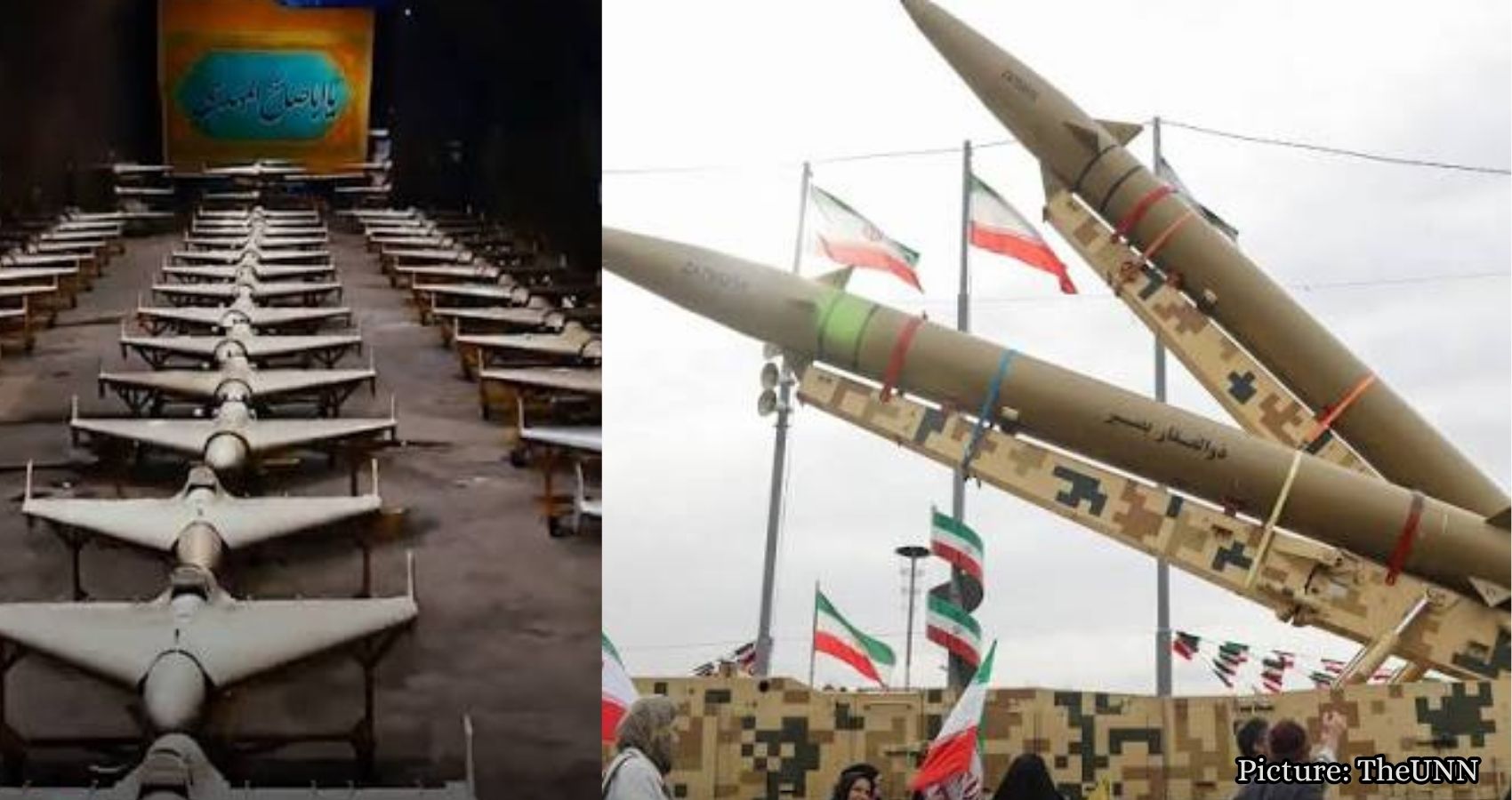
Iran’s military chief, Major General Amir Hatami, asserts that the country’s armed forces maintained their capabilities and launched missile and drone strikes with maximum intensity until the end of recent conflicts.
On August 29, 2026, Major General Amir Hatami, the Commander-in-Chief of the Iranian Army, announced that Iran’s military forces successfully retained their operational capabilities during recent hostilities. He stated that they deployed their missile and drone stockpile against adversaries with “utmost intensity until the last moment.”
Speaking at a ceremony in Rasht, located in Gilan province, Hatami emphasized that Iran emerged victorious by thwarting the “enemy” from achieving its core strategic objectives. His remarks were a direct response to claims suggesting that Iran’s defense infrastructure had been significantly degraded.
Hatami firmly rejected assertions that Iran’s military capacity had been neutralized. He highlighted that, despite concentrated efforts from enemy forces aimed at dismantling the nation’s drone and missile capabilities, Iran continued to launch strikes with full force until the conflict concluded.
He framed the situation within the context of military strategy, explaining that in an aggressive war, the attacker must meet specific goals to claim victory. In contrast, he noted that a defender can be considered victorious simply by preventing the attacker from achieving those objectives.
During his address, Hatami also pointed out that Iranian air defense units remained resilient throughout the conflict, successfully damaging several enemy drones, manned aircraft, and strategic assets.
Hatami’s statements directly countered Western and Israeli military assessments that suggested Iran’s military capacity had been severely compromised. He asserted that, despite targeted intelligence and strike operations aimed at Iran’s launch infrastructure, the country maintained operational continuity, launching unmanned aerial vehicles (UAVs) and ballistic missiles with maximum force until the final moments of combat.
While joint Western intelligence previously estimated that external suppression operations had diminished some of Iran’s ready launchers, Iranian military officials claimed they had utilized ceasefire periods to triple their drone output, asserting that over 70% of their ballistic missile arsenal remained intact.
In terms of air defense capabilities, Hatami reiterated that Iranian units were active and effective throughout the strikes. He claimed these units successfully engaged and damaged multiple enemy assets, specifically mentioning manned aircraft, unmanned surveillance and combat drones, and specialized strategic equipment.
This announcement follows a series of provocative policy declarations from Iranian military leadership throughout August 2026. Just days prior, on August 24, Hatami stated in Mashhad that Iran was prepared to engage in a conflict lasting “10 to 20 generations” to prevent foreign actors from altering its sovereign borders.
Additionally, the Islamic Revolutionary Guard Corps (IRGC) and the broader Iranian military have indicated a shift from a purely defensive posture to an offensive doctrine, training specifically for operations intended to occur on enemy territory.
Earlier in the month, Hatami also announced a state-backed initiative offering a $30,000 bounty—doubled to $60,000 if executed by an Iranian woman—for the capture or killing of any invading U.S. military personnel. This initiative was framed as a response to domestic calls for “Financial Jihad.”
Hatami’s statements underscore the broader dynamics of the ongoing conflict, which has become a war of attrition affecting both sides. While Iran claims a defensive victory, U.S. defense planners have reported that the extensive use of advanced interceptors and munitions in the Middle East has significantly depleted American domestic stockpiles, impacting strategic readiness in other global theaters.
These developments highlight the escalating tensions and evolving military strategies in the region, as both Iran and its adversaries navigate the complexities of modern warfare.
According to The Sunday Guardian.