
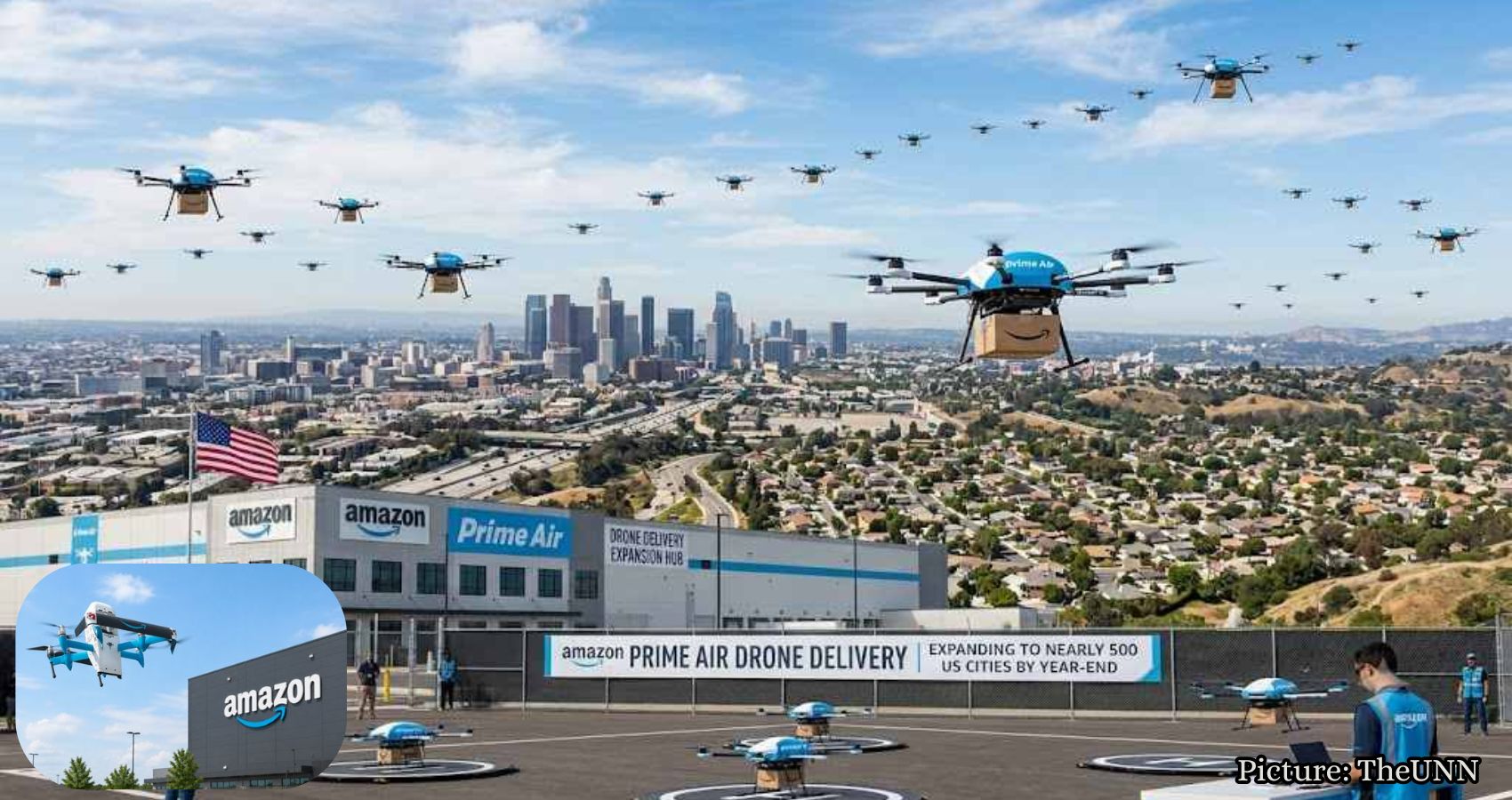
Amazon plans to significantly expand its Prime Air drone delivery service to nearly 500 U.S. cities and towns by the end of 2026, marking a major increase in its delivery capabilities.
Amazon is set to dramatically enhance its drone delivery service, Prime Air, with plans to reach nearly 500 U.S. cities and towns by the end of 2026. This ambitious expansion represents a sixfold increase from its current operational footprint.
Currently, Prime Air operates from 11 sites across 10 metropolitan areas, including Phoenix, Tampa, Kansas City, Omaha, Baton Rouge, Detroit, Houston, San Antonio, Dallas, and Waco. The company is preparing to launch the service in additional metro areas such as Chicago, Syracuse, Cleveland, Atlanta, and Boise, with more communities expected to follow later this year.
This expansion will enable drone delivery to reach communities representing tens of millions of customers. According to Amazon, hundreds of thousands of packages have already been delivered by drone in 2023.
Prime Air is designed to deliver eligible packages directly to customers using autonomous drones. Amazon states that millions of products can qualify for drone delivery, including groceries, electronics, cosmetics, medications, and household goods. Most eligible items weigh five pounds or less and must fit within a large shoebox. While deliveries can arrive in as little as 30 minutes, most orders currently take about an hour to reach customers.
Each Prime Air location typically serves an area of approximately 175 square miles. Customers in eligible areas can select drone delivery at checkout and specify a suitable delivery location. The service is also becoming more cost-effective for customers. Prime members enjoy free drone delivery on eligible orders of $50 or more. For orders below this threshold, Prime members pay $2.99, while non-Prime customers are charged $4.99.
This expansion marks a significant milestone for Amazon’s long-running Prime Air project, which was first introduced by founder Jeff Bezos in 2013. The company has been working diligently to overcome various regulatory and technological challenges that have hindered large-scale commercial drone delivery.
Amazon’s current MK30 drones are equipped with onboard cameras and sensors, as well as a Detect-and-Avoid system designed to identify obstacles and navigate safely. Prime Air operates under an FAA Part 135 air carrier certificate, ensuring compliance with federal regulations.
The move also intensifies competition with other companies such as Walmart and Alphabet’s Wing, both of which are expanding their own drone delivery networks in the U.S. Amazon’s expansion could potentially reshape last-mile delivery, reducing reliance on traditional delivery vehicles for smaller packages and providing customers with a faster delivery option.
However, challenges remain as the technology moves toward wider adoption. Issues related to safety, weather, noise, privacy, regulatory requirements, and the cost of drone operations will need to be addressed as Amazon continues to develop its drone delivery capabilities.
According to The American Bazaar, this expansion represents a significant leap forward for Amazon’s logistics and delivery services.