
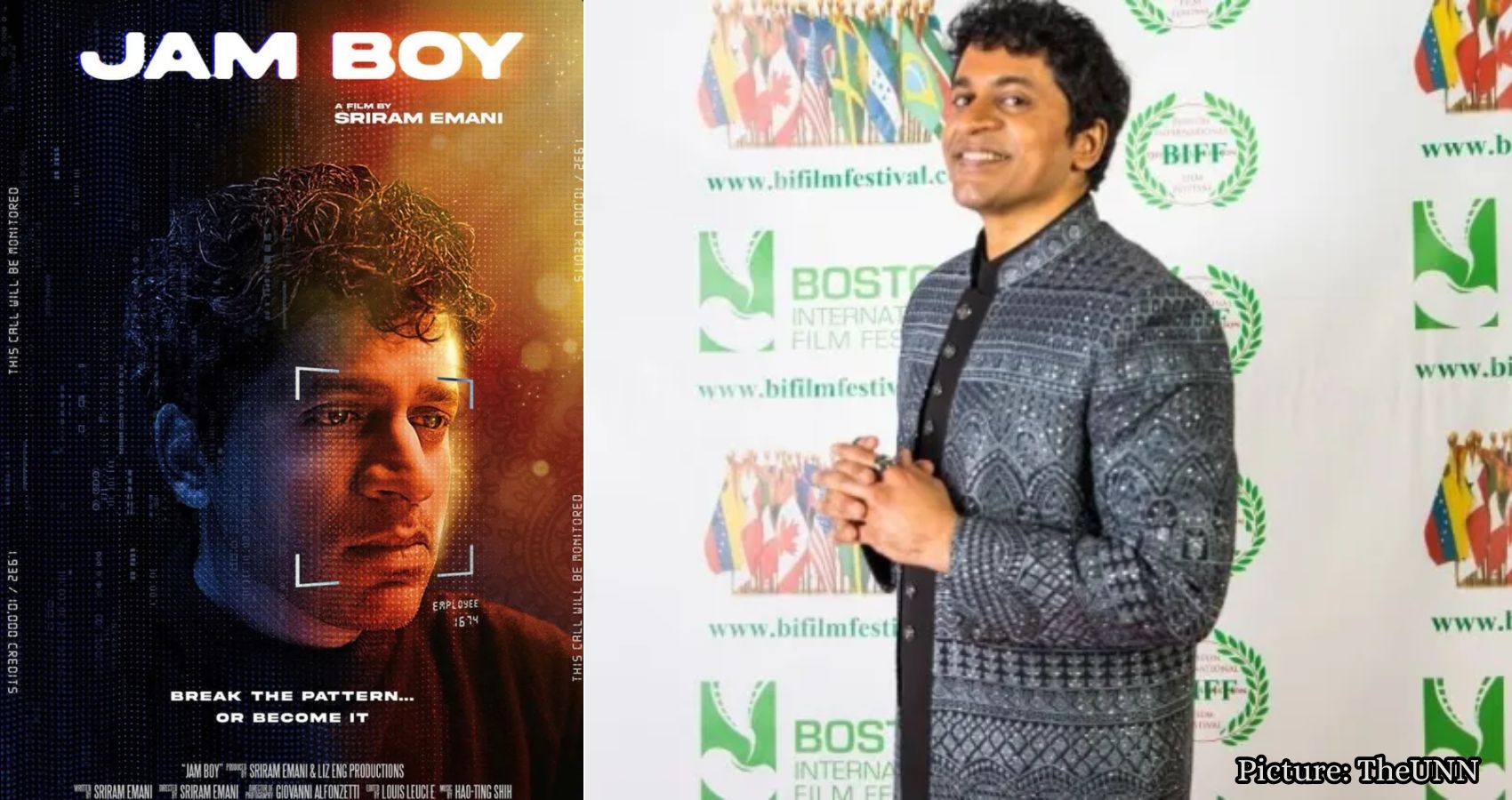
A new film by Boston-based immigrant Sriram Emani challenges the model-minority narrative, exploring the complexities of identity and belonging for South Asians in America.
A new film by Boston-based immigrant Sriram Emani is dismantling the model-minority concept, offering a poignant exploration of identity and belonging.
Tempers between India and Pakistan had barely cooled following a brief but dangerous military confrontation between the two nuclear powers in May 2025 when an Indian and a Pakistani met for coffee in Boston, bonding over a shared love for films.
During that coffee session, I—a Pakistani creative—and Indian writer-director Sriram Emani discussed his new short film, *Jam Boy*.
I first met Sriram in 2025 at the Boston Asian American Film Festival and later attended a private screening of *Jam Boy*, which has a runtime of 22 minutes. The film serves as an introspective science-fiction allegory about the psychological cost of belonging to America’s “model minority.”
The title of the film draws from a disturbing colonial urban legend: in one version, British golfers in India would smear a local servant with jam and position him nearby, turning his body into a human lure for mosquitoes. Whether rooted in literal history or apocryphal folklore, this image captures a recognizable colonial arrangement where one person is dehumanized for the comfort of another.
The optics of our meeting carried their own irony. Here were two caramel-skinned individuals with similar jet-black hair, our names almost anagrams of one another, sitting on neutral Bostonian ground while belonging to opposite sides of an inflamed border. While we were acutely aware of the quarrels between our nations, I doubt any eavesdropper overhearing our conversation would have been able to tell us apart.
This irony became an appropriate entry point into *Jam Boy*. Sriram’s film distills the conflict between preserving cultural memory and pursuing opportunity in the West—a dilemma familiar to South Asians, regardless of which side of the India-Pakistan divide they hail from.
Beyond the sensationalist news and cricket rivalries lies the shared experience of sacrificing connections with family and trading traditions for the chance to succeed in corporate America.
The image of an Indian and a Pakistani sitting together lingers in my mind, chatting not as representatives of rival nations but as two creatives striving to remain whole in a country that often flattens our differences.
What sets *Jam Boy* apart is its reversal of the conventional immigrant narrative. Many stories focus on crossing borders, securing visas, and ultimately achieving the elusive “American Dream.” In contrast, Sriram’s protagonist—a crucial Indian coder played by Emani himself—faces a different terror: the struggle to return “home” to India after proving his worth to his new country.
Set in a near-future America, the film presents an opaque credit system that dictates whether Sriram can work, travel, or visit his ailing mother. He adheres to the rules, believing that good performance will eventually earn him his freedom. However, the demands of his worth grow deeper the more utility he exhibits, and his goal remains perpetually elusive.
The film’s power lies in how little exaggeration it requires. While the flashy algorithms, bureaucratic restrictions, and invisible ceilings are heightened within the narrative, any immigrant watching it will recognize the suffocating feeling that emerges when Sriram’s character reveals his desire to visit home.
At its thematic core, *Jam Boy* dismantles the model-minority concept and reframes the immigrant’s idea of success in the West as mere compliance with the status quo. Immigrants are often praised for being useful, productive, and undemanding, while the system quietly discourages dissent. Acceptance is only feigned at the cost of making oneself smaller.
If you were to give image and music to the conversation Sriram and I shared at the coffee shop, it might resemble *Jam Boy* itself. The current socio-political climate surrounding immigrants in the U.S. suggests we are merely opportunists seeking to impose our presence without any intention of leaving. Nothing could be further from the truth.
The nuance that remains invisible in media narratives about immigrants does not revolve around the challenges of reaching the West. Instead, it concerns the freedom to return to where we came from once we are established here. Common conversations about our longing for chai hangouts and time with family often segue into discussions about visa types, citizenship processes, and the latest national travel restrictions.
It is no surprise that *Jam Boy* has garnered acclaim at various film festivals and critical conversations. The film emerges at a time when the traditional narrative of the “resilient” immigrant no longer resonates with the modern zeitgeist.
Sriram’s film is uncomfortable, claustrophobic, and deliberately unresolved, mirroring the experience it depicts, which rarely offers a clean resolution. It articulates a struggle that remains underrepresented: not the battle to enter but the fight to remain whole once inside.
*Jam Boy* had its world premiere at the DC Independent Film Festival in February 2026, where it won the Best Film award. It also screened at the Boston International Film Festival in April, receiving the Indie Soul Special Recognition award.
Sriram and I have maintained our connection, continuing to support each other in our creative endeavors. The image of an Indian and a Pakistani sitting together remains with me, not as representatives of rival nations but as two creatives striving to remain whole in a country that often flattens our differences.
*Jam Boy* raises essential questions for our diaspora about why it takes a third aggressor for us to recognize our shared struggles and why it is only in such situations that we remember our common ideas of home.
According to Sapan News, this story was first published on their platform.