
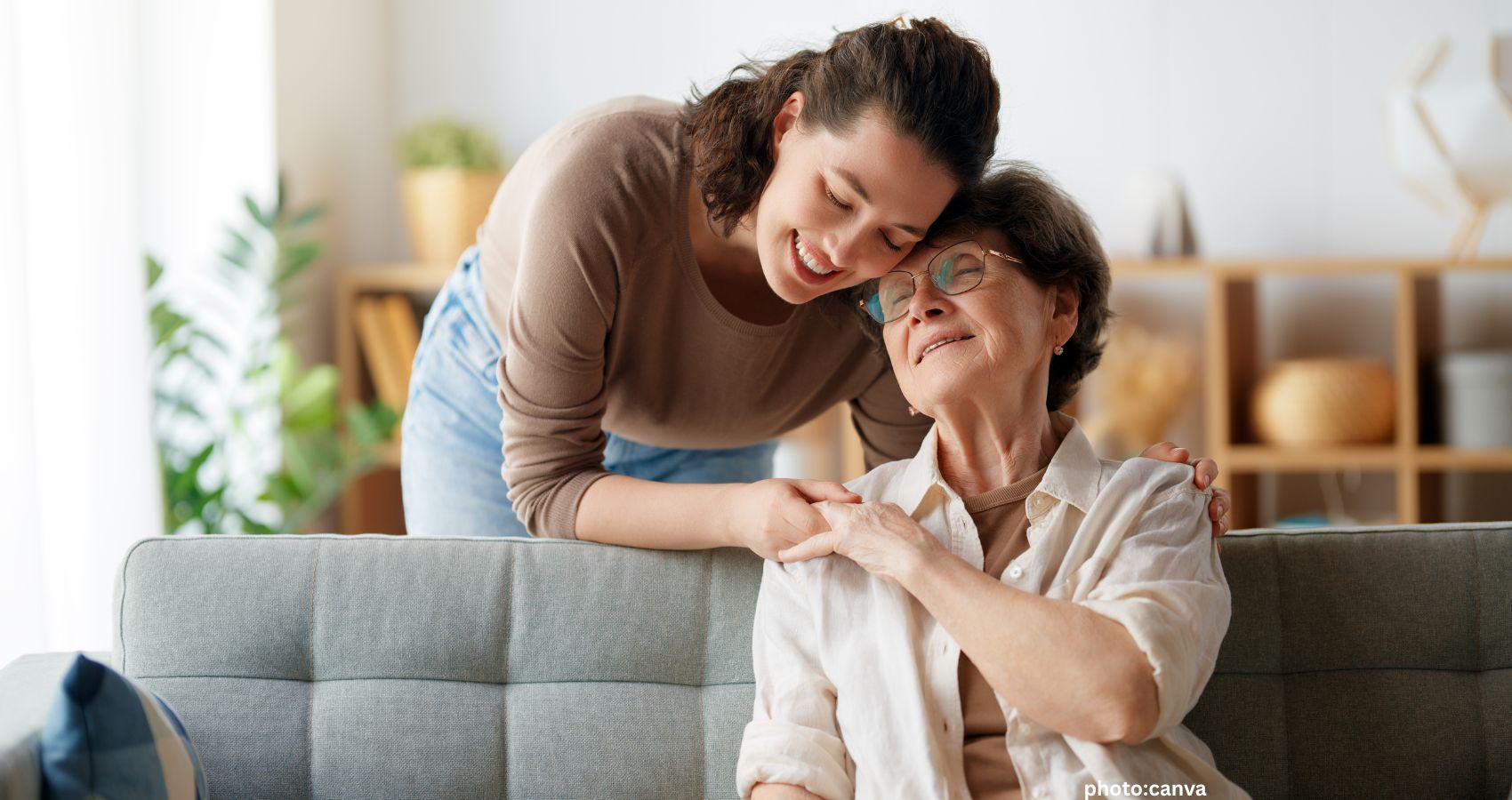
South Asian families in the Bay Area face significant challenges in caregiving for aging relatives, navigating cultural, linguistic, and systemic barriers in the U.S. healthcare system.
In 2006, 71-year-old Sarada Ramachandran left India to live with her daughter, Jaya Padmanabhan, in the Bay Area. Jaya hoped her Amma (mother), affectionately known as Paati (grandma) to family and friends, would spend her later years surrounded by loved ones, secure in the care, companionship, and support of family.
Inviting an aging parent to be part of the household is not unusual in South Asian families; it reflects deeply rooted traditions that emphasize family responsibility, respect for elders, and strong intergenerational bonds.
Jaya and Paati’s story illustrates the emotional and practical challenges immigrant families face as they navigate the limitations of U.S. health and eldercare systems, which are often ill-equipped to meet the cultural, linguistic, and social needs of South Asian seniors.
What neither mother nor daughter could foresee at the time was the complex, often disruptive arc of aging that would eventually take Sarada from India to America and back again, as the realities of caregiving, declining health, and fragmented support systems reshaped their plans.
Initially, Paati remained largely independent. “She was my support system when I needed her, and I was hers,” recalls Jaya. Paati helped with meals, laundry, and household chores. She even attended her granddaughters’ basketball games and plays.
While speaking English posed challenges, Paati was determined to communicate. A native Tamil and Malayalam speaker, she had previously taught herself to read and speak some English. In the U.S., she managed to explain her ailments to doctors in simple English and even passed her U.S. Citizenship test at age 79.
Yet beneath that resilience was a lifelong sense of displacement that formed in childhood and followed Paati into her adult years. Jaya notes that her mother never developed the skills needed to cope independently. Without strong social networks, she grew dependent, first on her husband, and then on her daughter. “Moving to the U.S. meant her entire support system was reduced to one person – and that was me,” Jaya explains.
Paati formed connections to her new environment through food, cooking traditional South Indian dishes for her family. “It’s something she could call her own,” says Jaya. However, as her daughters left for college, Jaya noticed her mother’s world was shrinking, leading to fewer daily interactions with people.
Concerned about her mother’s emotional state, Jaya arranged for Paati to spend two weeks at Priya Living, an independent living facility for Indian-origin seniors in Milpitas, while the family was away on vacation. “She hated every minute of it,” Jaya recalls, noting that Paati showed little interest in socializing with other residents and refused to cook for herself.
Technology also posed a challenge. Paati relied heavily on television but struggled with unfamiliar controls. Friends who visited her at Priya Living reported that she had “her bags packed and waiting at the door.” Jaya realized that an essential part of her mother’s well-being was being around her.
In 2020, as the pandemic surged, Paati suffered a serious fall that left her with multiple pelvic fractures. “2020 just completely changed our lives,” Jaya says. As her mother struggled through recovery, Jaya became a full-time caregiver while continuing to work long hours.
To combat her mother’s growing sense of isolation, Jaya insisted on taking her for drives after work, even when Paati was reluctant. However, cooking homemade meals became increasingly difficult. Once a week, Jaya ordered South Indian food from a local catering service, but Paati’s eating patterns limited Jaya’s choices when exploring care homes for her mother.
As Paati’s health declined, she needed help with daily activities, including bathing, meal preparation, medications, and doctor appointments. The onset of dementia compounded these challenges, prompting Jaya to hire a caregiver.
Jaya’s search for a caregiver began at the height of the COVID-19 pandemic. When she contacted Santa Clara County’s In-Home Supportive Services (IHSS) program, she received no response. Eventually, she turned to care.com to find a caregiver on her own, including Paati in the interviews to gauge her engagement with prospective caregivers.
After several interviews, Jaya hired Angie Marquez, whose gentle manner resonated with Paati. However, as Paati’s dementia progressed, she became more demanding, often calling for Angie every few minutes. Jaya struggled to balance her work schedule with caregiving responsibilities, especially during evenings and weekends.
As Paati’s hearing loss accelerated, she stopped watching television and listening to the Carnatic music she once loved. The decline in her health led to severe bouts of insomnia and hallucinations, further complicating Jaya’s caregiving role.
As caregiving demands intensified, Jaya began considering alternatives. Assisted living facilities for South Asians were nonexistent in the Bay Area, and the few she explored were prohibitively expensive, costing between $100,000 and $150,000 annually.
In January 2022, Jaya decided to take her mother back to India, where Paati moved into a 24-hour assisted living facility that offered Tamil-speaking caregivers and South Indian vegetarian meals. “Ultimately, I just wanted her to be happy,” Jaya reflects.
However, once Jaya left, Paati’s experience grew challenging. She felt confined, developed bed sores, and lost her peripheral vision. Jaya’s attempts to stay connected through daily calls were met with resistance, and eight months later, Paati passed away.
Paati’s story reflects a growing challenge facing multicultural communities across the United States. As ethnically diverse, aging populations grow, so will the need for culturally responsive healthcare and caregiver support services. Jaya wishes she had found an assisted living facility in the Bay Area specifically for older South Asians, with trained caregivers and culturally familiar support.
“If there had been something like that,” she says, “I think I would have jumped at it.”
This story was written with support from the Solutions Journalism Network, according to India Currents.