
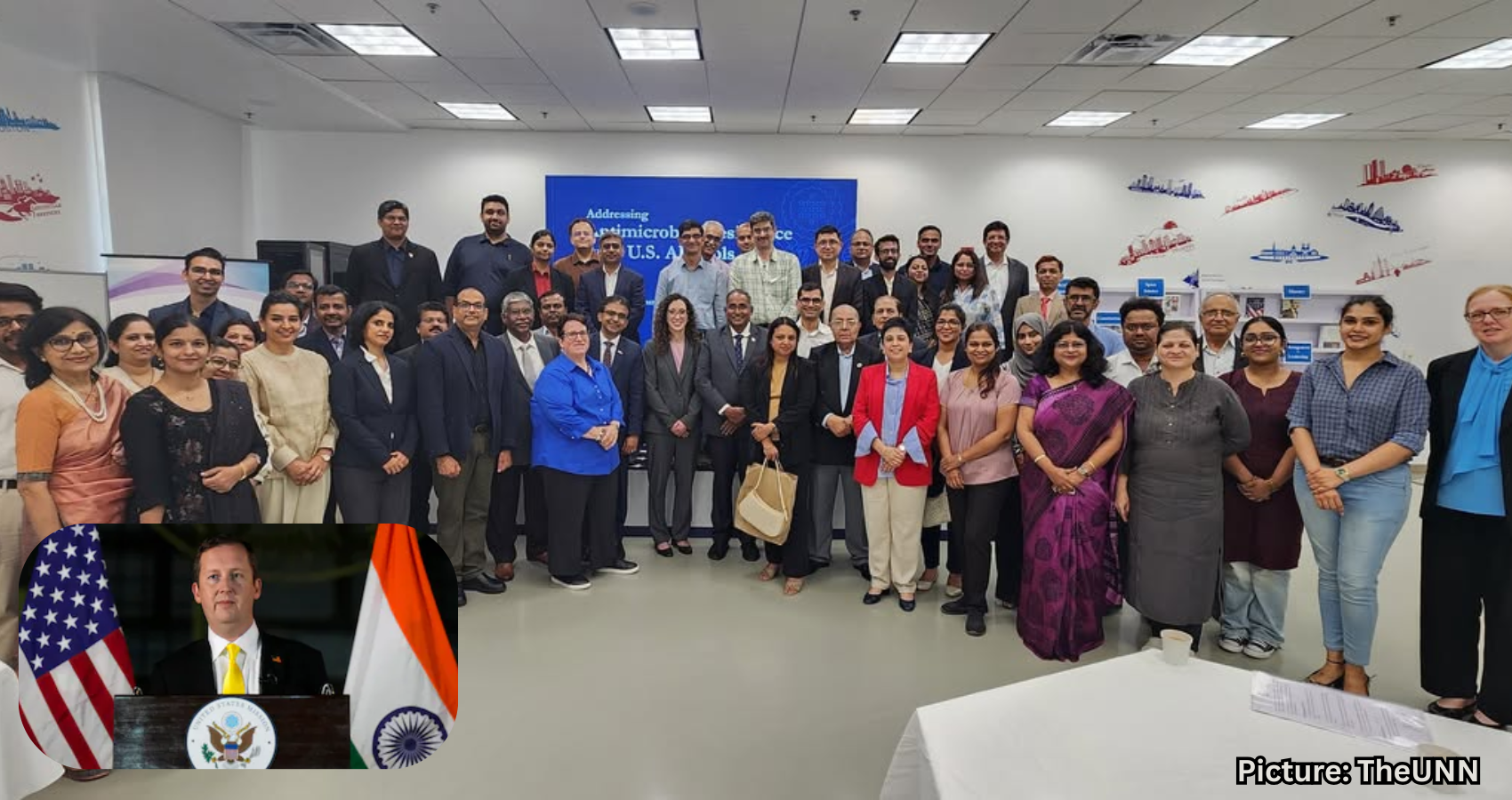
U.S. Ambassador Sergio Gor underscores India’s crucial role in healthcare and technology during a summit, announcing that a bilateral interim trade agreement is nearing completion.
NEW DELHI — At a high-level bilateral research and innovation summit held at the Indian Institute of Technology (IIT) Delhi, U.S. Ambassador to India Sergio Gor delivered a compelling endorsement of the growing economic and technological partnership between the United States and India. He characterized this relationship as one of the most significant structural anchors of the 21st century.
Gor addressed an audience comprising academics, industry leaders, and policymakers during the event titled “Advancing Partnership in Research and Innovation,” which was organized under the U.S.-India TRUST (Transforming the Relationship Utilizing Strategic Technologies) Initiative. His remarks highlighted India’s indispensable role as a trusted partner within America’s restructured global supply chain framework.
In his address, Gor presented detailed macroeconomic data to illustrate the transformation in bilateral relations, emphasizing that the partnership extends beyond geopolitical considerations to encompass deep economic integration. He pointed to critical sectors such as life-saving pharmaceuticals and massive investments in digital infrastructure as evidence of this evolving relationship.
One of the most striking points Gor made was regarding the reliance of the U.S. healthcare system on Indian manufacturing. He revealed that approximately 40% of the United States’ generic medicine imports now come from India, a figure that underscores a deliberate policy choice by Washington to strengthen supply chain integration with democratic allies.
“On pharmaceuticals, we import close to 40 percent of our generics from India,” Gor stated, emphasizing the trust that the U.S. has in India’s pharmaceutical sector. “These are critical life-saving ingredients that are needed in the United States.”
This acknowledgment carries significant economic implications. The global pharmaceutical landscape has faced numerous challenges, including supply chain disruptions and regulatory bottlenecks. By solidifying its reliance on Indian manufacturers, the U.S. is signaling long-term support for India’s pharmaceutical industry, which has made significant strides in meeting stringent U.S. Food and Drug Administration (FDA) standards.
Gor also discussed the broader trade trajectory between the two nations, noting that bilateral trade in goods and services has expanded from $20 billion to over $220 billion in just over two decades. He emphasized that this growth reflects deeper engagement and stronger economic integration rather than mere inflationary increases.
“In just over two decades, bilateral trade has grown from 20 billion dollars to over 220 billion dollars in goods and services,” Gor remarked. “That’s not just volume; it reflects deeper, broader engagement and stronger economic integration.”
A key catalyst for further economic integration is the impending interim trade agreement, which Gor announced is nearing completion. He indicated that only about 1% of the treaty remains to be finalized. This announcement follows a recent diplomatic visit by U.S. Secretary of State Marco Rubio, aimed at resolving long-standing trade frictions between the two countries.
“Our current interim trade agreement is on the table for us to finalize that will unlock prosperity for both of our countries,” Gor explained, expressing optimism that the trade deal will be signed in the coming weeks or months.
In addition to government-to-government agreements, Gor highlighted a significant increase in direct capital investments from American technology firms in India. This surge is seen as a testament to India’s stability and potential as a destination for global investment, particularly as companies adopt “friend-shoring” strategies to mitigate supply chain risks.
He pointed to substantial commitments from major technology companies, including:
Amazon, which plans to invest $35 billion in India by 2030 to support AI-driven digitization initiatives and expand logistics networks.
Microsoft, which has pledged $17.5 billion to enhance its hyperscale cloud infrastructure in India, including the construction of next-generation data centers.
Google, which is developing a subsea cable landing terminal project valued at approximately $15 billion to improve international data transmission speeds.
Gor noted the scale of these investments has sparked interest from international financiers, many of whom inquire about India’s safety as an investment destination. He affirmed that India is indeed a secure choice for investment, citing its inclusion in the Pax Silica initiative, a U.S.-backed technology and supply chain network for trusted partners.
The economic momentum described by Gor aligns with the broader goals of the U.S.-India TRUST Initiative, which aims to streamline bureaucratic hurdles and facilitate the transfer of advanced technologies between the two nations. This initiative is expected to enhance collaboration in various sectors, including aerospace and critical minerals.
As the technical negotiating teams prepare for crucial discussions in New Delhi, the overarching message from the U.S. diplomatic corps is clear: the relationship between the United States and India has evolved into a foundational pillar of global supply chain security. By leveraging India’s extensive pharmaceutical and tech manufacturing capabilities alongside America’s capital resources and consumer markets, both democracies are establishing an economic corridor designed to withstand macroeconomic volatility well into the future.
According to Source Name, this partnership is set to redefine the landscape of international trade and technological collaboration.