
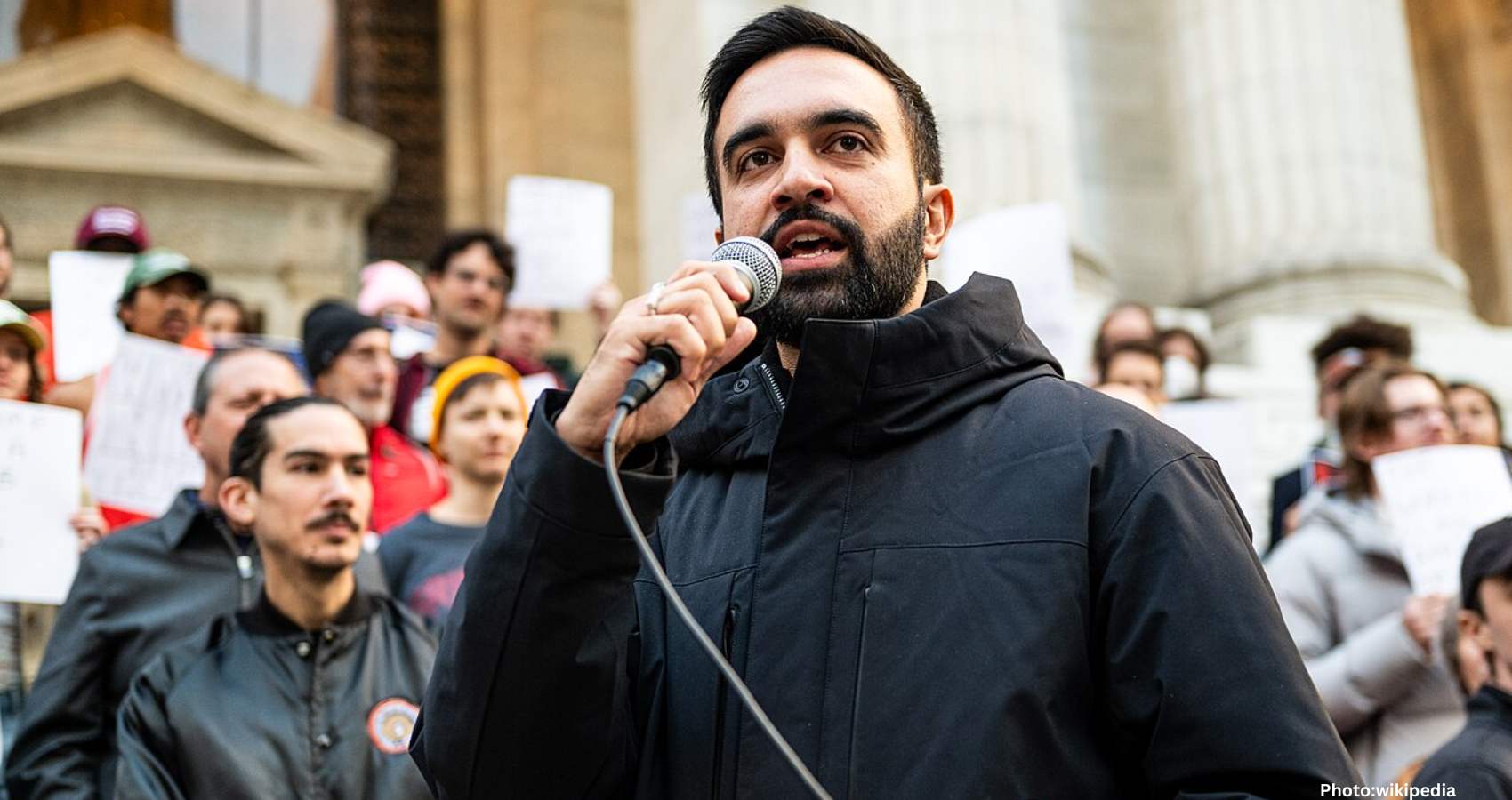
Zohran Mamdani’s election as New York City’s first Asian American mayor marks a significant milestone in the city’s evolving political landscape, reflecting the growing diversity of its communities.
Zohran Mamdani’s historic election as New York City’s first Asian American mayor has sparked conversations about representation and identity within the city’s diverse political landscape. His victory is seen as a moment of pride and empowerment, particularly for Asian American communities that have long sought greater political representation.
John Liu, a New York State Senator and the first Asian American to win a City Council seat, recalls the early days of his political career. Liu, who took office in 2002, often joked about being the head of the Asian caucus in the City Council, despite being the only member. He became a go-to resource for colleagues seeking to understand Asian cultures and traditions, highlighting the challenges of representation in a city with over 30 different ethnic groups and more than 50 languages spoken.
Today, Asian American and Pacific Islander (AAPI) communities are the fastest-growing racial group in New York City. This demographic shift has fueled a demand for political representation that reflects the city’s rich diversity, particularly in areas like Queens, where many Asian ethnoburbs have developed. Liu, who is Taiwanese American, made history again in 2010 when he became the first Asian American citywide official by winning the comptroller’s race.
After a decade of waiting, Mamdani’s election in 2025 marked a significant milestone for Asian Americans in New York City. Liu endorsed Mamdani during the Democratic primary, emphasizing the importance of representation in the city’s leadership. Their shared experience as alumni of the Bronx High School of Science further solidified their connection, with Mamdani expressing admiration for Liu’s pioneering role in city politics.
Mamdani’s popularity among Asian American communities is well-documented, with two-thirds of his initial endorsements coming from AAPI organizations. Exit polls indicated that Asian Americans overwhelmingly supported the Democratic socialist candidate, even as some Asian neighborhoods shifted politically in other recent elections. Notably, Mamdani’s campaign focused on substantive issues rather than solely on his identity, a sentiment echoed by fellow Councilmember Chi Ossé.
Ossé, who represents a historically Black district and is of Caribbean and Chinese descent, believes that Mamdani’s success is rooted in his commitment to improving the lives of all New Yorkers. While identity is an important aspect of representation, Ossé emphasizes that it should not be the sole focus of a candidate’s platform. His perspective on identity politics has evolved since becoming the first Gen Z member of the City Council, recognizing the need for broader representation beyond just shared racial or ethnic backgrounds.
The City Council has seen a shift in representation, with eight members of the Black, Latino, and Asian Caucus (BLAC) identifying as Asian American. Co-chair Christopher Marte, who represents a district that includes Chinatown, believes the council now better reflects the city’s diversity. He points to the increased awareness of AAPI issues following the pandemic and the Stop Asian Hate movement, which highlighted long-standing inequities and the need for representation.
Despite progress, challenges remain in ensuring that all voices within the AAPI community are heard. Ossé notes that mixed-race individuals and non-East Asian Americans often feel overlooked in discussions about representation. He highlights the need for greater inclusivity within the political landscape, as well as in media and cultural narratives that often focus primarily on East Asian experiences.
Mamdani’s identity has been scrutinized throughout the election cycle, with discussions surrounding his South Asian heritage and Muslim beliefs. His background is complex; born in Uganda to Indian parents from different ethnic and religious backgrounds, Mamdani embodies a multifaceted identity that reflects the diversity of the AAPI community. Liu underscores that Mamdani’s roots in India contribute to his status as an Asian American, reinforcing the idea that representation encompasses a wide range of experiences.
As May marks Asian American, Pacific Islander, and Native Hawaiian Heritage Month, Mamdani’s role as mayor serves as a reminder of the contributions of AAPI communities to New York City. During a recent visit to a Sunnyside AAPI night market, Mamdani expressed pride in serving a city shaped by generations of immigrants and their diverse cultures.
“New York City is home to more than 1 million Asian American and Pacific Islander New Yorkers whose cultures, labor, and communities make this city more vibrant, dynamic, and alive every single day,” Mamdani stated. His presence at community events has resonated with constituents, many of whom view him as a symbol of hope and representation.
As the city continues to navigate its complex political landscape, Mamdani’s election signifies a new chapter for Asian Americans in New York City. His leadership not only reflects the changing demographics but also highlights the ongoing struggle for representation and equity within the broader community.
This article was first published in the Amsterdam News.