
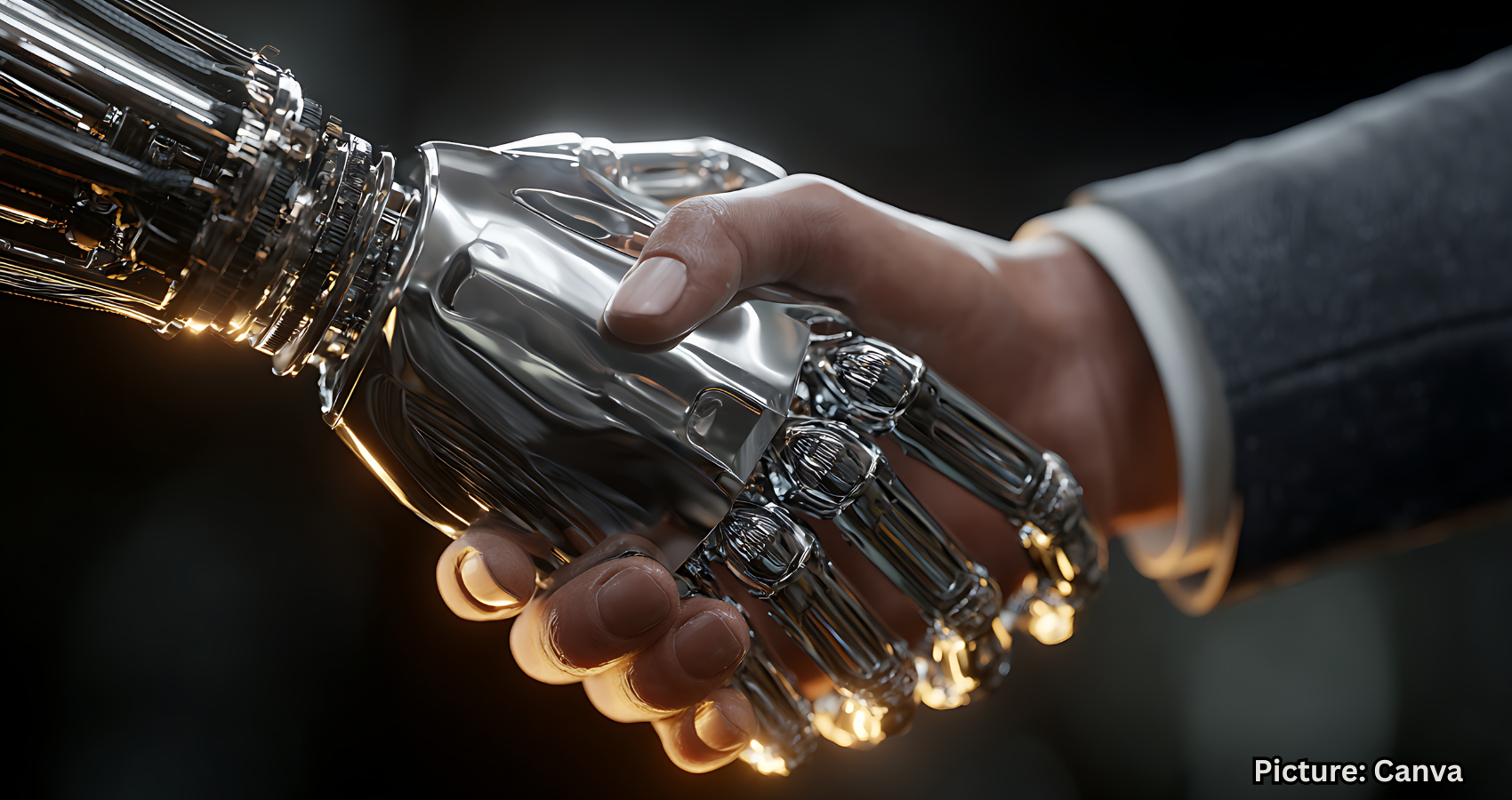
Genesis AI has introduced GENE-26.5, a groundbreaking robotic brain that enables general-purpose robots to perform complex tasks with human-like dexterity.
Genesis AI, a global leader in full-stack robotics, has unveiled its latest innovation, GENE-26.5, a robotic brain designed to empower general-purpose robots to execute intricate physical tasks with dexterity comparable to that of humans. This advanced system combines a robotics foundation model with a human-scale dexterous robotic hand and a new data engine, enabling robots to learn from human movements and perform tasks that demand precision and coordination.
The co-founder and president of Genesis AI, Theo Gervet, describes GENE-26.5 as a system that directs the robot’s actions. “Think of GENE-26.5 like a robotic brain that takes in information and tells the robot what to do,” Gervet explained. “It is the industry’s most advanced robotic brain, with capabilities that have been demonstrated through videos showcasing GENE-26.5 executing some of the most complex tasks ever performed by robots.”
Despite advancements in robotics, many robots still struggle with intricate hand movements, often limited to repetitive tasks in controlled environments. Gervet emphasized the importance of adaptability in real-world scenarios. “We’ve developed a way to feed GENE-26.5 massive amounts of data about how human hands move, allowing it to instruct our robotic hands on how to mimic human actions,” he stated. “For instance, powered by GENE-26.5, our robotic hands can follow a 20-step process to make a full omelet from start to finish.”
Human hands are adept at making constant adjustments, even during simple actions, a level of control that has proven challenging for robots to replicate. Gervet illustrated this with the example of solving a Rubik’s Cube, where grip strength and micro-adjustments are critical. “Imagine you’re playing with a Rubik’s Cube. You have to hold it with the perfect grip strength. If you grip it too loosely, you’ll drop it,” he noted. “Even when holding the cube, your hands are never perfectly still; they are constantly making micro-adjustments to ensure it remains balanced.”
To address this challenge, Genesis AI has developed a robotic hand that closely mirrors the human hand in both form and function. This hand is paired with a glove that captures motion and pressure, facilitating the transfer of information about human hand movements to the robotic hands. “The glove system allows us to directly capture the intricate details of how human hands move during various tasks,” Gervet explained. “Our robotic hands are designed to match human hands precisely, making the data we collect highly effective.”
Notably, Genesis AI’s glove technology is significantly more cost-effective than traditional options, being 100 times cheaper and demonstrating up to five times greater data collection efficiency. Gervet pointed out that robots have historically faced a data problem when it comes to physical tasks. Unlike AI chatbots that can access vast amounts of information from the internet, robots have lacked sufficient training data.
To overcome this obstacle, Genesis AI has created a robotic hand that accurately replicates the human hand, allowing for effective data transfer. In addition to data collected from the glove, the company utilizes videos of humans wearing camera headbands to observe hand movements, as well as extensive internet video resources. Their simulation system serves as a significant accelerator, enabling AI to train in a fully virtual environment before transitioning to real-world applications, thereby expediting the testing and improvement processes.
Initially, Genesis AI anticipates deploying its technology in industrial settings, such as warehouses and manufacturing facilities. “We see our technology being used in industrial applications first, followed by potential use in home environments,” Gervet stated. He outlined a phased rollout strategy, starting with industrial use and eventually expanding to the service industry and consumer markets. “In a home setting, our technology could assist with daily chores, allowing people to focus on what they truly enjoy,” he added.
Safety testing is a fundamental aspect of the development process for Genesis AI. “Our technology undergoes extensive testing and validation, beginning with simulations that run millions of scenarios, followed by controlled real-world environments,” Gervet explained. “It has to earn its way into the room.” The company adheres to established safety standards and industry regulations governing robot operations around people.
Currently, Genesis AI is showcasing individual components of its technology, including the robotic brain, hands, and data collection system, with plans to unveil a fully integrated general-purpose robot that combines all elements. Early deployments with select partners could commence later this year.
Gervet envisions a future where robots equipped with this technology can help address critical labor shortages, thereby increasing productivity and allowing humans to engage in more meaningful, creative work. “The beauty of the technology is that it’s designed to fit seamlessly into the human world,” he remarked. “Humans will still lead, but our capabilities will not be limited by our physical abilities.”
As robots become more adept at handling objects in a manner similar to humans, the prospect of having such technology in homes raises intriguing questions. Will consumers embrace the idea of robotic assistance in their daily lives, or will it feel like an unwelcome intrusion? This ongoing evolution in robotics is poised to transform various sectors, and the implications of these advancements will be felt in ways that may not be immediately apparent.
For further insights, refer to Fox News.