
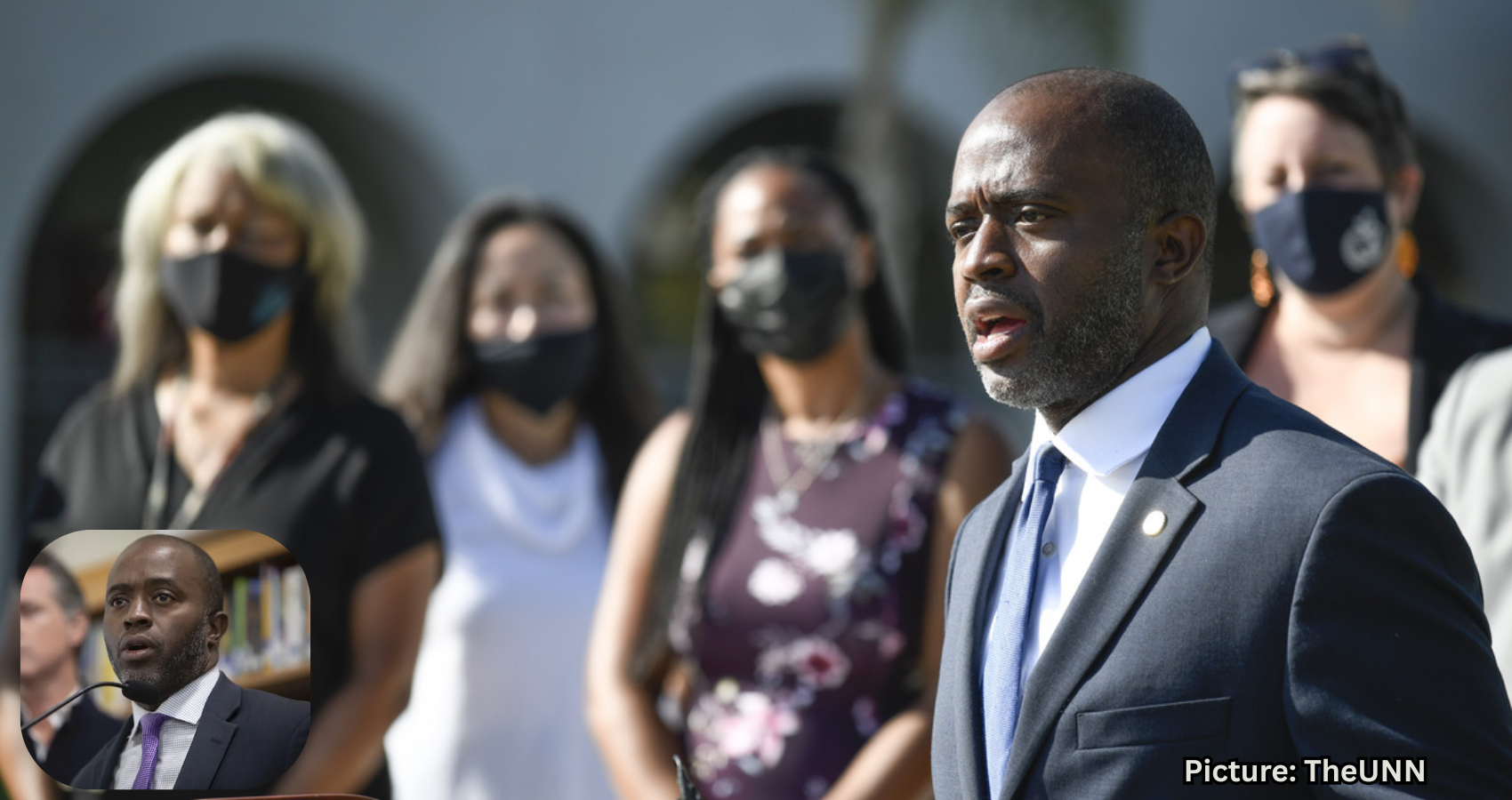
California Superintendent of Public Instruction Tony Thurmond is campaigning for governor with a focus on housing, health care, and cost-of-living relief, aiming to address the economic challenges faced by working families.
California Superintendent of Public Instruction Tony Thurmond is positioning his campaign for governor around key issues such as housing, health care, and cost-of-living relief. He argues that the economic pressures confronting working families should shape the state’s priorities.
In an interview hosted by American Community Media on April 30, Thurmond expressed optimism, stating, “A better California is possible and that we have to build it together.” He outlined a platform aimed at expanding housing opportunities, reducing costs, and increasing access to health care services.
The race to succeed Gov. Gavin Newsom, who is term-limited, has attracted a diverse group of candidates under California’s top-two primary system. This system allows all candidates to appear on a single ballot, with the two highest vote-getters advancing to the November election, regardless of party affiliation. As the June 2 primary approaches, the outcome remains uncertain due to the crowded field of candidates.
Thurmond is one of several Democrats vying for the position, competing against notable figures such as Xavier Becerra, Katie Porter, former Los Angeles Mayor Antonio Villaraigosa, investor Tom Steyer, and San Jose Mayor Matt Mahan. Republican candidates include Steve Hilton and Chad Bianco.
A recent CBS News poll revealed a fragmented landscape, with Hilton leading at 16%, followed closely by Steyer at 15%, Becerra at 13%, Bianco at 10%, and Porter at 9%. Notably, over a quarter of voters remained undecided, and Thurmond registered at just 1% in the survey.
Addressing concerns about his campaign’s low standing, Thurmond emphasized the importance of voter engagement over polling numbers. “I just don’t think that polls elect anyone. People do,” he remarked, affirming his commitment to remain in the race until Election Day. “My name is on the ballot. I’m in it to the end. And I’m running to win,” he added.
In a competitive field, Thurmond has carved out a platform centered on economic equity. He has proposed ambitious plans to build 2 million housing units, support single-payer health care, and raise taxes on billionaires to fund tax credits for working- and middle-class Californians. “My plan is to help our state build two million housing units, and to make sure that Californians have access to good-paying jobs,” he stated.
Thurmond linked these priorities to his personal background, sharing that he grew up facing financial hardship after losing his mother at the age of six. “We used free lunches, food stamps, and government cheese,” he recalled, emphasizing that education ultimately transformed his life.
On immigration, Thurmond expressed his commitment to limiting enforcement actions in sensitive areas and expanding protections for undocumented residents. “I was the first candidate to call for abolishing ICE,” he noted, advocating for a pathway to citizenship. He also highlighted policies designed to keep immigration enforcement out of schools, stating, “To date, we have not had ICE in our schools.”
Thurmond’s support for universal health care is deeply personal, stemming from the loss of his brother due to lack of health coverage. “No person should lose their life simply because they don’t have health insurance,” he asserted, calling for a system that prioritizes patient care over profit.
Affordability is a pivotal issue in the race, particularly concerning the rising costs of housing, transportation, and essential goods. Thurmond emphasized that while the state cannot directly lower prices, it can create conditions that support cost reductions. “The governor and the state can’t just make prices go down,” he explained, “but we can create conditions that ultimately will support bringing costs down.”
He described California’s housing shortage as “a crisis of supply and demand,” asserting that expanding construction is essential for reducing costs over time.
As the race intensifies leading up to the June primary, Thurmond faces the challenge of translating his working-class message into broader appeal within a crowded and dynamic field—where visibility and recognition may play as crucial a role as policy in determining who advances.
This interview is part of a series hosted by American Community Media, providing ethnic media outlets with direct access to gubernatorial candidates on pressing issues such as immigration, health care, and affordability ahead of the June primary, according to India Currents.