
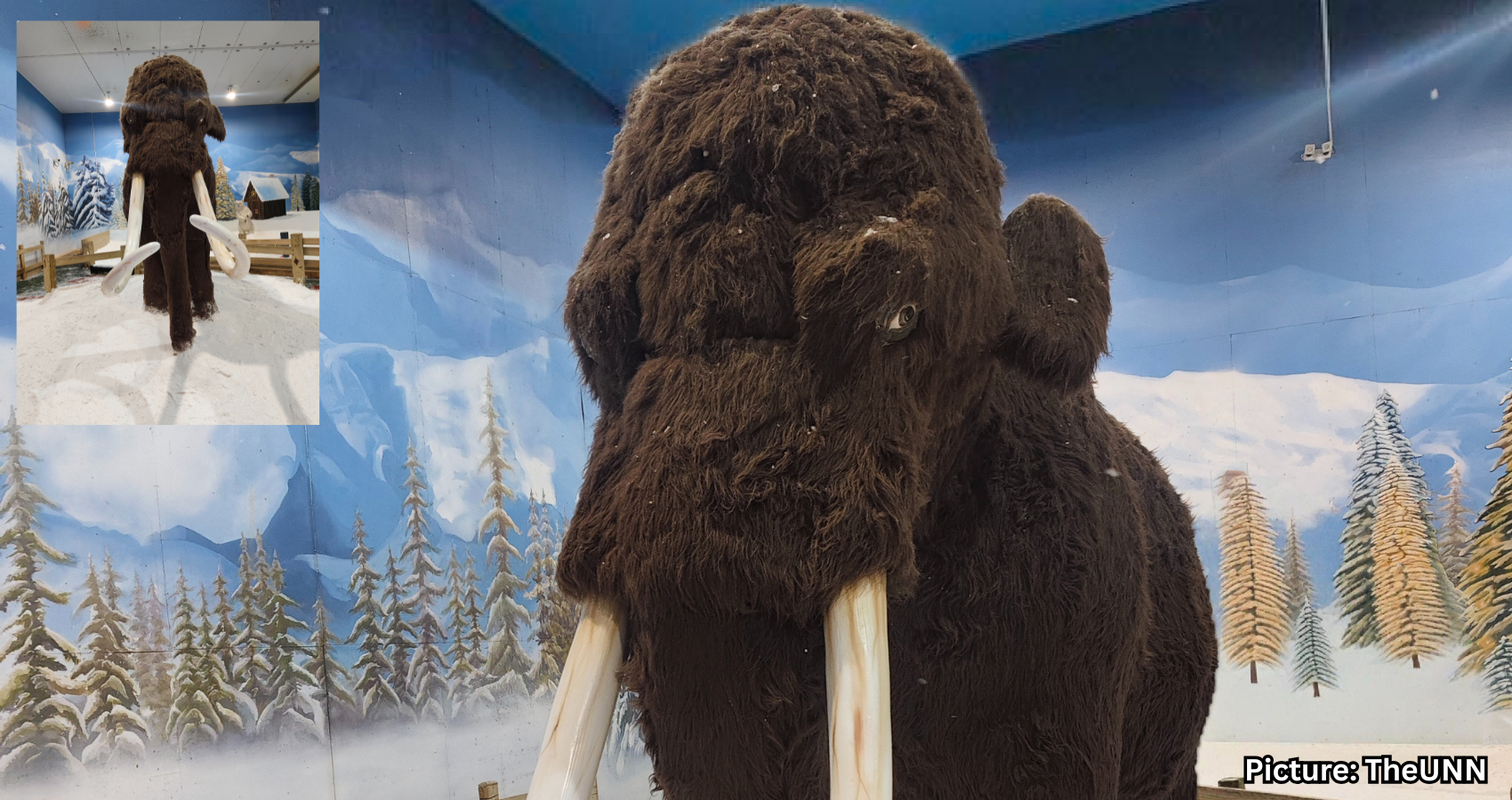
A well-preserved baby mammoth, nicknamed “Yana,” was recently dissected by Russian scientists, revealing insights into its life over 130,000 years ago.
A female baby mammoth, affectionately named “Yana,” was dissected by Russian scientists at North-Eastern Federal University in Yakutsk on March 27. This remarkable specimen dates back more than 130,000 years and was preserved in permafrost until its discovery last year in the cold region of Yakutia, Russia.
Stunning images from the necropsy depict a team of scientists gathered around the 397-pound mammoth, which bears a striking resemblance to a modern baby elephant. The creature’s mouth was open, and its trunk was curled as researchers carefully examined its skin.
Initially, scientists estimated that Yana lived around 50,000 years ago. However, further analysis of the permafrost layer where she was found led to an updated dating of over 130,000 years.
Maxim Cherpasov, head of the Lazarev Mammoth Museum Laboratory, shared insights with Reuters about Yana’s life. He noted that the mammoth was just over a year old at the time of her death. Unfortunately, her remains had already been partially consumed by predators when she was unearthed.
“As a rule, the part that thaws out first, especially the trunk, is often eaten by modern predators or birds,” Cherpasov explained. “Here, for example, even though the forelimbs have already been eaten, the head is remarkably well-preserved.”
The discovery of a well-preserved mammoth is a rare occurrence, though not entirely unprecedented. In June 2024, a fisherman stumbled upon a mammoth bone along the banks of the Raba River in Książnice, near Gdów, Poland. Additionally, in August of the same year, a fossil collector found a portion of a Columbian mammoth tusk in an embankment in Madison County, Mississippi.
This recent dissection of Yana not only provides a glimpse into the life of this ancient creature but also contributes to the broader understanding of mammoths and their existence during the Ice Age.
According to Reuters, the findings from Yana’s dissection may offer valuable insights into the environmental conditions and ecological dynamics of the time in which she lived.