
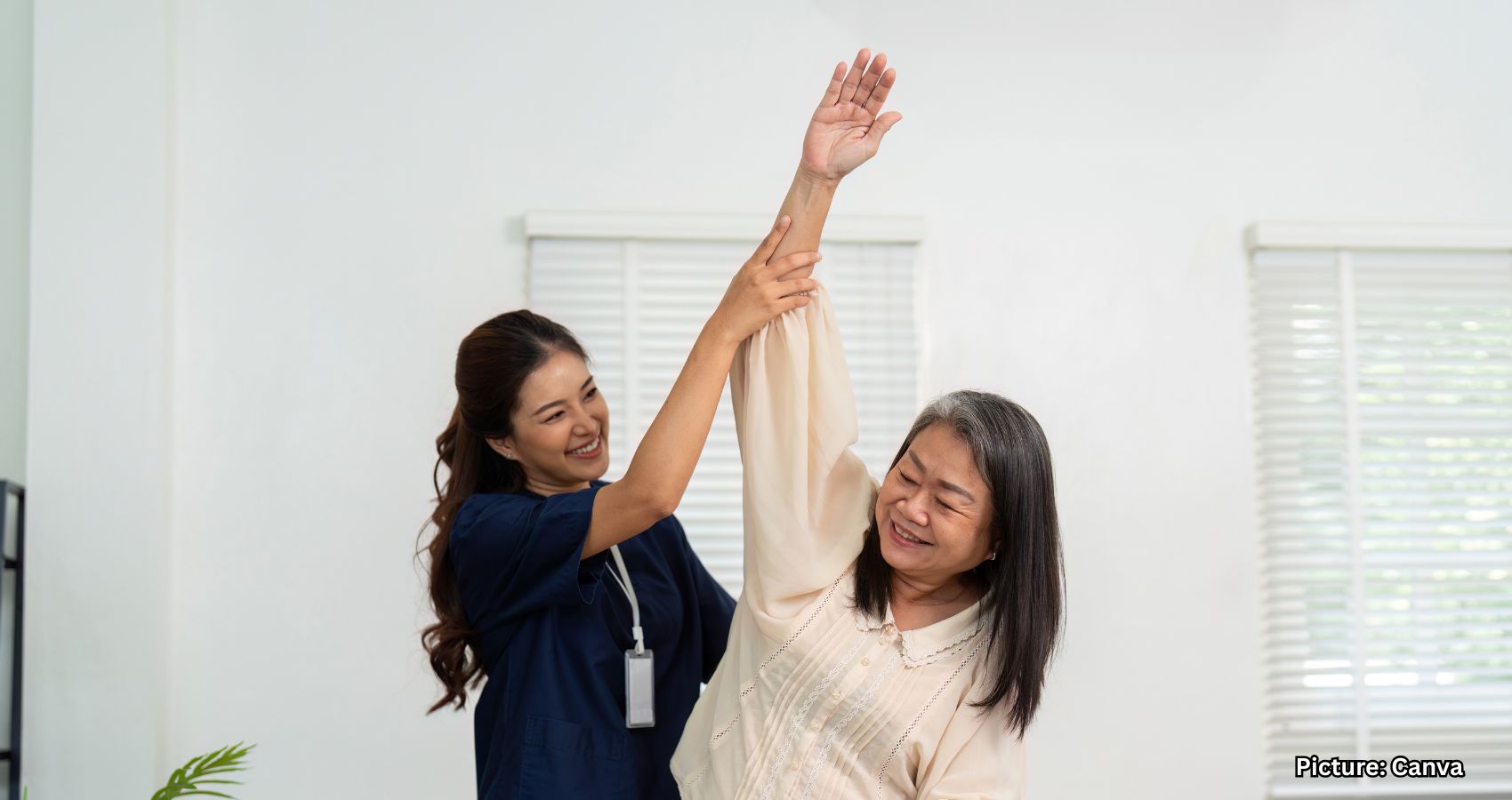
Empowering yourself to improve health and wellbeing involves setting realistic goals and adopting sustainable habits that enhance both lifespan and health span.
As the New Year unfolds, people around the globe embrace it with hope and optimism, often resolving to prioritize their health. However, research indicates that between 50% and 80% of individuals abandon their New Year’s resolutions by the second Friday of the year, a day now referred to as “Quitter’s Day.” Instead of succumbing to this trend, consider adopting a lifelong goal to enhance your health and wellbeing through small, realistic, and measurable steps.
A successful and enduring strategy involves the concept of ‘habit stacking,’ popularized by author S.J. Scott. According to James Clear, the best-selling author of Atomic Habits, the key is to identify the first small step and focus on integrating it into your routine. This process should be repeated with subsequent small steps, creating a sustainable approach to health improvement. As a health professional aptly puts it, “it’s a marathon, not a sprint.”
While there are aspects of health that remain beyond our control, such as genetics, it is essential to recognize that lifestyle choices and environmental factors play a more significant role in determining health outcomes. Professor David Wishart from the University of Alberta emphasizes that while genes can influence health and disease risk, their impact is often minimal. “The vast majority of diseases, including many cancers, diabetes, and Alzheimer’s disease, have a genetic contribution of 5 to 10 percent at best,” he notes. Thus, lifestyle choices and surroundings are crucial in shaping health outcomes.
“Good genes help, but good habits help more,” states Eyleen O’Rourke, a professor of biology and cell biology at the University of Virginia. The ability of our cells to respond to damage and rejuvenate is vital for maintaining health and youthfulness. Factors such as diet, stress, and exercise significantly influence this cellular function, accounting for approximately 90% of our risk for various illnesses. Research suggests that the ability to repair damaged cells has a substantial impact on longevity, contributing around 75% to the overall influence on lifespan.
In addition to individual behaviors and biological traits, societal-level factors, known as the social determinants of health, also play a significant role in health outcomes. These non-medical factors encompass the conditions in which individuals are born, grow, work, live, and age. The U.S. Centers for Disease Control and Prevention (CDC) describes these determinants as a wide array of forces and systems that shape daily life, including economic policies, social norms, and political systems.
Many of these determinants are beyond individual control. For instance, most people have little say in where they are born or raised, and their current living and working conditions significantly influence access to healthcare and its quality. Economic stability, education access, neighborhood environment, and social support all contribute to health and wellbeing. Access to clean air and water, safe living conditions, and green spaces are vital for better health outcomes and longer life expectancy.
Despite these factors, it is crucial not to feel daunted. Dr. Sofiya Milman, a professor of medicine and genetics at the Albert Einstein College of Medicine, asserts, “There’s very clear evidence that for the general population, living a healthy lifestyle does extend the lifespan.” She adds that individuals can take proactive steps to ensure their lifespan—the total number of years lived—aligns with their health span, which refers to the years lived free of chronic disease. Dr. Linda Ercoli of the UCLA Longevity Center echoes this sentiment, emphasizing the importance of lifestyle choices.
So, what can individuals do to enhance their health span and improve their overall wellbeing? A review of various studies suggests that adopting a holistic lifestyle that includes physical activity, sound nutrition, strong social connections, and effective stress management is the most effective way to promote good health and longevity. The following seven keys can guide this journey:
First, maintain a healthy diet that emphasizes a predominantly plant-based, Mediterranean-style approach rich in fruits, vegetables, whole grains, legumes, and healthy fats. Portion control and minimizing processed foods, sugar, and salt are also crucial.
Second, engage in regular physical activity. Consistent, moderate exercise, such as brisk walking, gardening, and strength training, is essential for preserving muscle mass, cardiovascular health, and independence. Cardiorespiratory fitness and strength are strong predictors of longevity.
Third, avoid smoking and limit alcohol consumption. Smoking is a significant risk factor for numerous diseases, while moderate alcohol intake may be associated with better health outcomes, although its overall benefits remain a personal decision.
Fourth, maintaining a healthy weight is vital for reducing the risk of chronic conditions like diabetes, heart disease, and certain cancers.
Fifth, prioritize adequate sleep and stress management. Aim for 7-9 hours of quality sleep and manage chronic stress through techniques such as meditation, yoga, or mindfulness to support overall health.
Sixth, foster strong social connections. Research indicates that relationships with family, friends, and community are powerful predictors of physical health and wellbeing, comparable in importance to not smoking.
Finally, cultivate a sense of purpose and optimism. Having a clear sense of meaning in life and a positive mindset is associated with lower risks of heart disease and improved overall health outcomes.
It is never too late to establish a personalized, lifelong routine. Even if health issues are present, individuals can take steps to enhance their quality of life and extend their health span. Empower yourself to take control and embark on your journey toward better health and wellbeing. Integrate the four Ls—Live, Laugh, Learn, and Love—into your daily routine as essential tools for a stress-free life.
Investing in health and wellbeing is not optional; it is the foundation for achieving and enjoying everything else in life.
According to India Currents.