
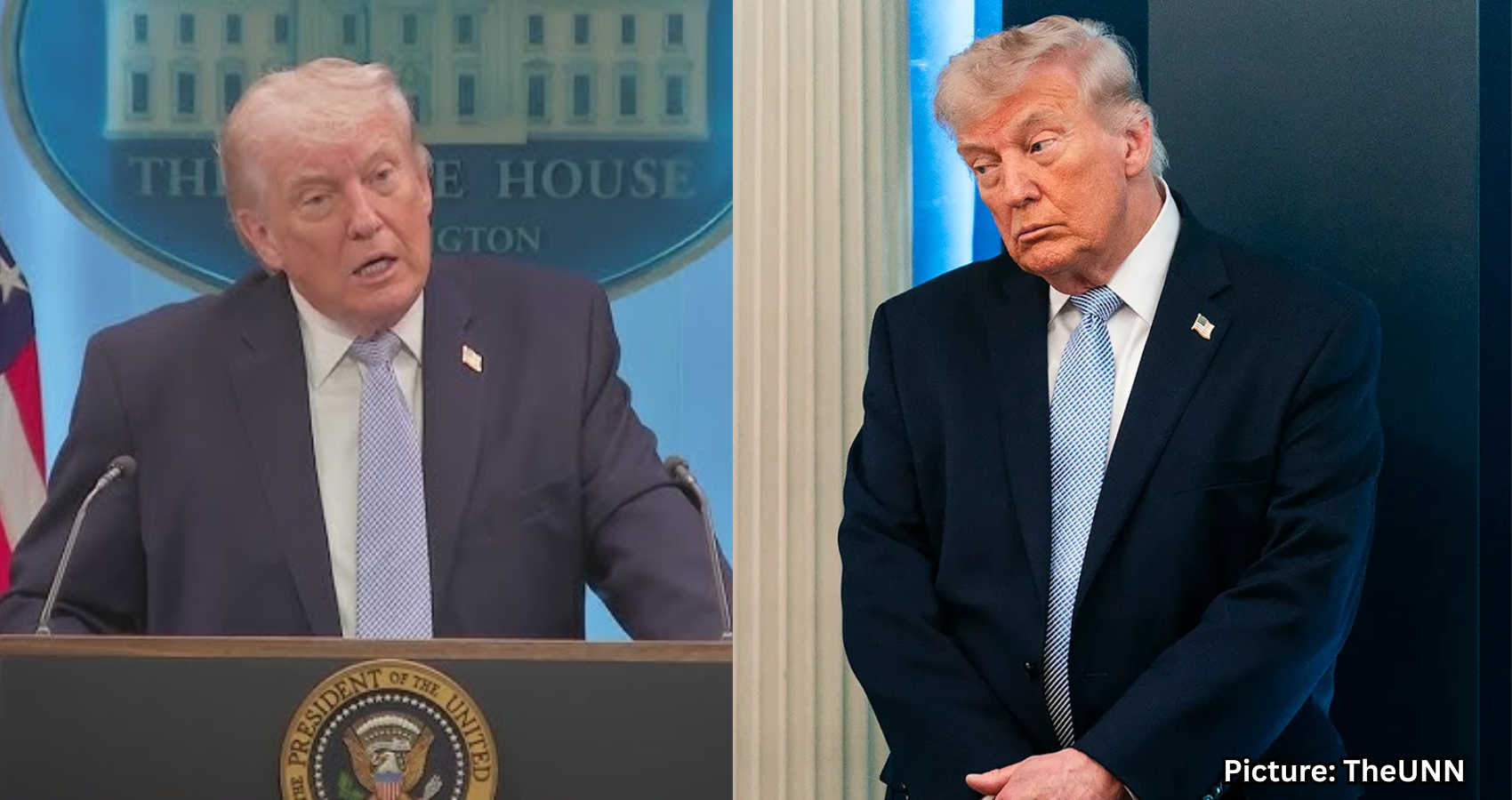
President Trump has announced a two-week suspension of military actions against Iran, contingent upon Iran’s agreement to reopen the Strait of Hormuz amid ongoing diplomatic negotiations.
President Donald Trump declared on Tuesday a two-week suspension of military escalation against Iran, contingent upon Iran’s agreement to reopen the strategically vital Strait of Hormuz. This announcement was made via a post on his Truth Social platform, just hours before a deadline he set for Iran to respond to U.S. demands.
Trump’s statement followed discussions with Pakistani Prime Minister Shehbaz Sharif and Field Marshal Asim Munir, which he described as leading to a “double-sided ceasefire.” He emphasized that the U.S. had already met its military objectives regarding Iran and was making progress toward a “definitive agreement concerning long-term peace with Iran and peace in the Middle East.”
In his post, Trump indicated that Iran had submitted a ten-point proposal, which he characterized as a “workable basis on which to negotiate.” He noted that many contentious issues between the U.S. and Iran had been reconciled, and the two-week timeframe would allow for the finalization of the agreement. He expressed pride in representing the U.S. and Middle Eastern nations in what he deemed a significant step toward resolving a long-standing conflict.
In response, Iranian Foreign Minister Seyed Abbas Araghchi issued a statement on behalf of Iran’s Supreme National Security Council, expressing gratitude to the Pakistani officials involved in the negotiations. The statement indicated that if military actions against Iran were halted, their armed forces would also cease defensive operations. It further noted that safe passage through the Strait of Hormuz would be coordinated with Iran’s military, taking into account technical limitations.
The White House confirmed that Israel had agreed to the two-week ceasefire, following a request from Prime Minister Sharif for an extension of the deadline for negotiations. Sharif detailed on social media that the ceasefire would extend to “Lebanon and elsewhere,” highlighting the broader regional implications of the negotiations.
Sharif called for U.S. and Iranian leaders to convene in Islamabad to continue discussions aimed at reaching a conclusive agreement. He praised the involvement of both parties in demonstrating “remarkable wisdom and understanding” and expressed optimism regarding the potential for sustainable peace.
However, the situation remains fluid, with the White House stating that no decisions had been finalized regarding in-person talks. White House Press Secretary Karoline Leavitt noted that discussions were ongoing but that nothing would be confirmed until an official announcement was made by the President.
Earlier on Tuesday, Trump had issued a stark warning that “a whole civilization will die tonight never to be brought back again” unless a significant breakthrough occurred. He reiterated that reopening the Strait of Hormuz was a pressing priority following the rejection of an earlier ceasefire proposal.
The closure of this vital maritime route has severely disrupted global oil supplies, causing prices to surge since the onset of hostilities over five weeks ago. Iran has reportedly allowed only a limited number of vessels to pass through the strait, imposing fees as a means of demonstrating their seriousness in negotiations.
On the diplomatic front, a resolution championed by Bahrain aimed at reopening the strait was blocked at the United Nations, thwarted by vetoes from Russia and China, despite support from a dozen countries, including the U.S. and several European nations.
Trump’s aggressive rhetoric regarding military action against Iran has drawn criticism from both sides of the political aisle in the U.S. Several Democratic lawmakers have called for invoking the 25th Amendment in response to his threats, while some Republicans have also voiced their disapproval. Notably, Texas GOP Representative Nathaniel Moran condemned Trump’s remarks, stating, “I do not support the destruction of a ‘whole civilization.’ That is not who we are, and it is not consistent with the principles that have long guided America.”
Senator Lisa Murkowski (R-Alaska) echoed these sentiments, asserting that Trump’s threats could not be justified as mere negotiation tactics and constituted an affront to American ideals. The controversy surrounding Trump’s statements reflects a broader concern about the implications of military escalation and the potential for significant loss of life and geopolitical instability.
As the situation continues to evolve, the international community remains watchful of developments in U.S.-Iran relations and the potential for lasting peace in the region, according to GlobalNet News.