
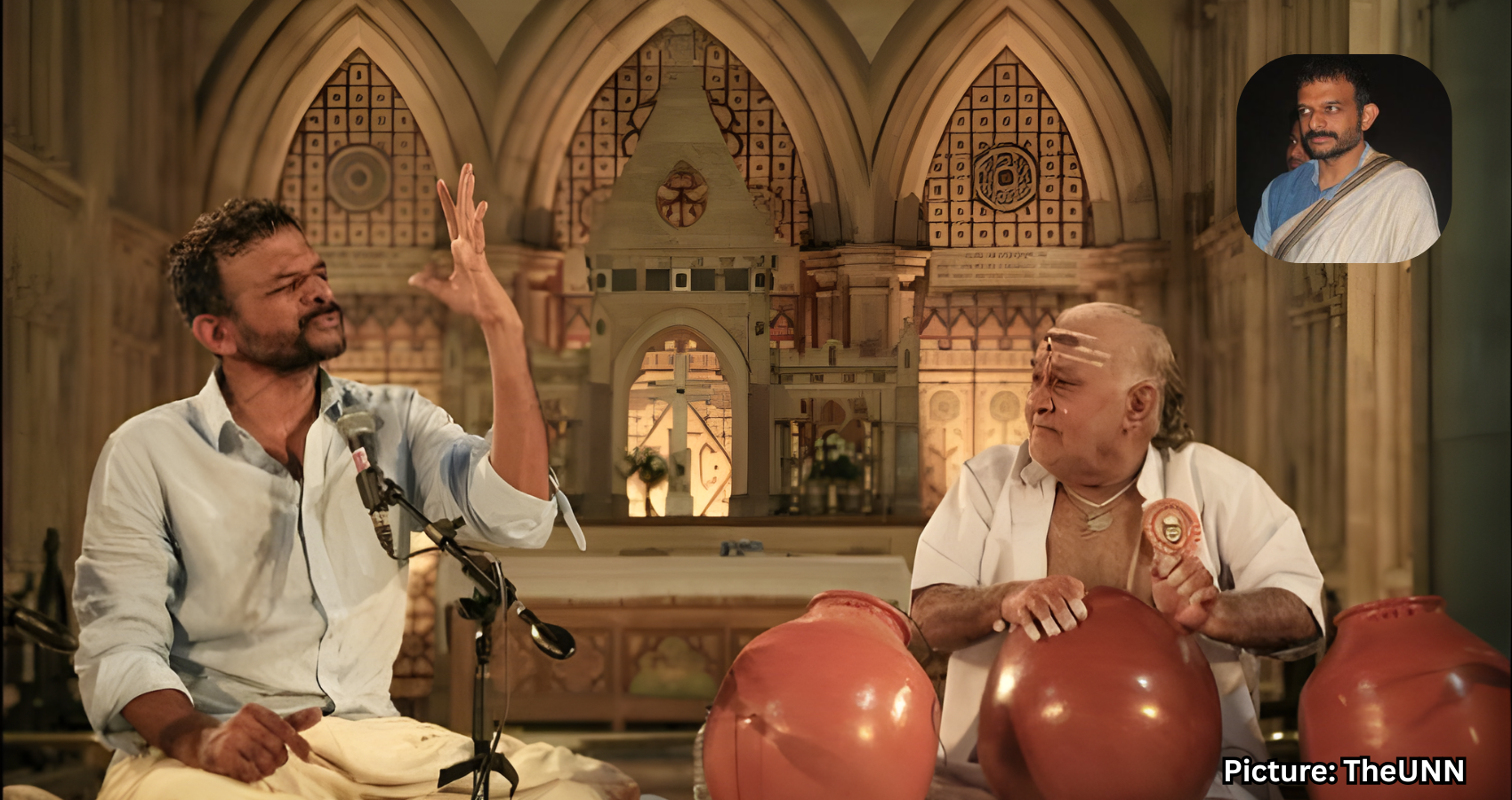
T.M. Krishna addresses viral claims of replacing ‘Rama’ with ‘Allah’ in his music, asserting the importance of inclusivity in Carnatic music and reflecting on his activism and artistic journey.
Acclaimed Carnatic musician T.M. Krishna, known for his bold artistic choices and social activism, recently addressed viral claims suggesting he has replaced the name ‘Rama’ with ‘Allah’ in his performances. The recipient of numerous accolades, including the prestigious Magsaysay Award and the 2024 Sangita Kalanidhi, Krishna has become a prominent figure not only in music but also in discussions surrounding social issues.
Krishna, who hails from a Brahmin background, has dedicated his career to amplifying marginalized voices, particularly those of Dalits. He often questions the privileges associated with his own upbringing, using his platform to challenge societal norms and advocate for inclusivity. His approach to Carnatic music is innovative; he integrates contemporary themes such as environmentalism and social reform into his performances, thereby expanding the genre’s traditional boundaries.
During a recent performance at the Indian Fine Arts Academy in San Diego, Krishna discussed his latest book, *We, the People of India: Decoding a Nation’s Symbols*, which reflects on India’s national symbols and the historical context surrounding them. He expressed concern over the current climate of hate and division in society, noting that the ideals of fraternity and respect for differing opinions have been overshadowed by anger and intolerance.
In an interview, Krishna shared insights into his creative process and the motivations behind his activism. He emphasized the need for empathy and understanding, particularly among those who have experienced marginalization. “When I meet Indians here, I often wonder why those who recognize their own struggles as minorities do not extend the same sensitivity to the challenges faced by minorities in India,” he said.
Krishna’s views on India’s national anthem also sparked discussion. He proposed that singing the anthem in various regional languages could foster a deeper emotional connection among citizens. “Every language has its own resonance,” he explained, suggesting that a multilingual approach could unify diverse linguistic communities through shared musical expression.
Despite facing criticism for his political stance, Krishna remains steadfast in his beliefs. He acknowledged that while some fans have distanced themselves due to his activism, others have been drawn to his music precisely because of it. “I think everyone has their entry and exit points,” he noted, highlighting the diverse audience that engages with his work.
Addressing the accusations of altering religious references in his music, Krishna firmly denied the claims. “I have NEVER done it in my life. It’s an outright lie that has been going on in social media for the last decade,” he stated. He clarified that while he sings songs that reference various deities, including Allah and Jesus, he has never replaced the name of Rama in traditional compositions. “Carnatic music does not belong to any one religion or section of society,” he asserted, advocating for a more inclusive interpretation of the art form.
Krishna’s commitment to social issues often comes with personal challenges. He has faced backlash and threats, which have affected his family. However, he remains resolute in his mission, stating that his wife and daughters fully support his activism. “They have never asked me to stop speaking,” he said, emphasizing the importance of standing up for one’s beliefs.
Reflecting on the controversies he has navigated, Krishna acknowledged the emotional toll they can take. “There are mornings when I feel helpless, thinking I’m just one person and questioning whether I can make a difference,” he admitted. Yet, he also finds solace in small moments of positivity that remind him of the impact of his work.
Krishna’s unique approach to Carnatic music has redefined concert formats, often opting for fewer, more in-depth explorations of ragas rather than adhering to traditional performance norms. This willingness to experiment has garnered both admiration and criticism, but he believes it is essential for the evolution of the art form.
As a musician, author, and activist, T.M. Krishna continues to challenge the status quo, using his voice to advocate for a more inclusive and empathetic society. His journey reflects a deep commitment to both his craft and the broader social issues that resonate within it, making him a significant figure in contemporary Indian culture.
For more insights into T.M. Krishna’s work and philosophy, refer to the interview facilitated by the Indian Fine Arts Academy, which has been a vibrant cultural institution in the U.S. for nearly two decades, promoting Indian classical arts.
According to India West.