
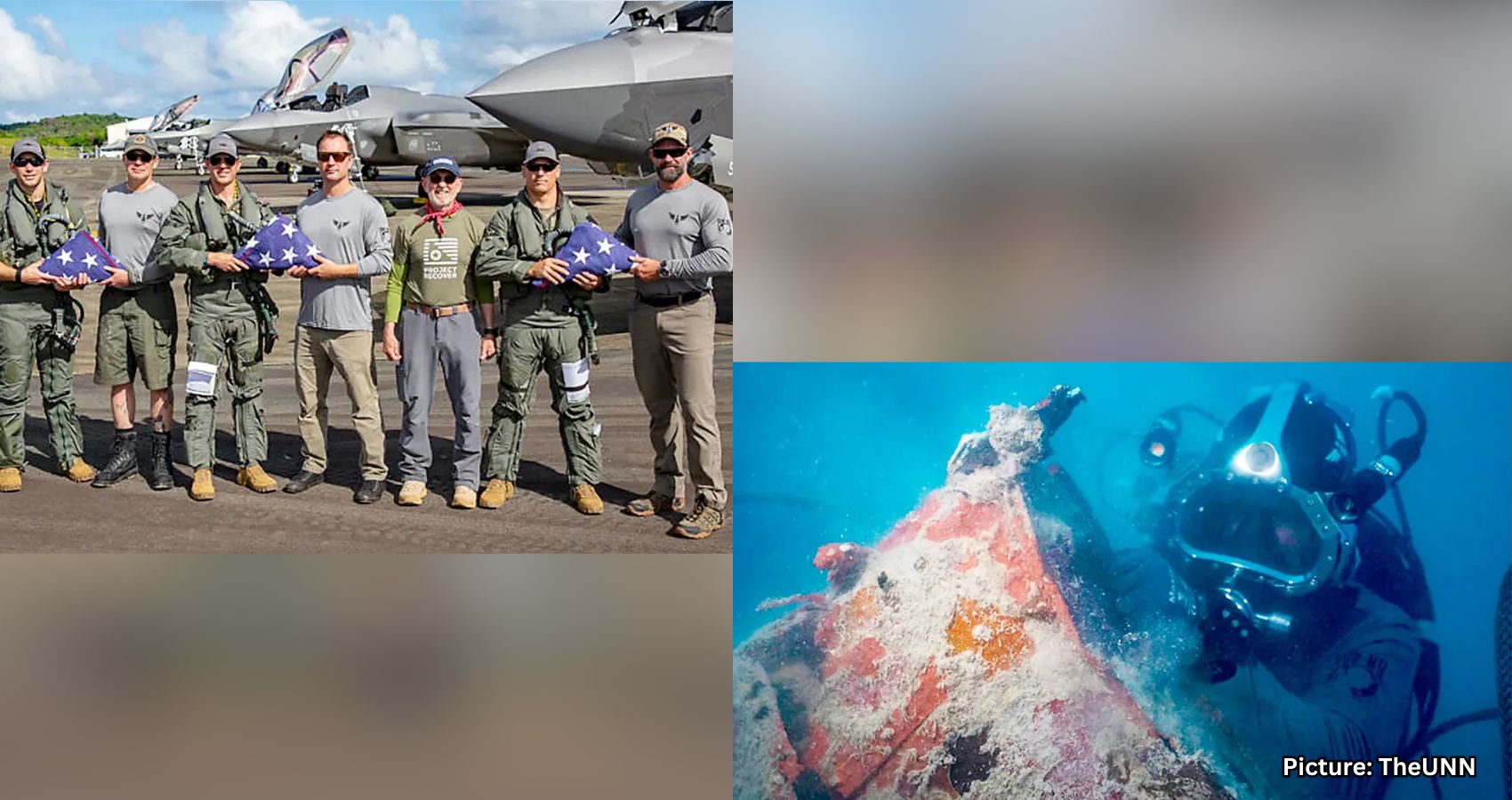
Project Recover employs advanced underwater technology to locate and repatriate missing service members from past conflicts, having successfully brought home 24 Americans to date.
Project Recover, a nonprofit organization dedicated to locating missing service members from previous conflicts, is utilizing advanced underwater technology to aid in its mission. The organization has successfully repatriated 24 Americans, contributing to the ongoing effort to account for more than 80,000 service members who remain unaccounted for.
According to the Defense POW/MIA Accounting Agency, research and technological advancements suggest that the remains of approximately 38,000 fallen veterans could potentially be recovered. Project Recover collaborates closely with the agency to conduct complex underwater missions aimed at bringing these service members home.
“This is a great American story here,” said former Navy Rear Admiral Tim Gallaudet, who also serves as a member of Project Recover’s advisory council. “Our work is to use technology, like underwater drones and scuba diving gear, to find the platforms that these members perished on and then do the DNA analysis of detecting and recovering their remains and matching them to those that are missing.”
Project Recover was founded by Dr. Patrick Scannon, who conceived the idea in 1993 while touring the Palau islands with his wife. During their visit, he discovered a downed World War II aircraft, which he described as a pivotal moment in his life. “That 65-foot wing essentially changed my life,” Scannon recalled in an interview.
Since its inception, Project Recover teams have identified numerous aircraft sites around the Palau islands, linked to nearly 100 service members who went missing in action. Gallaudet emphasized the challenges involved in these recovery missions, stating, “The recovery is difficult. We first have to find the aircraft or ships, and then we’ve got to go determine if there are any remains there and then ID them, match them to the service members.”
The Palau islands played a significant role during World War II, particularly in the U.S. effort to liberate the Philippines. The battle for Peleliu, which began in September 1944, was expected to last only a few days but extended to 74 days, resulting in heavy casualties on both sides. Over 1,800 Americans were killed, and more than 8,000 were wounded or went missing during the conflict.
Project Recover’s work has led to the recovery of remains from several service members, including those of Lt. Jay Manown, AOM1c Anthony Di Petta, and ARM1c Wilbur Mitts. The three men were on a bombing mission when their aircraft was struck by enemy fire and crashed into the ocean. “The plane was hit by enemy fire, and it burst into flames,” Di Petta’s niece, Suzanne Nakamura, recounted.
After locating the wreckage in 2015, Project Recover conducted multiple dives to recover the remains of the three service members. Gallaudet noted that the last of the remains was finally identified after extensive forensic analysis and DNA testing. A ceremony was held in Manown’s hometown in West Virginia, attended by the relatives of all three men.
The nieces of the service members have formed a close bond through this shared experience. “We’ve communicated beautifully and become friends through this experience and almost a sisterhood of type,” said Rebecca Sheets, Manown’s niece. Diana Ward, Mitts’ niece, expressed her joy in meeting the others in person, highlighting the emotional connection they share regarding their uncles’ sacrifices.
Project Recover has conducted over 100 missions across 25 countries, successfully repatriating 24 missing Americans and locating more than 200 others who remain unaccounted for. The organization is currently raising funds for a mission planned for 2026, which aims to search for a B-52 aircraft that disappeared during a training accident.
“It’s off the coast of Texas. We’ve not yet found the aircraft. And of those eight service members, they all had families,” Gallaudet explained. He noted that approximately 32 family members of the missing service members are still alive and seeking answers about their loved ones.
In addition to the 80,000 missing-in-action service members, there are around 20,000 who are unaccounted for due to training accidents. Unfortunately, the Defense POW/MIA Accounting Agency is unable to allocate funds for the search for the B-52, as the crash occurred during a non-conflict training mission.
The B-52 bomber disappeared in February 1968 during a routine training mission, and despite an extensive nine-day search, no trace of the aircraft was found. Gallaudet expressed optimism about locating the wreckage, stating, “This B-52 off the Texas coast hasn’t been located yet, but we think we know where the area is. We’re going to find it.”
To date, Project Recover has raised over $300,000 for the mission, with an additional $200,000 needed to continue the search for the eight service members. If the organization can locate the remains, the Defense POW/MIA Accounting Agency will be able to allocate resources for a recovery effort.
For more information about Project Recover and to support their mission, visit their website.