
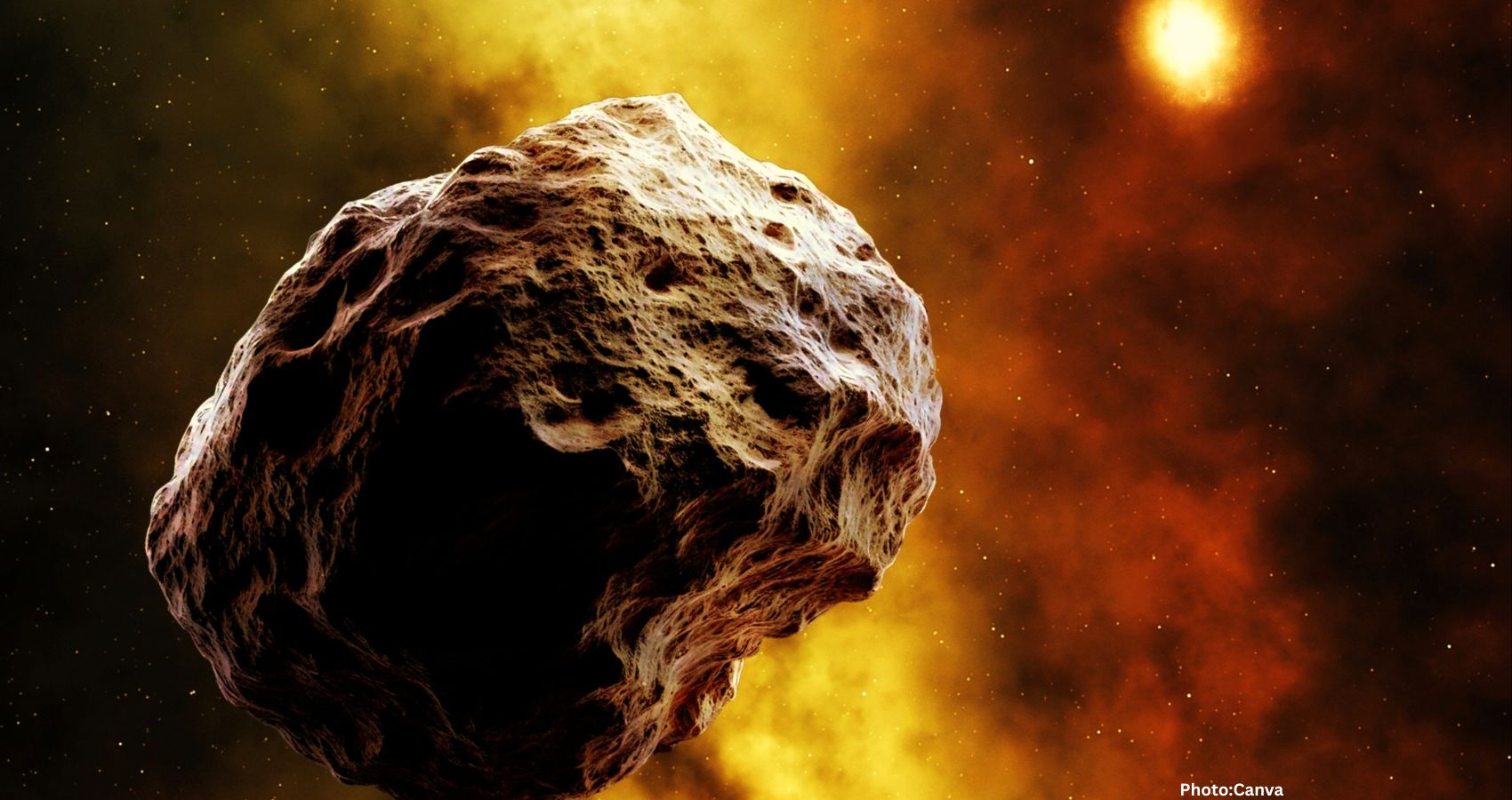
Astronomers recently identified a Tesla Roadster, launched into orbit by SpaceX in 2018, as an asteroid, leading to a swift retraction of the discovery.
Astronomers from the Minor Planet Center at the Harvard-Smithsonian Center for Astrophysics in Massachusetts mistakenly classified a Tesla Roadster, launched into orbit by SpaceX in 2018, as an asteroid earlier this month. This confusion arose shortly after the object was registered as 2018 CN41, which was promptly deleted on January 3 when it was confirmed to be Musk’s roadster.
The Minor Planet Center clarified on its website that the registry for 2018 CN41 was removed after it was determined that the orbit of the object matched that of an artificial satellite, specifically the Falcon Heavy Upper Stage carrying the Tesla Roadster. The center stated, “The designation 2018 CN41 is being deleted and will be listed as omitted.”
The Tesla Roadster was launched during the maiden flight of SpaceX’s Falcon Heavy rocket in February 2018. Initially, the vehicle was expected to enter an elliptical orbit around the sun, extending slightly beyond Mars before returning toward Earth. However, it appears to have exceeded the orbit of Mars and continued its trajectory toward the asteroid belt, as noted by Musk at the time.
When the roadster was misidentified as an asteroid, it was located less than 150,000 miles from Earth, which is closer than the moon’s orbit. This proximity raised concerns among astronomers about the need to monitor the object’s path and its potential closeness to Earth.
Jonathan McDowell, an astrophysicist at the Center for Astrophysics, commented on the incident, highlighting the challenges posed by untracked objects in space. He remarked, “Worst case, you spend a billion launching a space probe to study an asteroid and only realize it’s not an asteroid when you get there,” emphasizing the importance of accurate tracking and identification of celestial bodies.
As the situation unfolded, Fox News Digital reached out to SpaceX for further comment regarding the misidentification of the Tesla Roadster.
This incident serves as a reminder of the complexities involved in space exploration and the ongoing need for precise monitoring of objects in orbit, whether they are natural or man-made.
According to Astronomy Magazine, the mix-up underscores the challenges faced by astronomers in distinguishing between asteroids and artificial objects, particularly as the number of satellites and other debris in space continues to grow.