
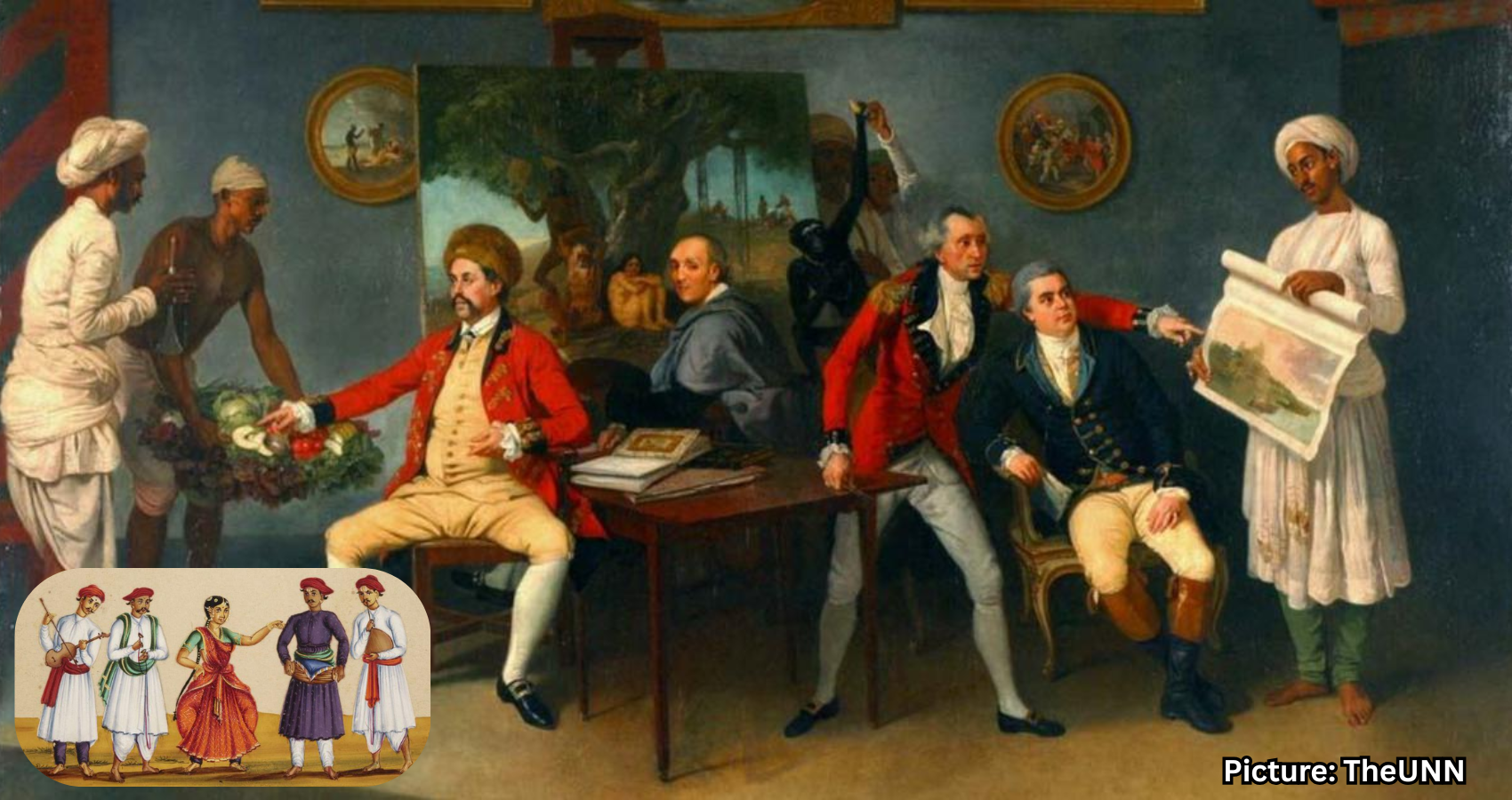
A new exhibition at the Yale Center for British Art explores the artistic legacy of the British East India Company, featuring over 100 works that highlight cultural exchanges in colonial India.
A significant exhibition titled “Painters, Ports and Profits: Artists and the East India Company, 1750-1850” has opened at the Yale Center for British Art in New Haven, Connecticut. This exhibition provides a comprehensive look at the artistic developments during the British East India Company’s dominance in trade across East and Southeast Asia.
Featuring over 100 artworks, the exhibition illustrates the complex interactions between British artistic traditions and local practices in the regions influenced by the company. A centerpiece of the exhibition is the remarkable 37-foot-long watercolor and gouache scroll named *Lucknow From the Gomti*. Created in the 1820s, this large-scale artwork depicts the Gomti River in Lucknow, India, showcasing a vibrant scene filled with fantastical riverboats, opulent palaces, and lively figures. Curators note that the piece was likely intended for a British audience, employing European-style perspective to cater to the tastes of foreign visitors.
Laurel Peterson, one of the exhibition’s curators, emphasized the intent behind the collection. “We really organized the show to think about artists’ stories who are working in the orbit of the company,” she stated. “They innovated, created these great innovations in order to kind of meet this new market.” This sentiment reflects the broader trend of adaptation and creativity among artists who navigated the changing cultural landscape during this period.
The British East India Company, established in 1600, evolved into a powerful imperialist entity by the early 19th century, exerting significant control over trade in Asia. As part of its operations, company agents commissioned artworks to document trade routes and engage in diplomatic relations through the gifting of art. These interactions fostered a unique environment for artistic collaboration between British and local artists.
During the timeframe highlighted in the exhibition, there was a notable increase in military and political activity by the East India Company, which facilitated connections between artists in London and their counterparts in Calcutta (now Kolkata) and Canton (Guangzhou). Holly Shaffer, another co-curator and art historian at Brown University, remarked on the nature of these interactions, stating, “We’re looking at these really tight networks of artists and kind of how they learn from each other, how they innovate, how they kind of create new techniques.”
Among the noteworthy pieces showcased is *A Marriage Procession by Night, Patna*, which illustrates a traditional practice of the groom’s family traveling to the bride’s home. This artwork exemplifies the “Company painting” style, where Indian artists utilized European techniques and materials to appeal to British tourists and trade agents.
The exhibition also features natural history works, such as *A Great Indian Fruit Bat or Flying Fox* by Bhawani Das, created between 1778 and 1782. This piece is part of a series commissioned by Elijah Impey, chief justice of British India, and his wife, reflecting the curiosity and fascination of the period regarding local flora and fauna.
Another significant work is a circa 1770 watercolor depicting a bird on a flowering branch, created with pigments sourced from various regions: Indian yellow and indigo, Chinese vermilion, and Prussian blue. This piece illustrates the cross-cultural influences that were prevalent during the era.
The exhibition marks the first public display of *Lucknow From the Gomti*, also referred to as the Lucknow scroll. Due to its large size and delicate condition, the scroll will be displayed in halves to minimize light exposure and preserve its integrity. The Yale Center for British Art’s conservators recently completed a two-year study to address the scroll’s complex construction, which consists of multiple sheets of paper layered with a cotton-textile backing.
Anita Dey, assistant paper conservator at the center, explained the conservation challenges, noting, “The primary conservation challenges stemmed from the scroll’s complex, layered construction.” It is believed that multiple artists collaborated to create the scroll, although their identities remain unknown, as they did not leave signatures on the work.
The exhibition is further complemented by four pages of handwritten notes in English that describe the panoramic view of Lucknow, potentially authored by the individual who commissioned the scroll. The curators described the scroll as having “a fascinating story both historically and materially, in part because it’s so mysterious.”
“Painters, Ports and Profits: Artists and the East India Company, 1750-1850” will be on display at the Yale Center for British Art until June 21, 2026. This exhibition not only highlights the artistic legacy of the British East India Company but also offers a deeper understanding of the cultural exchanges that shaped art during this pivotal time in history, according to Source Name.