
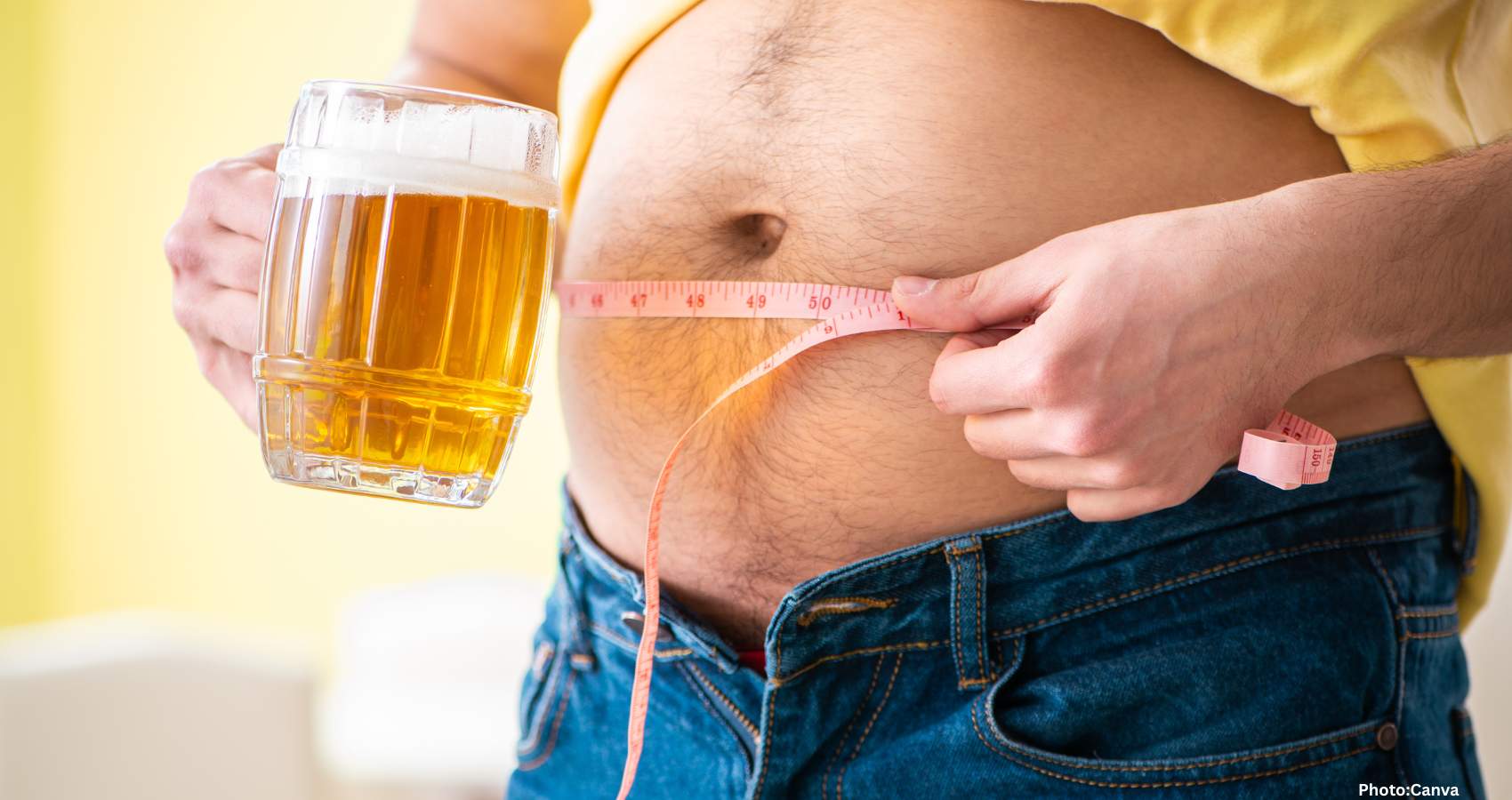
New research indicates that men with “beer bellies” face an increased risk of heart damage, even if they are of normal weight, challenging existing beliefs about cardiovascular health.
A recent study conducted by German researchers has revealed that men with abdominal fat, often referred to as “beer bellies,” may be at a heightened risk for heart damage, even when their overall weight appears normal. This finding raises important questions regarding the health risks associated with excess weight around the midsection.
The study aimed to investigate whether visceral fat—fat stored deep around internal organs—poses a greater threat to heart health than general body fat. Previous research has suggested that fat distribution plays a significant role in cardiovascular disease, but this study sought to provide more concrete evidence.
“Abdominal obesity, characterized by a high waist-to-hip ratio, is associated with more concerning cardiac remodeling patterns than high body mass index (BMI) alone,” stated Dr. Jennifer Erley, the study’s lead author and a radiology resident at University Medical Center Hamburg-Eppendorf, in a press release.
The research involved 2,244 adults aged 46 to 78, none of whom had been diagnosed with heart disease. Each participant underwent high-resolution MRI scans to assess the size, thickness, and volume of the heart’s chambers. In addition, researchers gathered detailed health information, including weight, blood pressure, cholesterol levels, smoking status, and diabetes history.
Rather than relying solely on BMI, which may overlook the location of fat deposits, the researchers utilized waist-to-hip ratio measurements. This method compares the circumference of the waist to that of the hips, providing insight into how much fat is concentrated around the abdomen. A high waist-to-hip ratio indicates the presence of visceral fat, which is metabolically active and linked to inflammation and stress on internal organs.
The findings indicated that men with elevated waist-to-hip ratios exhibited thicker heart muscles and reduced internal chamber volumes. This suggests that while the heart muscle may become bulkier, it holds less blood, thereby increasing the workload on the heart.
“[Abdominal obesity] appears to lead to a potentially pathological form of cardiac remodeling,” Dr. Erley noted.
When assessed using BMI alone, 69% of the male participants and 56% of the female participants were classified as overweight or obese. However, when waist-to-hip ratio was taken into account, the figures rose significantly, with 91% of males and 64% of females meeting the criteria for obesity.
While general obesity based on BMI was more frequently linked to enlarged heart chambers across all participants, abdominal obesity was specifically associated with thickening of the heart muscle and smaller heart chamber volumes. Over time, these structural changes can lead to heart failure and other cardiovascular complications, the researchers cautioned.
These associations remained robust even after accounting for various risk factors such as age, smoking, blood pressure, and other health indicators. Although the same trends were observed in women, the effects were notably more pronounced in men. This may be attributed to the fact that men typically store fat in the abdominal area more readily than women, particularly as they age.
The study’s findings provide valuable insights into why some individuals with normal or slightly elevated BMI develop heart disease, while others with higher weights do not. It underscores the importance of understanding that simply monitoring weight may not fully capture an individual’s heart health risk.
Despite its significant findings, the study does have limitations. It is observational in nature, meaning it identifies patterns but does not establish direct causation. Furthermore, the researchers did not follow participants long enough to determine who might eventually develop heart disease. While waist-to-hip ratio is a useful measure, it is a simplified approach that may not account for all variations in body composition.
The results of this study were presented at the annual meeting of the Radiological Society of North America in Chicago.
Source: Original article