
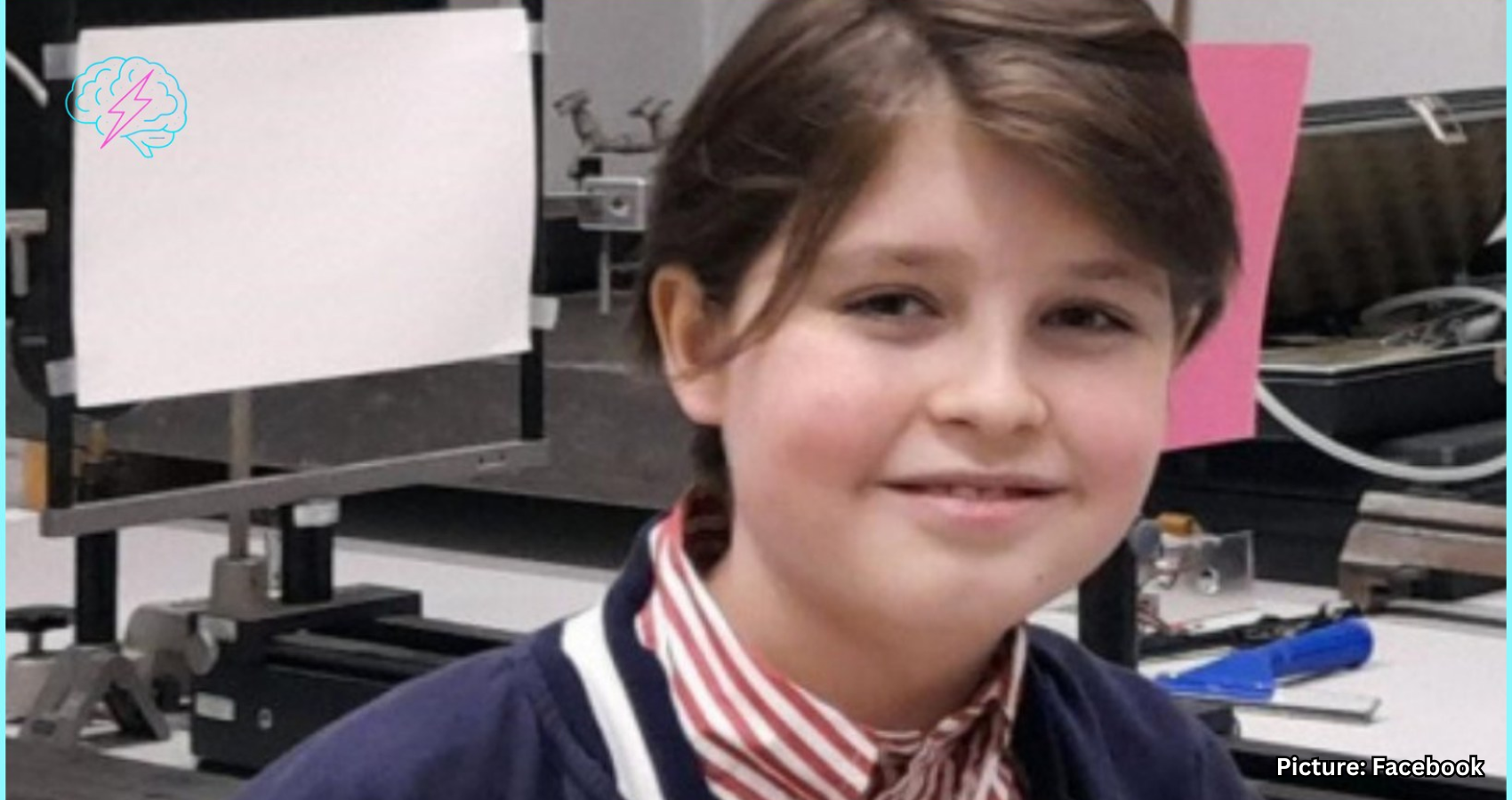
Laurent Simons, a Belgian prodigy who earned his PhD at 15, is now navigating the contentious field of human enhancement through artificial intelligence and medical science.
A doctoral degree earned at the age of 15 is not, by itself, a scientific breakthrough. It is a personal milestone—rare and extraordinary—often framed as a story of exceptional intellect rather than institutional transformation. However, when such an achievement is followed by an explicit ambition to reshape human biology through artificial intelligence, the narrative shifts from mere curiosity to significant consequence.
This is the case with Laurent Simons, a Belgian prodigy whose academic trajectory has unfolded at an unprecedented pace. Having completed high school by the age of eight, Simons went on to obtain both a bachelor’s and a master’s degree in physics in under two years. In late 2025, at just 15 years old, he formally defended his PhD in theoretical quantum physics at the University of Antwerp—through standard academic channels, under conventional supervision, and without honorary acceleration.
The credentials are verifiable. The thesis exists, the defense was public, and the institution is accredited. Yet Simons’ next move—venturing into medical science and artificial intelligence with the stated aim of “creating superhumans”—has placed him at the edge of some of the most contentious debates in modern science.
Simons’ doctoral dissertation, titled “Bose polarons in superfluids and supersolids,” examined the behavior of impurity particles within Bose–Einstein condensates—states of matter formed when atoms are cooled to near absolute zero, causing quantum effects to emerge on a macroscopic scale.
This area of condensed matter physics has implications for quantum simulation, low-temperature systems, and many-body interactions. According to documentation released by the University of Antwerp, Simons satisfied all academic and research requirements associated with the degree.
As part of his doctoral work, he also completed an internship at the Max Planck Institute for Quantum Optics, contributing to research on quasiparticle interactions in ultracold atomic environments. These institutions have not challenged the legitimacy of his academic record, and while the speed of his progress remains extraordinary, the process itself was conventional.
Immediately following his doctoral defense, Simons relocated to Munich to begin a second PhD program—this time in medical science, with a focus on artificial intelligence. This shift marks a departure from abstract quantum modeling into applied biological and computational research.
In a televised interview with Belgian broadcaster VTM, Simons articulated his long-term ambition in unusually direct terms. “After this, I’ll start working towards my goal: creating superhumans,” he stated.
Earlier reporting by The Brussels Times noted that Simons has discussed defeating aging since the age of 11, framing longevity as both a scientific and moral imperative. While details of his current research remain undisclosed, available information suggests that his work is concentrated on conceptual and computational models rather than laboratory-based biomedical experimentation. Areas of interest reportedly include AI-driven diagnostics, regenerative medicine frameworks, and lifespan modeling.
At this stage, there is no public evidence that Simons is involved in clinical trials or human-subject research.
Simons’ ambitions align with a rapidly expanding research landscape focused on human longevity and biological optimization. Well-funded private ventures such as Altos Labs and Calico Life Sciences are investigating cellular reprogramming, senolytics, and genetic pathways associated with aging and disease resistance.
At the academic level, journals such as Nature Aging and Cell Reports Medicine continue to publish work on machine-learning-based disease detection, gene expression analysis, and tissue regeneration. Yet much of this research remains exploratory, and the practical limits of “enhancement” remain undefined.
What distinguishes Simons is not merely his age, but the unusual bridge he is attempting to cross. Transitions from theoretical quantum physics into applied medical science are rare, particularly at the doctoral level, where disciplinary depth typically outweighs breadth.
The notion of engineering “superhumans” lacks scientific consensus and ethical clarity. According to the Stanford Encyclopedia of Philosophy, debates surrounding human enhancement revolve around whether interventions are therapeutic, elective, or fundamentally transformational.
At present, there is no indication that Simons’ research violates existing ethical frameworks. His academic affiliations have not publicly raised concerns, and his work appears to fall within early-stage theoretical exploration.
Nevertheless, the convergence of artificial intelligence, medicine, and long-term biological redesign presents governance challenges. Questions of supervision, peer review, and interdisciplinary oversight are still being negotiated across the field. The involvement of a researcher below the age of legal adulthood introduces further complexity.
For now, Laurent Simons represents neither a scientific revolution nor a regulatory failure. He is, instead, a data point at the frontier—where exceptional individual capability intersects with emerging technologies whose implications remain unresolved.
Whether his ambitions lead to meaningful breakthroughs or remain aspirational will depend not on speed, but on scrutiny, according to The Brussels Times.