
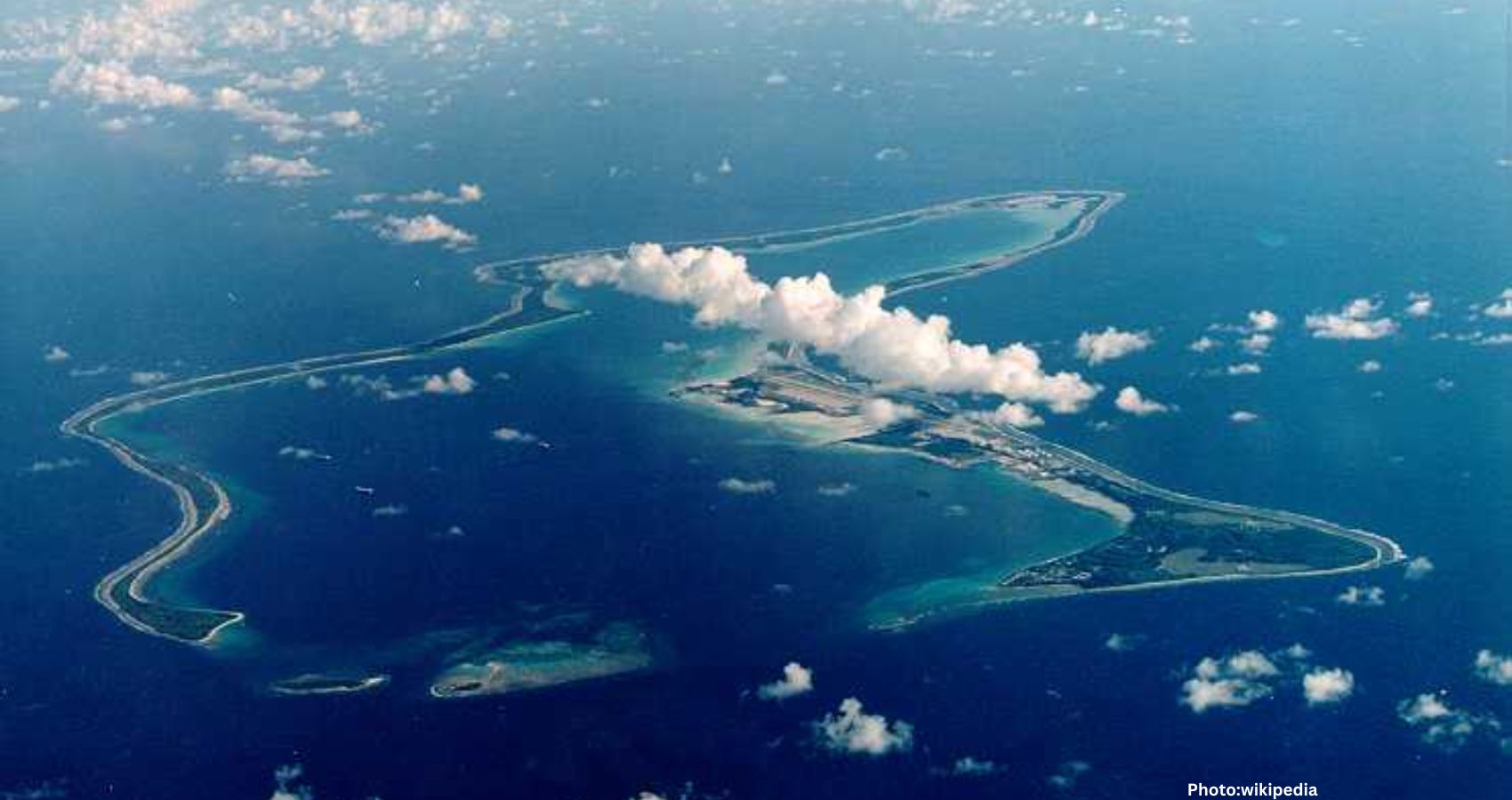
Iran has launched two intermediate-range ballistic missiles targeting the Diego Garcia military base, marking a significant escalation in the ongoing Middle East conflict as President Trump hints at a potential winding down of U.S. operations.
In a dramatic escalation of the three-week-old conflict in the Middle East, Iran launched two intermediate-range ballistic missiles aimed at the joint U.S.-UK military base at Diego Garcia. This strike represents the longest-range attempted missile strike in the Islamic Republic’s history. Although the missiles did not hit the sensitive Indian Ocean outpost, the event coincided with several high-stakes developments, including a U.S.-Israeli strike on Iran’s Natanz nuclear facility, a surprise 30-day sanctions waiver on 140 million barrels of Iranian oil, and a joint declaration from 22 nations to secure the Strait of Hormuz. Despite the escalating military activity, President Donald Trump suggested on social media that the United States is “winding down” its operations as it approaches the completion of its strategic objectives against Tehran.
On Saturday, the strategic landscape of the Middle East shifted violently as Tehran demonstrated missile capabilities that far exceed its previously acknowledged range. For the first time, Iranian forces targeted the Diego Garcia military facility, located approximately 4,000 kilometers from Iranian territory. This move was widely interpreted as a retaliatory response to the ongoing “Operation Epic Fury,” a U.S.-led campaign aimed at dismantling Iran’s military and nuclear infrastructure.
According to U.S. officials and reports from the Wall Street Journal, one of the Iranian missiles failed during flight, while the second was intercepted by a U.S. Navy warship using an SM-3 interceptor. Although the success of the interception remains unconfirmed, the base—a critical staging ground for heavy bombers and long-range surveillance—reported no damage. This strike attempt effectively contradicted previous claims made by Iranian Foreign Minister Abbas Araghchi, who stated that Tehran had voluntarily limited its missile range to 2,000 kilometers.
Hours before the missile launch, the Iranian Atomic Energy Organization confirmed that the Natanz uranium-enrichment facility had been targeted by U.S. and Israeli forces. This complex, situated deep within the Pickaxe Mountain tunnel system, is a centerpiece of Iran’s nuclear program. Data from the International Atomic Energy Agency (IAEA) and local reports indicate that the strike occurred early Saturday morning, with no radioactive leaks detected according to the IAEA. The facility had previously been struck in June 2025, but Saturday’s mission reportedly utilized 5,000-pound bunker-buster munitions to reach hardened underground centrifuges.
While the Israeli Defense Ministry remained officially “unaware” of the specific strike, Defense Minister Israel Katz stated that operations against Iran would “increase significantly” in the coming week. This stance appears to contradict the rhetoric emanating from the White House.
On Friday evening, President Trump posted on Truth Social that the U.S. is “getting very close to meeting our objectives” and is considering “winding down our great military efforts.” He outlined a three-point checklist for victory, which includes completely degrading Iranian missile and launcher capabilities, destroying Iran’s defense industrial base, and eliminating the Iranian Navy and Air Force.
However, the reality on the ground suggests a more complex trajectory. Even as the President speaks of an exit strategy, the Pentagon is deploying the 31st Marine Expeditionary Unit—a rapid-response force of 2,200 Marines—to the region, alongside three amphibious assault ships, including the USS Boxer. Analysts suggest that the “winding down” rhetoric may serve as a diplomatic overture or a tactic to address domestic concerns ahead of the November midterm elections, especially as the ongoing conflict has driven global oil prices up by 50%, exceeding $100 a barrel.
In a move described by some analysts as “economically desperate,” the Trump administration issued a 30-day sanctions waiver on Friday, allowing for the sale of Iranian crude oil currently “stranded at sea.” Treasury Secretary Scott Bessent announced that this move would bring approximately 140 million barrels of oil to global markets. “We will be using the Iranian barrels against Tehran to keep the price down,” Bessent stated, emphasizing that the waiver is strictly for oil already in transit and does not permit new production. Critics argue that this decision provides a financial lifeline to the very regime the U.S. is currently targeting. “If we’ve reached the point of loosening sanctions on the country we are at war with, we’re really running out of options,” noted Brent Erickson, a managing principal at Obsidian Risk Advisors.
The “de facto closure” of the Strait of Hormuz by Iranian forces has prompted a rare display of international naval cooperation. A joint statement issued by 22 countries, including the United Arab Emirates, Australia, Bahrain, the UK, France, and Japan, declared a “readiness to contribute to appropriate efforts to ensure safe passage.” This comes after President Trump criticized NATO allies as “cowards” for not taking a more active role in mine-sweeping and escorting commercial tankers. The U.S. military recently claimed it “degraded” the Iranian threat to the Strait by destroying an underground bunker on the coast that housed anti-ship cruise missiles and radar relays used to track merchant vessels.
As the conflict enters its fourth week, the humanitarian and geopolitical risks continue to mount. Iran has issued fresh warnings through General Abolfazl Shekarchi, stating that “parks, recreational areas and tourist destinations” worldwide would no longer be safe for its enemies. Tehran has also specifically warned the UAE that it will face “crushing blows” if further strikes are launched from its territory against Iranian-held islands in the Persian Gulf.
For now, the world remains in a state of high tension, closely observing whether the “winding down” promised by the U.S. President will materialize, or if the “significant increase” in military operations promised by the Israeli Defense Minister will lead to a broader, more permanent regional conflict.
According to Source Name.