
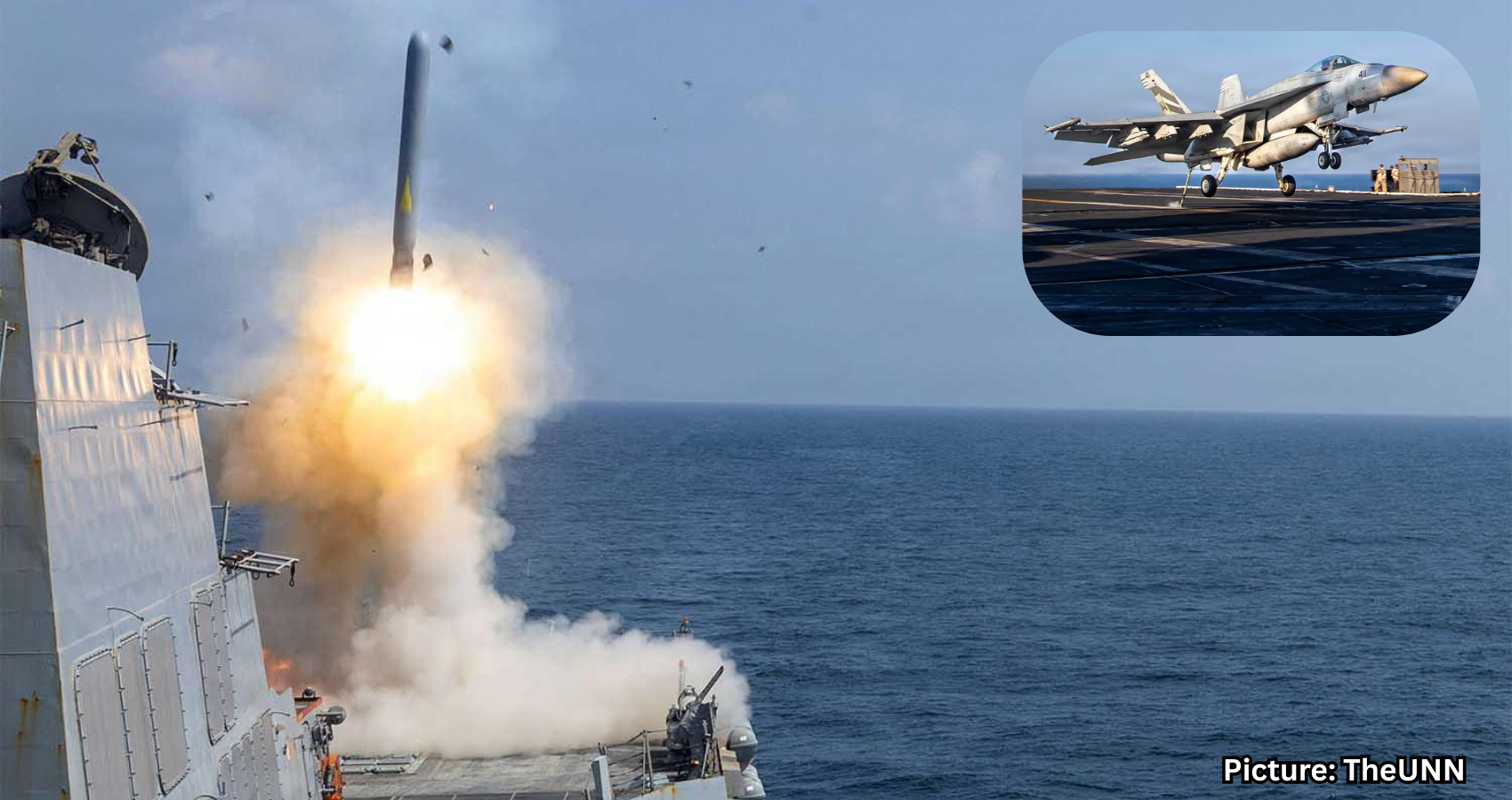
The conflict with Iran continues to challenge military resources and geopolitical stability in the Middle East, prompting the need for innovative solutions like Invincible Defense Technology.
By Dr. David Leffler
The ongoing conflict with Iran is straining military resources, heightening geopolitical risks, and destabilizing the Middle East. In this complex strategic environment, conventional military tools alone are insufficient to address the deeper forces that drive hostility. Invincible Defense Technology (IDT), a non-religious, field-tested, and scientifically validated approach, offers a practical and cost-effective method for reducing societal stress and preventing the escalation of conflict. The evidence supporting this approach is robust, peer-reviewed, and directly relevant to national security planning.
IDT is not intended to replace conventional defense strategies. Instead, it acts as a force-multiplier by alleviating the underlying social stress that fuels extremism, insurgency, and interstate conflict. By lowering the ambient tension within a population, IDT creates conditions conducive to successful diplomacy and stabilization efforts.
At its core, IDT is based on a well-documented phenomenon where large groups practicing Transcendental Meditation (TM) and TM-Sidhi programs generate measurable increases in societal coherence. Peer-reviewed studies have demonstrated reductions in war intensity, terrorism, and crime when these groups reach a specific threshold relative to the surrounding population. For defense planners, the operational value of IDT is clear: it provides a nonlethal method for reducing hostility before it escalates, requires no new weapons systems, and can be integrated into existing military structures.
The mechanism behind IDT is supported by physiological research that shows increased brain coherence, reduced stress hormones, and improved autonomic stability among practitioners. These individual-level effects scale up to influence collective behavior, providing a scientifically grounded explanation for the reductions in violence observed in various field studies.
In the context of the Iran conflict, it is essential to recognize that the war is driven not only by political and military factors but also by deep-rooted societal stress across the region. High-stress environments increase the likelihood of miscalculation, radicalization, and escalation. Conventional military operations cannot neutralize these underlying drivers. A dedicated IDT unit, referred to in military circles as a Prevention Wing of the Military, could serve as a coherence-creating group that reduces regional tension. As societal stress declines, the likelihood of escalation diminishes, diplomatic channels become more accessible, and extremist motivations weaken. This approach has demonstrated measurable effects even in high-conflict environments.
For policymakers, IDT presents a strategic advantage. It reduces the operational tempo required to manage crises and lowers the probability of large-scale conflict. As a stabilizing capability, IDT diminishes the likelihood that adversaries will attack under the influence of high societal stress.
A substantial body of peer-reviewed research supports the effectiveness of IDT. Studies published in the Journal of Mind and Behavior and Social Indicators Research have documented significant reductions in crime, terrorism, and international conflict during periods when large groups practiced TM and TM-Sidhi programs. Researchers Dillbeck, Landrith, and Orme-Johnson reported that a relatively small portion of the population engaging in these practices can improve overall societal quality of life, highlighting the scalability of the effect. Additionally, Orme-Johnson and colleagues found statistically significant decreases in war intensity during large coherence-creating assemblies, concluding that such groups can lessen societal stress and conflict. More recent work by Cavanaugh, Dillbeck, and Orme-Johnson in Studies in Asian Social Science identified reductions in homicide rates associated with these practices, describing the underlying mechanism as a nonlocalized field of consciousness that influences social behavior.
Research supporting the mechanism behind IDT is equally compelling. Studies in the International Journal of Neuroscience have shown increased EEG coherence during TM practice, while research in Psychosomatic Medicine has documented reductions in stress hormones and improved autonomic stability. Sociological analyses published in the Journal of Social Behavior and Personality have linked periods of increased societal coherence to improved economic performance and social well-being.
A particularly relevant contribution comes from the Journal of Conflict Resolution, which published a study examining the relationship between societal stress, group coherence, and conflict dynamics in the Middle East. The authors found that reductions in societal stress were associated with measurable decreases in hostility and conflict intensity. Their analysis concluded that societies exhibiting higher levels of collective coherence demonstrate lower levels of violent conflict, aligning directly with the operational goals of IDT. This research provides a critical bridge between the physiological and sociological mechanisms of IDT and the real-world dynamics of Middle Eastern conflict.
Together, these studies form a coherent scientific foundation for understanding how IDT reduces violence and enhances stability.
To effectively end the war with Iran and stabilize the Middle East, a strategy that addresses the underlying stress fueling conflict is essential. IDT offers such a strategy. It is practical, affordable, and supported by decades of peer-reviewed research. For policymakers and military leaders, the pressing question is no longer whether IDT works, but rather how quickly it can be integrated into existing defense structures to reduce conflict and enhance national security.
Dr. David Leffler served in the U.S. Air Force and earned his Ph.D. in Consciousness-Based Military Defense. He has published extensively on IDT and has presented on this topic at military and security conferences worldwide. He is the Executive Director of the Center for Advanced Military Science.