
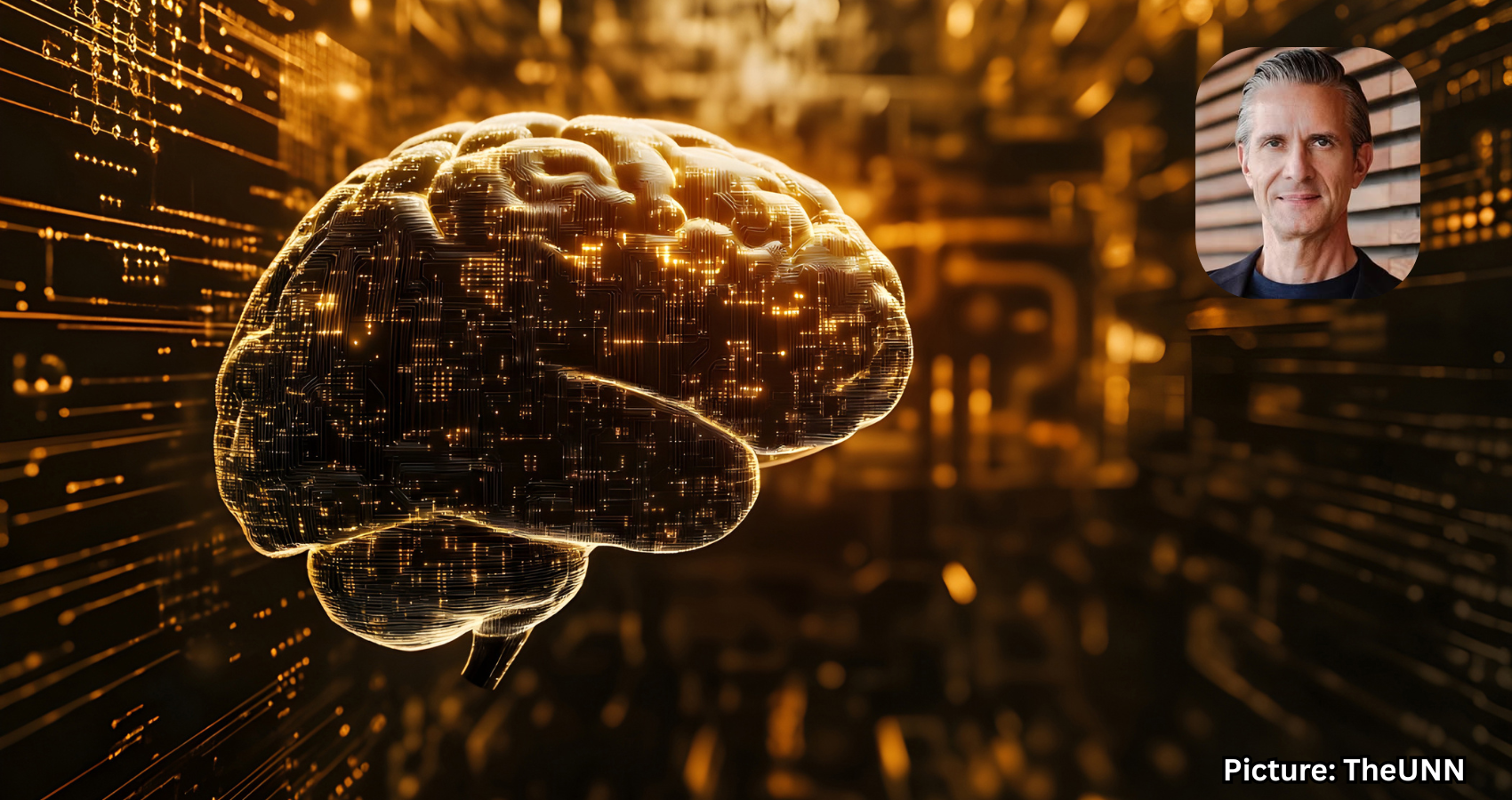
Professor Christian Doeller’s groundbreaking research at the Max Planck Institute reveals the brain’s navigational system, enhancing our understanding of memory organization and cognitive processes.
LEIPZIG, Germany — A significant advancement in neuroscience has been achieved by Professor Dr. Christian Doeller at the Max Planck Institute for Human Cognitive and Brain Sciences. His research focuses on the brain’s navigational system and its integral role in memory, learning, and decision-making processes. Utilizing advanced imaging techniques, Doeller and his team have conducted experiments that reveal how spatial navigation is not merely about physical movement but is deeply intertwined with cognitive functions.
In a series of innovative experiments, students at the Leipzig institute participated in interactive computer games designed to simulate real-world navigation tasks. While navigating a virtual city as taxi drivers, test subjects transported virtual passengers from point A to point B. Their brain activity was meticulously monitored through functional magnetic resonance imaging (fMRI), allowing researchers to analyze the underlying cognitive mechanisms at play.
“Test subjects with high navigational performance, who navigate the virtual paths accurately and efficiently, exhibit significantly higher brain activity,” stated Doeller. This correlation suggests that superior navigational skills are linked to enhanced cognitive processing, indicating that the brain’s navigational capabilities extend far beyond spatial awareness.
According to Professor Doeller, the brain operates analogously to a sophisticated navigation system, effectively organizing memory and knowledge in a spatially structured manner. He likens this organizational strategy to that of noted sociologist Niklas Luhmann, who famously organized his 90,000 handwritten notes spatially, a method still studied at Bielefeld University today. “Spatial strategies can profoundly enhance memory retention and information retrieval,” Doeller explained, drawing attention to how individuals often utilize similar techniques in everyday life, such as categorizing newspaper articles by placing them in specific locations on their desks.
This research underscores the potential for spatial reasoning to facilitate cognitive tasks, suggesting that the brain’s navigation system is activated whenever individuals employ spatial strategies to organize information.
This latest study builds on prior research conducted by Doeller in 2010, where he and his team first demonstrated grid cells in humans—cells previously identified in rodents that help track location and spatial perception. Their findings, published in the journal Nature, indicated that humans share a similar biological framework for navigation with other mammals, reinforcing the idea that spatial perception is a fundamental component of cognitive processing.
Doeller’s ongoing research also explores the use of virtual reality environments for both animals and humans. In these studies, rodents are often placed on spinning balls to assess their navigational capabilities, further bridging the gap between spatial navigation and cognitive function.
The recent award of the prestigious Gottfried Wilhelm Leibniz Prize, valued at 2.5 million euros, positions Professor Doeller to expand his research into more intricate cognitive tasks. With this funding, he plans to investigate how the brain processes social interactions during collaborative learning experiences, a study that involves observing pairs of subjects solving complex problems together.
“This research is technically complex as it requires the synchronization of the two scanners while both subjects engage in the cognitive task,” Doeller noted. This unique approach aims to unravel how social dynamics impact cognitive functions, potentially leading to a greater understanding of collaborative learning and its neurological underpinnings.
Additionally, the Max Planck Institute is actively engaged in clinical research, particularly focusing on early-stage Alzheimer’s disease and the cognitive challenges associated with Long Covid. While the results of these studies have yet to be published, they highlight the institute’s commitment to applying foundational neuroscience research to address pressing health issues.
Professor Doeller’s pioneering work on the brain’s navigational system not only enhances our understanding of spatial information processing but also opens new avenues for research into its broader cognitive implications. By identifying how navigation affects other cognitive functions, such as decision-making and learning, this research could inform educational strategies and therapeutic approaches for cognitive impairments.
The intersection of navigation and cognition presents a promising frontier for neuroscience, with the potential to improve educational methodologies and clinical practices in treating neurological disorders. As this research progresses, the insights gained may significantly contribute to the fields of psychology, education, and health care, promising new strategies for enhancing cognitive function and addressing cognitive decline.
In conclusion, Doeller’s research at the Max Planck Institute is not only a remarkable scientific achievement but also a vital step towards understanding the complexities of human cognition. As researchers continue to explore the brain’s navigational system, they pave the way for future explorations that could reshape our understanding of memory, learning, and social interaction, according to GlobalNetNews.