
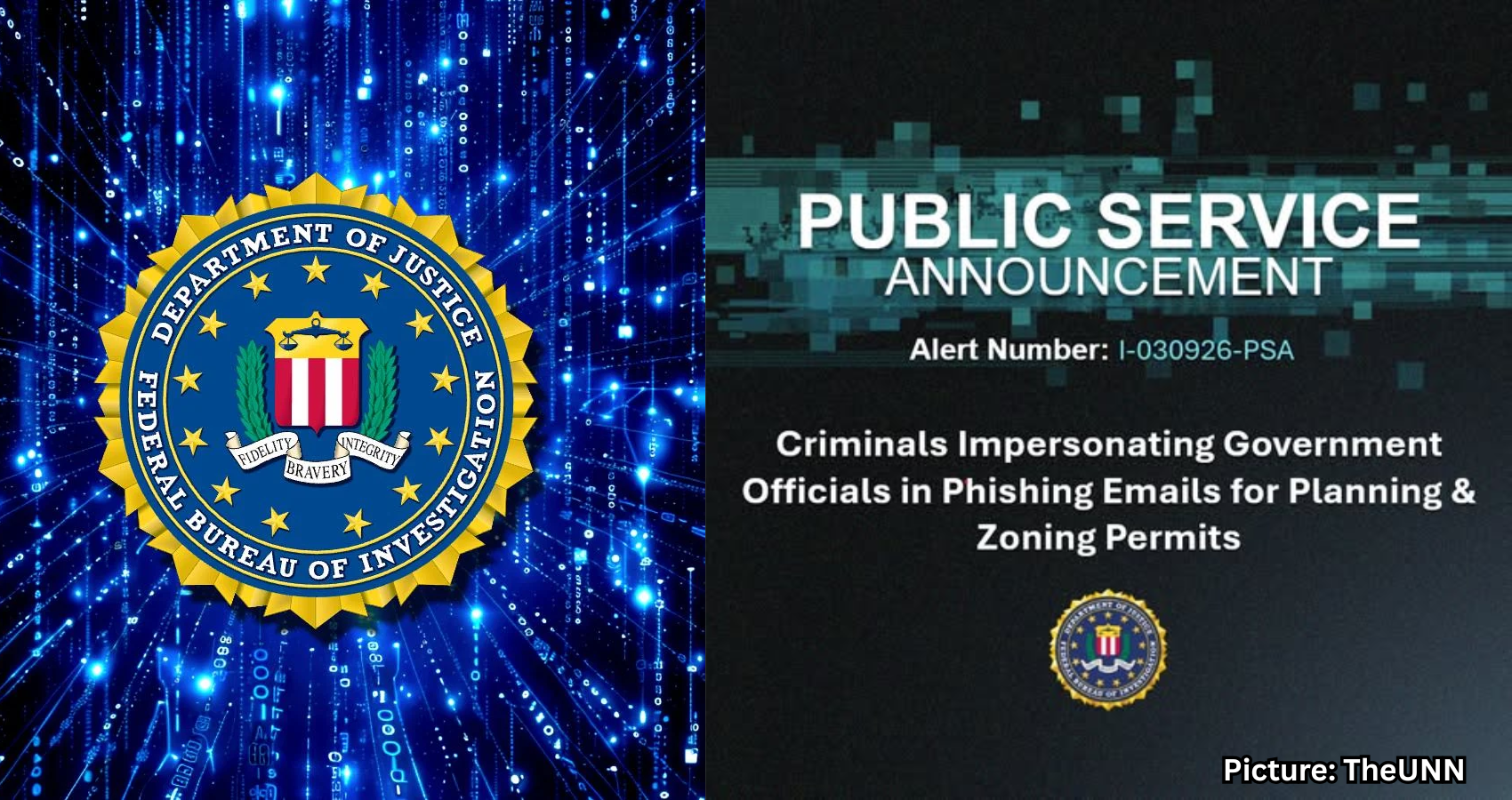
The FBI has issued a warning about a new scam targeting homeowners and builders, involving fake zoning and permit fee emails that appear to come from legitimate government officials.
The Federal Bureau of Investigation (FBI) is alerting the public to a phishing scheme that targets homeowners, builders, and businesses by sending fraudulent emails related to zoning permits and permit fees. These scams utilize real property details to create a sense of urgency and legitimacy.
As individuals embark on home construction, renovations, or zoning permit applications, they should be vigilant against these deceptive communications. Scammers are impersonating city and county planning officials, attempting to trick victims into paying non-existent permit fees. The emails often appear convincingly official, making it difficult for recipients to discern their authenticity.
According to the FBI, the scammers begin by gathering publicly available information about zoning applications and development permits, which can typically be found on local government websites. Once they identify a target, they send an email that mimics the format and tone of legitimate correspondence from a local planning or zoning department.
These fraudulent messages often claim that immediate payment is necessary to avoid delays in the permit approval process. Victims are instructed to send money through wire transfers, peer-to-peer payment apps, or cryptocurrency—methods that are notoriously difficult to trace and recover once the payment is made.
This scam is particularly effective because it exploits a process that many homeowners and businesses are already familiar with. The legitimate nature of planning approvals, zoning permits, and building applications, which often involve fees and official communications, makes it easy for scammers to create messages that feel authentic. Furthermore, many phishing emails are timed to arrive shortly after applicants receive genuine communications from their local planning departments, increasing the likelihood that recipients will act without verification.
The FBI has highlighted several warning signs that can help individuals identify these phishing attempts. One key indicator is the email address itself; many fraudulent messages originate from domains that appear official but are not government-affiliated. For instance, scammers might use email addresses ending in @usa.com or other non-.gov domains.
Legitimate government offices rarely request permit payments via email, and impersonating government officials has become a common tactic among scammers. In recent years, the FBI has issued warnings about criminals posing as law enforcement agents, federal officials, and even employees of the Internet Crime Complaint Center (IC3). In one notable case, scammers contacted victims claiming they could assist in recovering lost funds, falsely presenting themselves as FBI representatives. The bureau has also raised concerns about the use of AI-generated audio deepfakes in voice phishing attacks, illustrating how quickly scammers adapt their tactics.
To protect themselves from zoning permit phishing scams, the FBI recommends several practical steps. First, recipients should carefully check the email address from which the communication was sent. Official government communications typically originate from a .gov domain. Individuals should also reach out to their local planning department using the contact information provided on the official government website to verify any requests for payment.
Scammers often create a sense of urgency in their communications, so it is crucial to take the time to verify any financial requests. Government agencies rarely request payments through wire transfers, peer-to-peer apps, or cryptocurrency, which are often favored by scammers.
Moreover, scammers frequently gather information from public records, property listings, and data broker sites to make their messages appear legitimate. Utilizing a data removal service can help individuals remove their personal information from these databases, thereby reducing the chances of being targeted by highly personalized scams.
Individuals should also be cautious of unexpected files or payment instructions included in emails, as these can signal phishing attempts. It is advisable not to click on any links or download attachments until the legitimacy of the message has been confirmed. Strong antivirus software can detect phishing links, malicious downloads, and suspicious websites before they compromise devices, providing an additional layer of protection.
If you receive a fraudulent email, it is important to report it to the FBI’s Internet Crime Complaint Center (IC3). Providing details such as the email address used, the date of the message, and the requested payment amount can assist investigators in tracking down the criminals behind these scams.
Building permits and zoning approvals already involve considerable paperwork, deadlines, and fees, making them a prime target for scammers. By understanding how these scams operate, property owners, developers, and businesses can better protect themselves from falling victim to such schemes. A moment of verification can be the difference between advancing a project and losing thousands of dollars to fraudsters.
As these scams continue to evolve, it is essential for individuals to remain informed and cautious. The next time an email demands immediate payment for a permit fee, take a moment to verify its authenticity before proceeding.
For further information and resources on how to protect yourself from scams, visit CyberGuy.com.