
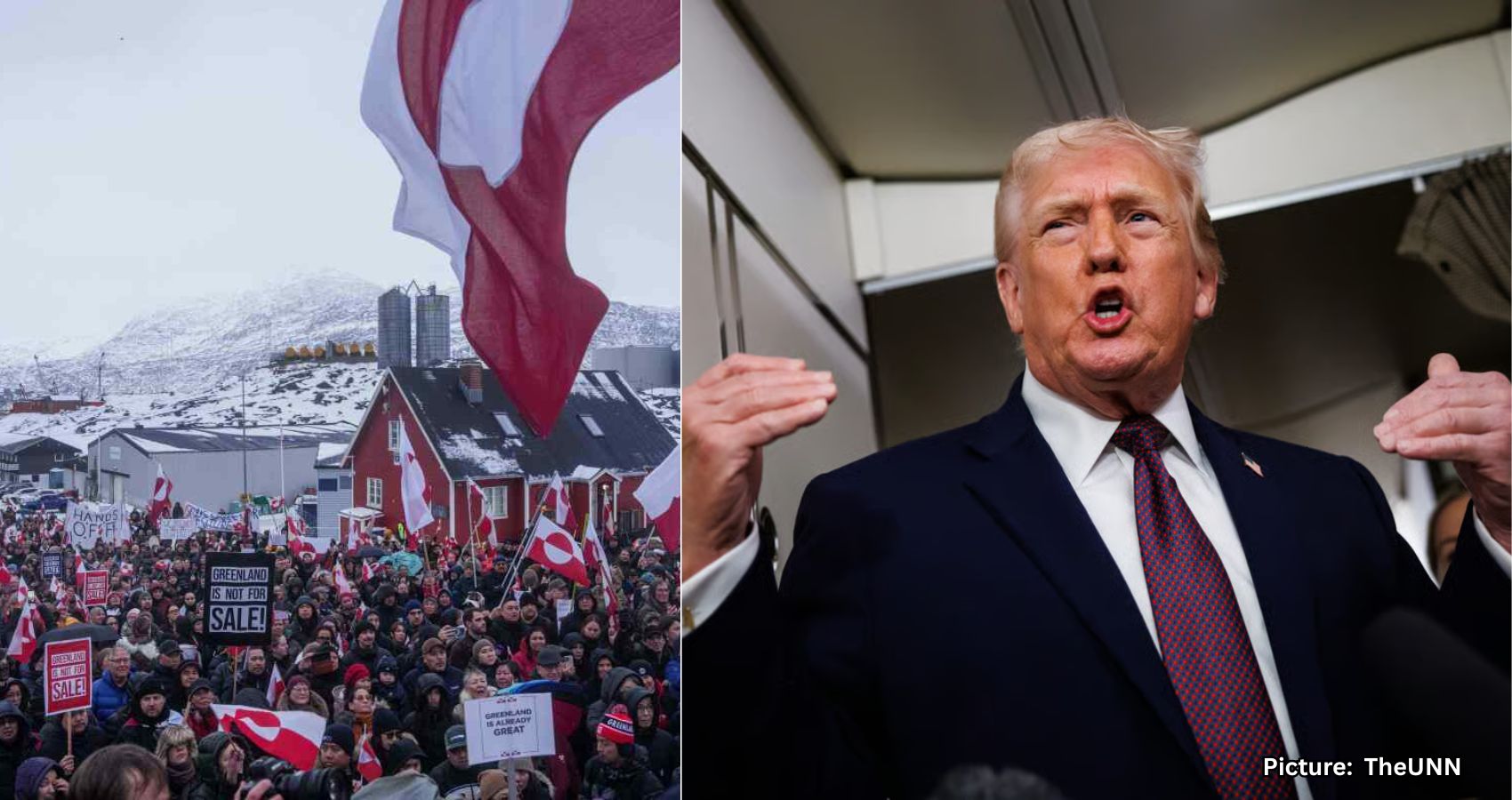
European leaders are responding firmly to President Trump’s tariff threats linked to Greenland, warning of potential retaliation and escalating tensions among longtime allies.
European leaders are gearing up for a robust response following President Donald Trump’s recent announcement of new tariff threats against several European countries, tied to his controversial ambitions regarding Greenland.
Trump revealed that starting February 1, the United States would impose a 10% tariff on goods from eight European nations: Denmark, Norway, Sweden, France, Germany, the United Kingdom, the Netherlands, and Finland. This measure will remain in effect until a deal to purchase Greenland is finalized or the dispute over the island’s future is resolved. If no agreement is reached by June 1, the tariffs could escalate to 25%.
This move is rooted in Trump’s assertion that Greenland, an autonomous territory of Denmark, holds strategic significance for U.S. security. The president has faced criticism both domestically and internationally for his stance, claiming that other global powers, such as China and Russia, have their eyes on Greenland, and only the United States can effectively secure it.
European capitals reacted with alarm to the tariff threats. Leaders from the eight targeted nations issued a joint statement on Sunday, warning that the proposed tariffs would undermine transatlantic ties and risk a dangerous downward spiral in economic and diplomatic cooperation.
Denmark’s Prime Minister, Mette Frederiksen, expressed strong opposition to the U.S. pressure, stating, “Europe will not be blackmailed.” Her sentiments were echoed by senior officials in Germany and Sweden, who emphasized a collective stance against what they perceive as coercive tactics.
Trump’s tariff plans have also become a topic of discussion within U.S. political circles. Treasury Secretary Scott Bessent, appearing on the television program “Meet the Press,” suggested that the president views his approach as a demonstration of strength, asserting that Europeans “project weakness” while the United States signals resolve.
In Greenland and Denmark, public protests erupted in response to the tariff threats and the broader push to influence Greenland’s governance. Thousands marched in Nuuk, Greenland’s capital, chanting the island’s native name, “Kalaallit Nunaat,” and voicing their opposition to external pressure on their homeland.
European Union officials have indicated that discussions are underway in Brussels regarding potential retaliatory tariffs on U.S. exports, with estimates suggesting around $107 billion in goods could be affected. Emergency meetings among EU member states are planned to evaluate options, balancing the need to protect economic interests with a desire to avoid an all-out trade war.
Currently, both sides face heightened uncertainty in their relations. European leaders continue to advocate for diplomacy as the preferred path forward, while the Trump administration appears ready to leverage tariffs in pursuit of its broader strategic objectives.
As the situation develops, the implications of these tariff threats could reshape the dynamics of transatlantic relations, with both sides weighing the potential costs of escalation against the benefits of cooperation.
According to The American Bazaar, the unfolding events underscore the fragility of alliances in the face of aggressive economic tactics.