
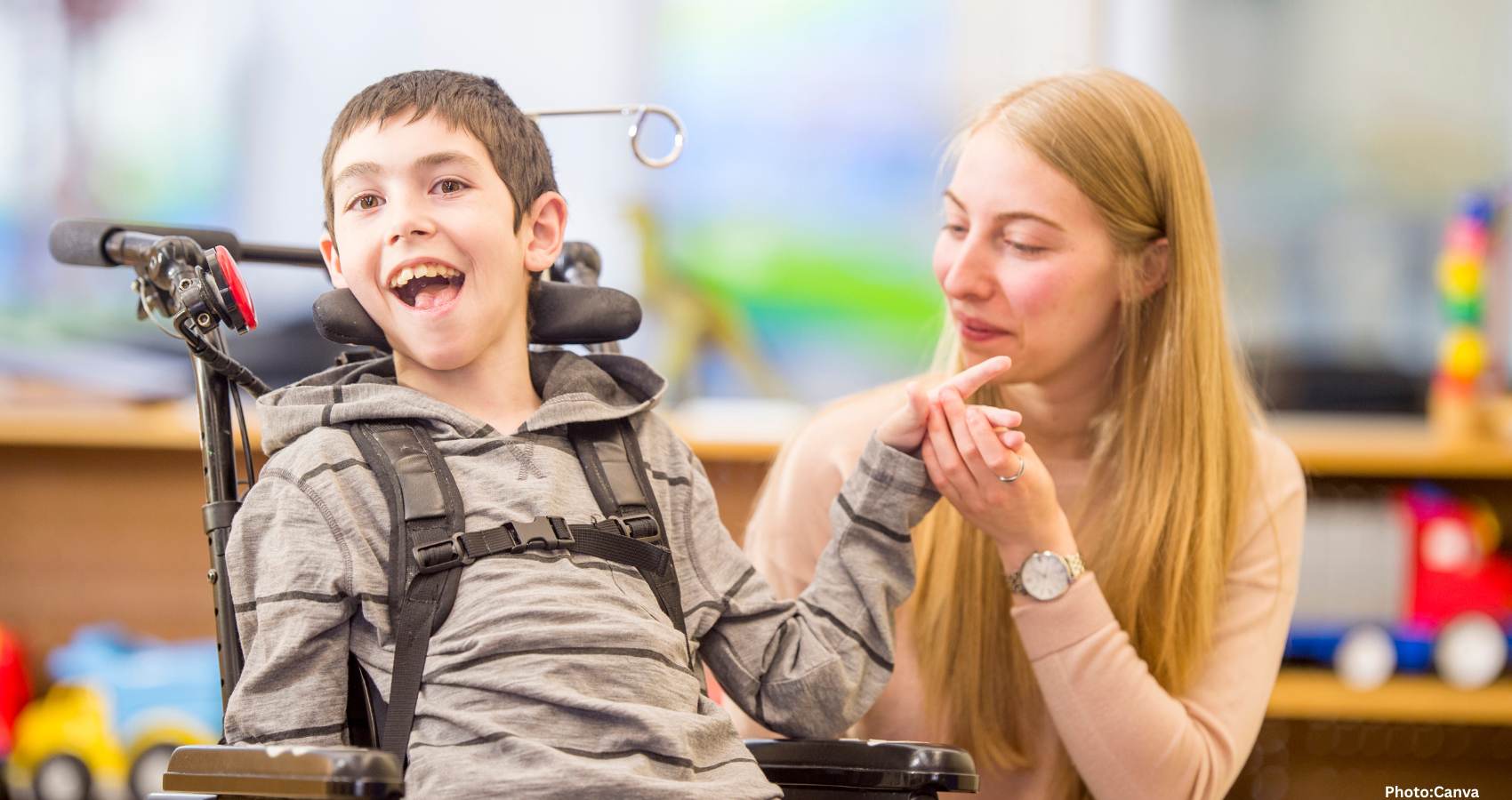
In a conversation about ableism, educators Carly Ferril and Sancia Kundu explore the importance of understanding developmental norms and advocating for inclusive environments for children with disabilities.
Ableism remains a pervasive issue in society, often manifesting in the pressure to conform to typical developmental expectations. In a recent conversation, Carly Ferril, an Early Childhood Special Educator, and Sancia Kundu, a student at the University of Texas at Austin, discussed the impact of ableism on children and the importance of fostering inclusive educational environments.
Ferril emphasized the need for a broader understanding of developmental norms. “I wish more people understood that kids develop differently,” she stated. While various checklists and benchmarks exist to track developmental milestones, not every child will meet these expectations in the same way or timeframe. For instance, Ferril pointed out that drawing at the age of three is not a requirement; rather, children should first learn to hold crayons and scribble.
Kundu shared her own experiences, recalling how her parents, who immigrated from India, faced challenges in understanding her developmental journey. “My mom told me, ‘You just barely passed all your tests,'” she reflected. This stigma surrounding disabilities often stems from cultural perceptions and societal norms, which can further complicate a child’s development.
Ferril highlighted the importance of awareness and advocacy in combating ableism. “Getting more information out to people—better understanding, awareness, and advocacy for different types of disabilities—is crucial,” she explained. The stigma associated with disabilities can hinder children’s potential. For example, a diagnosis of autism should not be viewed as a limitation but rather as an opportunity for growth and development.
Kundu echoed this sentiment, recalling how supportive teachers made a significant difference in her life. “It’s not wrong to talk about disabilities. It is a part of who you are,” she said. Ferril added that the more individuals are willing to accept and seek help for disabilities, the better it is for everyone involved. Hiding disabilities only perpetuates stigma, which is detrimental to both individuals and society as a whole.
When discussing potential changes in educational settings, Ferril emphasized the need for access to information and resources for families. Many families may not be aware of the programs and therapies available to them, particularly if they lack access to healthcare providers who conduct developmental assessments. Early intervention is key, and Ferril advocates for universal design in schools to ensure that all students, regardless of their physical needs, can participate fully in educational activities.
She recounted her experience at a school where the playground was inaccessible to students with mobility challenges. To address this, she wrote a grant to secure developmentally appropriate materials for the playground, allowing all children to engage in play equally. “That kind of universal design should be everywhere,” she asserted.
Kundu asked Ferril what future educators can do to create more inclusive environments for disabled children. Ferril stressed the importance of inclusion in classrooms, where students with disabilities learn alongside their typically developing peers. “Giving all of them the opportunity to play in shared spaces—that’s where learning happens,” she explained. Peer interactions can significantly enhance social skills, language development, and overall learning experiences.
Advocacy is also essential, according to Ferril. Educating the public about the diverse nature of disabilities can help shift societal mindsets. “Disability shouldn’t mean lower expectations,” she stated. Encouraging independence among students is equally important; allowing them to carry their own backpacks or open doors fosters a sense of agency and confidence.
Kundu shared her personal observations, noting that her sister, a Talented and Gifted student, learned valuable lessons from her experiences. “Inclusion matters—it’s not just about academic outcomes. It’s about belonging and visibility,” she remarked. Ferril agreed, emphasizing that typical students also benefit from interacting with their peers with disabilities, gaining empathy and patience in the process.
Ultimately, the conversation highlighted that everyone benefits from an inclusive educational model. “Disability awareness isn’t just for people with direct connections. It’s something everyone should understand,” Ferril concluded. As Kundu noted, discussing disabilities is not a sign of weakness but rather a demonstration of strength. The more these conversations take place, the more society can work toward dismantling the myth of “normal” and fostering a more inclusive world.
Sancia Kundu is an aspiring educator and disability advocate, majoring in Youth and Community Studies at the University of Texas at Austin. Carly Ferril holds a Master’s Degree in Early Childhood Special Education and is an Early Childhood Special Educator at Deepwood Elementary School in Round Rock, Texas.
These insights underscore the importance of understanding and unlearning ableism in our communities, advocating for all children to thrive in inclusive environments, according to India Currents.