
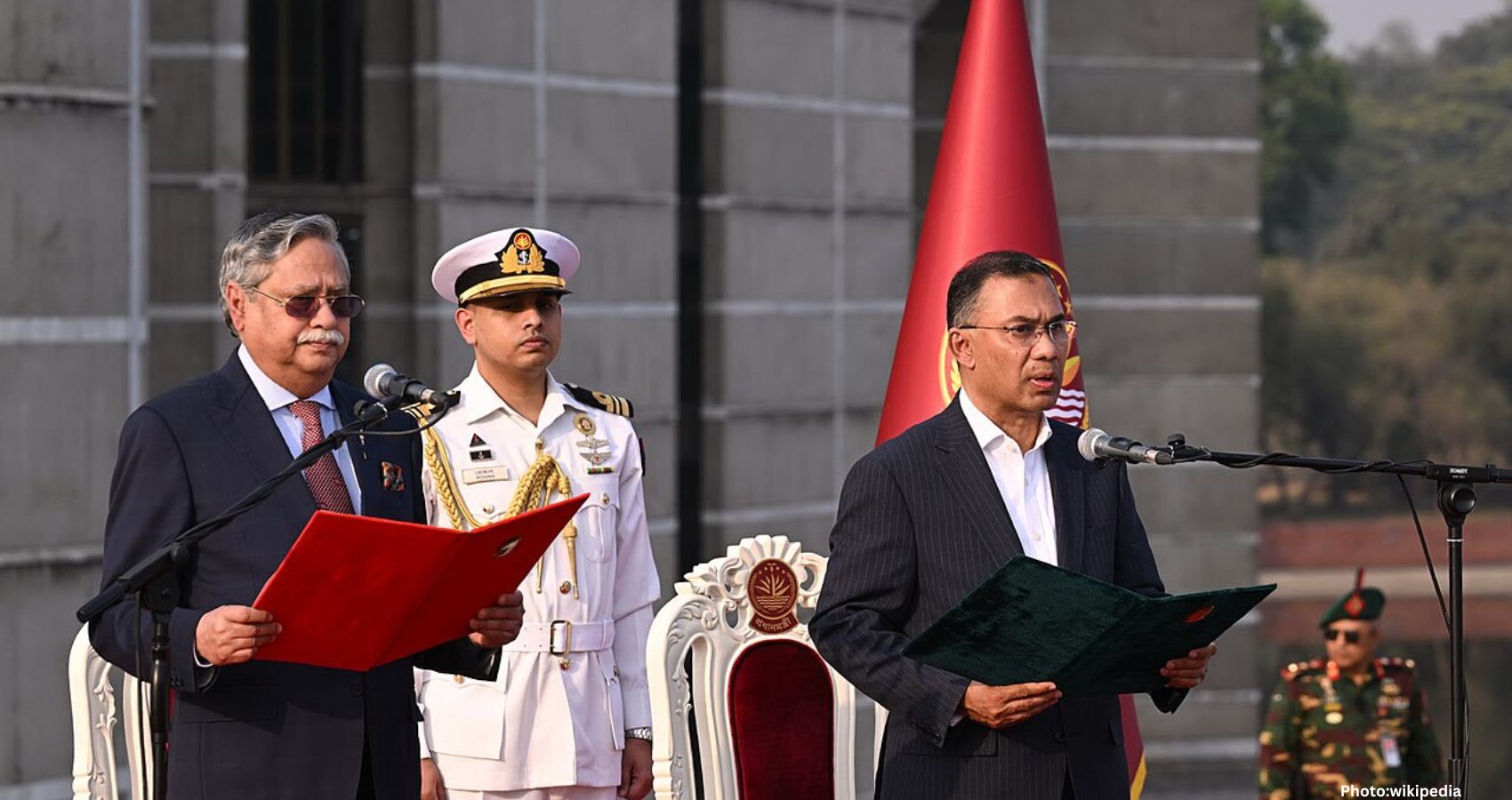
Bangladesh has sworn in its first male prime minister in 35 years, marking a significant shift in the nation’s political landscape following a recent parliamentary election.
In Bangladesh, the scent of democracy has often been overshadowed by the acrid smell of burning tires. For nearly four decades, elections in this delta nation have been marred by strikes, violence, and the ominous silence of the “hartal” (strike). However, on February 13, as the sun rose over the Buriganga River, the atmosphere was markedly different. The 13th Parliamentary Election, held the previous day, concluded without bloodshed, offering a rare moment of hope for the nation.
For the first time since 2008, Bangladeshis participated in an election where their votes were counted, resulting in a decisive verdict that is both significant and regressive. The Bangladesh Nationalist Party (BNP) has emerged from political obscurity with a commanding two-thirds majority, signaling a potential shift in the country’s governance.
As the final tallies were reported at the Election Commission’s headquarters, the initial excitement transformed into the cold reality of electoral statistics. The BNP, led by Tarique Rahman, secured 212 out of 300 seats, granting him the authority to reshape the republic. Rahman, the son of the late President Ziaur Rahman and former Prime Minister Khaleda Zia, who recently passed away, has returned to power after nearly two decades in self-imposed exile in London.
Voter participation in the election was approximately 60%, a notable turnout that raises questions about the absence of supporters from the proscribed Awami League. The BNP garnered nearly half of the total votes, with 49.97%, while the Jamaat-e-Islami party emerged as the second-largest bloc with 31.76% of the national popular vote, securing 77 seats. The National Citizen’s Party and independent candidates accounted for 3.05% and 5.79% of the votes, respectively, according to The Daily Star.
These statistics carry significant implications. If the proposed reforms are enacted, the establishment of an upper house with 100 members will be based on the proportion of total national popular votes received by the parties. With its substantial majority, the BNP is well-positioned to pass legislation in both houses.
However, the new parliament will include only seven women MPs, a disappointing figure compared to previous assemblies. This lack of representation reflects the limited number of women candidates fielded by the parties, particularly Jamaat. The decline of women’s leadership in a nation that has been led by women for three decades raises concerns about the return of patriarchal norms.
Notably, Tarique Rahman will be Bangladesh’s first male prime minister in 35 years, a distinction few nations can claim. Despite Jamaat’s anticipated surge, it fell short of expectations, although it did significantly increase its presence from 18 seats in 1991 to 77 in this election.
This election represents a fundamental shift in the ideological landscape of Bangladesh. The BNP campaigned on a platform of “restoring democracy,” while Jamaat positioned itself as a “cleaner” alternative, leveraging grassroots support and capitalizing on perceptions of corruption within the BNP during the interim period.
Alongside the parliamentary vote, citizens were also asked to vote on the July Charter, a package of constitutional reforms aimed at preventing the rise of another autocrat. With a 68% approval rate, the mandate for these reforms is clear. The Charter introduces term limits, ensuring that no individual can serve as prime minister for more than two terms, and establishes judicial independence to protect judges from executive influence.
While this is a victory for the “Gen Z” protesters who sparked the July 2024 uprising, the reality remains that the BNP’s two-thirds majority gives it the power to amend the constitution at will. Historically, politicians in Bangladesh have failed to deliver on their promises, both before and after independence. This election presents yet another opportunity for leaders to rebuild the nation.
The peaceful and participatory nature of the elections indicates that a vast majority of Bangladeshis—regardless of age, gender, or religion—desire a stable and prosperous nation where they can exercise their democratic rights. The electorate is calling for accountability from their leaders.
There are early signs of positive engagement among political leaders. Many losing candidates have graciously accepted the results, expressing gratitude to their supporters and promising to work towards future elections. Rahman has also reached out to opposition parties, emphasizing collaboration.
However, significant challenges lie ahead. These include rebuilding the economy, addressing social issues, and managing geopolitical relations, particularly with India, which has been sheltering Awami League leaders. The BNP must also navigate the complexities of governing a nation with a substantial Awami League support base.
In the past, political leaders have squandered opportunities by resorting to violence and street protests instead of engaging in constructive parliamentary debate. The 1991 elections and the 2008 polls serve as reminders of this pattern, where political discord led to instability.
Moreover, a rift has already emerged between the BNP and Jamaat regarding the implementation of the July Charter. Disagreements over the formation of the “Constitution Reform Council” could foreshadow a tumultuous political landscape. While such differences are common in any democracy, they could signal a troubling start for the new administration.
Bangladesh has a long history of political disappointments. The July Charter, supported by elected parties, offers a framework for meaningful reform, including improvements in freedom of expression and press freedom. Successive governments have stifled free speech, and Bangladesh currently ranks 149th in global press freedom indices.
Addressing the economy and institutional integrity will require sustained effort, but prioritizing the rule of law and allowing for diverse voices in public discourse can be immediate goals for the new administration.
The recent election was a credible exercise in democracy, marking a significant triumph for the electorate. The voters have made their choice, clearing the path for the new leadership.
Now, Tarique Rahman faces a pivotal decision. He can choose to perpetuate the old ways of governance, relying on patronage and coercion, or he can embrace the opportunity to limit his own power and foster institutions that endure beyond his tenure. The legacy of the “Monsoon Revolution” may not lie in his return but in the renewal of the nation itself.
As the streets of Dhaka resonate with the energy of a new beginning, there is a cautious hope for the future. The people have spoken, and their aspirations for a better Bangladesh are now at the forefront.
According to sapannews.com, the recent elections represent a critical juncture for Bangladesh’s political future.