
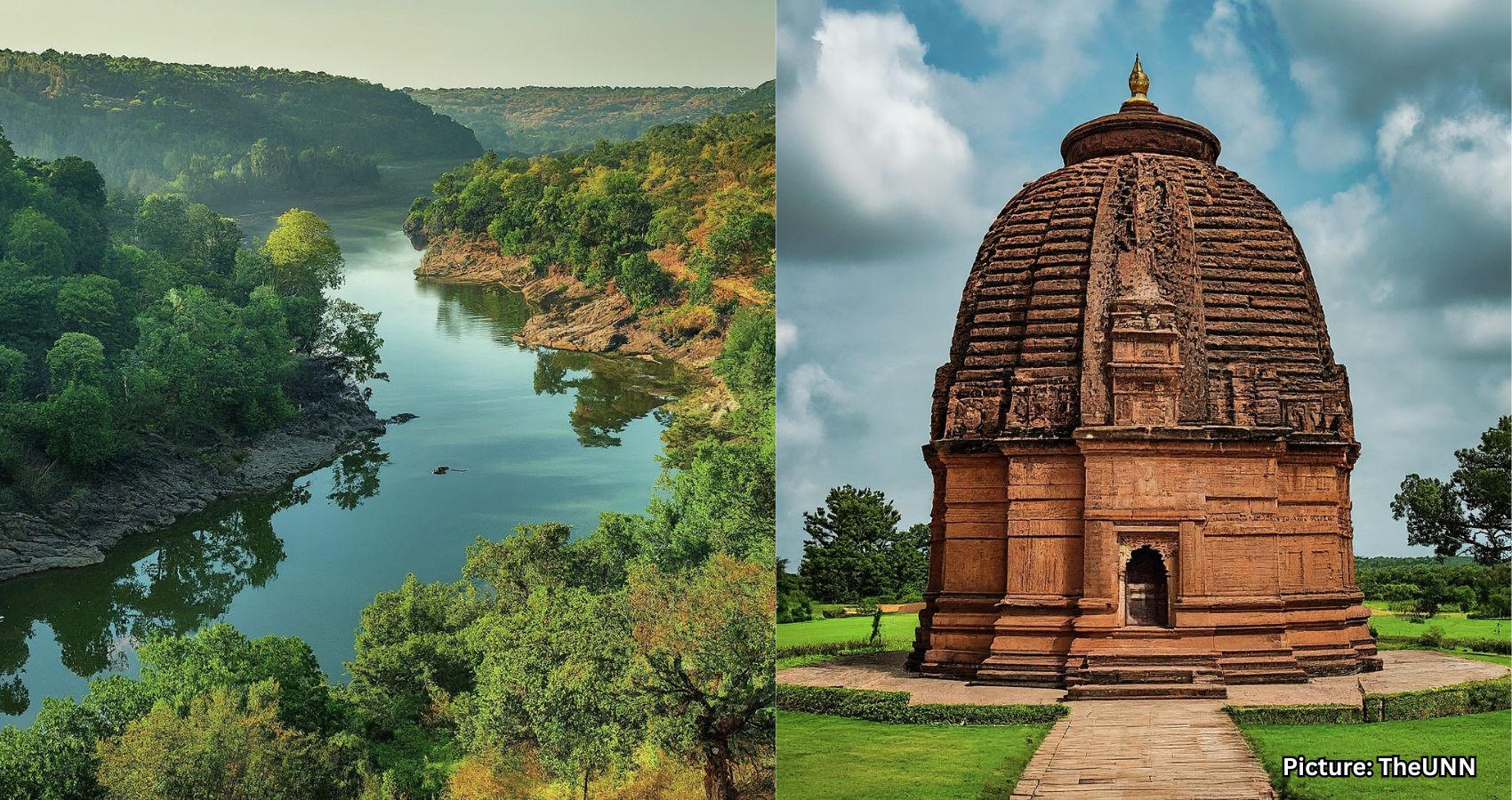
Balaghat, a hidden gem in Madhya Pradesh, offers a rich tapestry of wildlife, history, and stunning landscapes, making it a unique destination for nature lovers and adventurers alike.
The undulating hills and river-carved valleys of Balaghat cradle a world of fauna found nowhere else. It often feels as though Mother Nature has shown a special fondness for this district—her generosity evident in its dense forests, rich wildlife, and mineral-laden earth.
As a traveler, I am neither a wildlife photographer nor a researcher, but to truly understand the denizens of these forests, especially the tigers, one must step into the wilderness. And where better to do that than Balaghat? The district is divided into ten sectors, which, as the Nodal Officer pointed out, host an unusually high number of tigers. While there may be no formal record, the region is also believed to harbor the maximum concentration of sal trees and barasingha.
A Land Buried in Minerals, Rooted in History
Once the capital of the Gonds, Balaghat holds the country’s largest reserves of manganese and copper. Yet beyond the minerals, it is the forests—dominated by sal, bamboo, and wild timber—that fuel a significant part of the district’s economy. These forests also shelter an astonishing variety of wildlife, which is what ultimately drew me here.
Balaghat sits on the southeastern edge of Madhya Pradesh, touching Maharashtra to the south and Chhattisgarh to the east. Historically ruled by the Gonds, the Bhonsle Marathas, the Peshwas, and later the British, the region rests on the northeastern foothills of the Satpuras, along the serene Wainganga River. Its ancient monuments, tranquil landscapes, and vibrant tribal cultures give it a character unlike any other.
The western and southern portions of Balaghat lie within the Wainganga valley, fed by the district’s most important river. The Wainganga’s sandy stretches are occasionally broken by rising rocks, and two tributaries—both called “Bagh,” or tiger—add to its character. One of them, the Greater Bagh, meets the Smaller Bagh before curving northwest.
Where Wildlife Still Roams Unscripted
The rugged Maikal Hills—an extension of the Satpuras—run like a spine through the district, sustaining both wildlife and the tribal communities who have lived here for centuries. These hills, rivers, and valleys make Balaghat a haven for unique species, from the rediscovered Eurasian otter in the Wainganga to the thriving tiger populations in the forests that form a crucial part of the Kanha–Pench corridor.
Balaghat was once called “Burha,” later renamed to signify its position “above the ghats,” and perhaps also drawing from the Marathi “Bala,” meaning “best.” Yet despite this intriguing past, the district’s wilderness remains overshadowed by the fame of the Kanha and Pench Tiger Reserves. With over 54 percent forest cover—three times the size of Kanha—Balaghat remains a largely unexplored, almost mythical wildland in the heart of India.
Landscapes That Shift Like Pages in a Book
Balaghat boasts the highest forest cover in Madhya Pradesh and is broadly divided into two terrains—the lower half extending into the Nagpur plains, and the upper half shaped by the Satpura mountains. Leaving behind the city, one enters the silent, sun-dappled roads that Captain James Forsyth once described in *The Highlands of Central India*, where luxuriant jungles and “noxious animals” once deterred settlers.
A sudden halt of our jeep broke the quiet. A herd of gaur—twelve strong, mostly females—stood grazing in an open meadow. Startled by our presence, they bolted into the woods: nothing like the habituated gaur often seen in protected reserves. That’s when I knew the forest was ready to reveal itself.
These forests form vital ecological links—from Kanha to the northeast and Pench to the southwest, all the way to Maharashtra’s Navegaon–Nagzira to the south. Conservationists worry that fragmenting land use, expanding highways, and rapidly growing settlements are slowly tightening these ancient corridors.
Where Every Turn Holds a Surprise
Once inside the right stretch of forest, Balaghat unfolds like an illustrated field guide. The canopy teems with birds; even the forest edges hum with life: mahua and mango trees draw everything from bulbuls to waders. Without warning, Sarus Cranes may emerge, striding elegantly across wetlands or paddy fields. And if you’re lucky, the white-plumed comet of the Indian Paradise Flycatcher will flash through the canopy, while the Indian giant flying squirrel claims the night.
Summer brings herds of gaur to tender bamboo groves, while late winter is arguably the best time to decipher the forest’s secrets. You may not encounter tigers at every bend, but the jungle speaks in subtle signs: scat on the trail, claw marks on bark, the soft hush of something wild moving just out of sight. Balaghat tells its story quietly, yet deeply.
Monsoons, Mystique, and Monuments
Balaghat receives the highest rainfall in central India, and the monsoon transforms it into a world of mist and emerald. Cloud-draped ghats take on a primeval beauty. Yet the rains also cut the district off—tributaries like Uskal and Nehra roar back to life, isolating villages for days.
Lanji Fort
Located 65 km from Balaghat, Lanji Fort carries centuries of history. Believed to be built by Raja Malukoma, grandfather of the martyr Rajkumari Hasla, the fort’s eastern entrance still bears carvings of tortoises and a serpent. Inside lie remnants of an ancient palace and the Raja–Rani bathing tank. The walls rise nearly 20 feet, once supported by four bastions—only two of which still stand. A small temple dedicated to Rajkumari Hasla marks the fort’s side entrance.
Hatta Ki Haweli
Dating back to the 16th–18th centuries CE, the remains of Hatta Ki Haweli give glimpses into the region’s architectural past. The surviving enclosure walls hint at the fortified mansion of Hatta’s Malgujar, built for protection. A few old pillars—silent witnesses to a lost structure—offer archaeologists valuable insights into the area’s heritage.
Balaghat is a treasure trove of natural beauty and historical significance, making it a remarkable destination for those seeking adventure and a deeper connection with nature. The district’s rich tapestry of wildlife and culture continues to inspire those who venture into its wild heart, according to India Currents.