
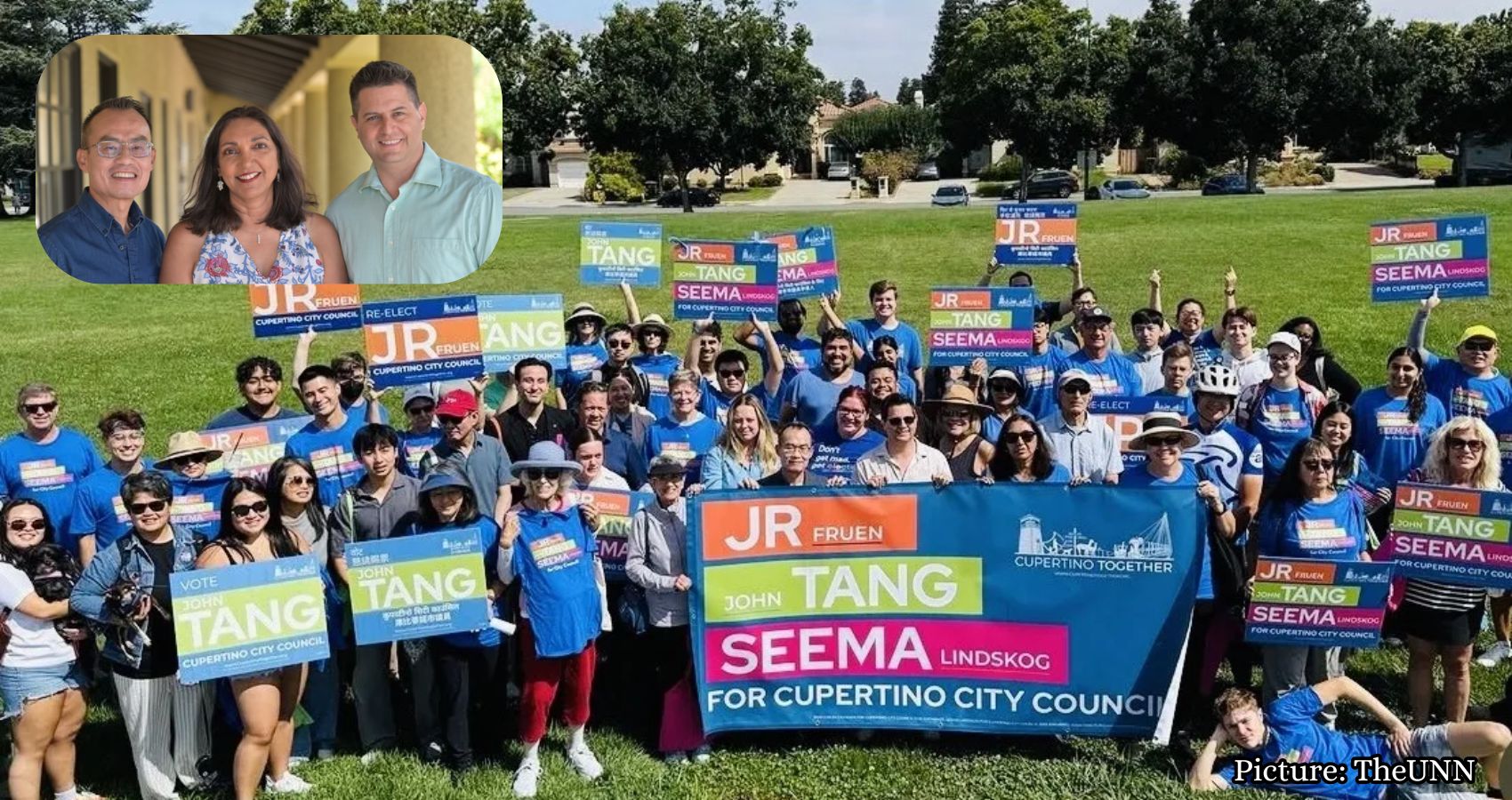
Seema Lindskog, a long-time community advocate and current Planning Commissioner, is running for Cupertino City Council, aiming to bring a fresh perspective and strategic vision to local governance.
Seema Lindskog, a dedicated community advocate, is embarking on her inaugural campaign for public office as a candidate for the Cupertino City Council. With 30 years of experience in corporate strategy and her current role as a Planning Commissioner, Lindskog aims to infuse City Hall with a dynamic and forward-thinking approach. She is running alongside fellow candidates J.R. Fruen and John Tang on a coordinated slate.
In an exclusive interview, Lindskog outlined her vision for Cupertino, emphasizing the need for a diversified tax base, an expanded urban tree canopy, and a more vibrant community. The following insights have been edited for clarity and brevity.
When asked about her decision to run for office, Lindskog explained, “Running for City Council in 2026 wasn’t originally on my bingo card, but community members encouraged me to run after years of local involvement.” Her journey into community politics began when she led a petition with 3,500 residents regarding the RNA trail, which ultimately led to her four-year tenure on the Planning Commission.
“Through my land-use work on the commission, it became clear that while Cupertino houses one of the most innovative companies in the world, that sense of energy, optimism, and innovation is not reflected in city government,” Lindskog noted. “For the last decade, civic debate centered almost entirely on what we don’t want; rejecting housing or commercial projects rather than defining what we do want. I am running to change that dynamic and bring a positive, forward-looking vision to Cupertino.”
Lindskog articulated her primary role as a city council member as one of creating a positive vision and developing structured five- and ten-year plans. “There are key areas where we need forward planning,” she said.
One of her main objectives is to diversify the city’s tax revenue base. “We have a unique economy in Cupertino with a lot of small businesses and one giant trillion-dollar company, but nothing in between,” she explained. “When state law changed six years ago and we lost Apple sales tax revenue, we tightened our belt to get out of the deficit. But we also have to build our revenue base and bring in mid-sized companies so we aren’t putting all our eggs in one or two baskets.”
Lindskog also emphasized the importance of a health and urban canopy plan. “On the west side of town, we have about 30% tree coverage, but on the east side, some places have only 10–12%,” she stated. “That is a health issue for our residents, a climate resilience issue, and an equity issue. I want to push a ‘35 by 35’ goal to reach 35% canopy coverage by 2035, which will have a huge positive implication for the health and quality of life of our residents.”
She also sees potential in transforming De Anza College into an innovation hub. “De Anza College is a fantastic location, and we could do so much more to make it a center of innovation and workforce development,” Lindskog said. “By creating public-private partnerships and innovation hubs, we can build a flywheel of highly qualified talent that feeds the economic engine of the city.”
Streamlining the permitting process for home renovations and accessory dwelling units (ADUs) is another priority for Lindskog. “We need to make it faster, cheaper, and easier,” she asserted. “So much has been ignored because the housing debate has taken up all the oxygen in the room.”
Addressing the challenges facing her constituency, Lindskog identified housing and demographic shifts as significant issues. “Housing is a big pain point,” she explained. “Young professionals and families can’t afford to buy here, so they rent until their kids graduate high school and then leave. That demographic shift has hit us hard and even forced school closures.”
She also noted the lack of a vibrant downtown, stating, “We don’t have a downtown or anything open past 9 or 10 p.m., so we don’t retain young people. My 18-year-old son once told me, ‘Mom, Cupertino is the most boring place on earth,’ and he isn’t wrong.”
Lindskog highlighted the need for ongoing support for schools, public safety, and community engagement. “Keeping our schools high-quality is an ongoing issue as they struggle with funding,” she said. “While the City Council doesn’t directly run the school district, creating a thriving downtown and housing market is symbiotic and will directly help support our schools.”
As for her campaign strategy, Lindskog is running on a three-person slate called “Cupertino Together” alongside J.R. Fruen, who is seeking re-election, and John Tang. “We are running as a very tight, coordinated team,” she explained, sharing resources like a website, flyers, and meet-and-greets to ensure voters understand their shared platform.
Lindskog believes that electing all three candidates is crucial to breaking through the current political gridlock. “Needing a three-vote majority on a five-person council to pass anything makes it essential to elect all three of us,” she stated.
What sets Lindskog apart from her competitors, she argues, is her vision for Cupertino. “Their vision is simply keeping Cupertino as close to what it used to be as possible—maintaining a semi-rural, suburban feel—without offering a broader plan for economic growth,” she said. “So much of the dialogue in Cupertino has been wrapped up strictly in housing, while I want to bring energy, optimism, and overall community vitality.”
In terms of her personal background, Lindskog brings a multicultural perspective to her campaign. Born in India and raised in Paris, she moved to the U.S. to earn her master’s degree at Carnegie Mellon University. “Cupertino is such a vibrant melting pot, and loving and respecting diverse cultures is a core part of who I am,” she remarked.
In her closing pitch to voters, Lindskog stated, “Cupertino needs change, and we deserve something better for our city. We need a positive, forward-looking vision for Cupertino; one that builds a stronger economic base, creates a real downtown, cuts through bureaucracy, and provides housing for all life stages.”
Ultimately, Lindskog aims to make Cupertino a more welcoming, vibrant, and thriving city for all residents, according to India Currents.