
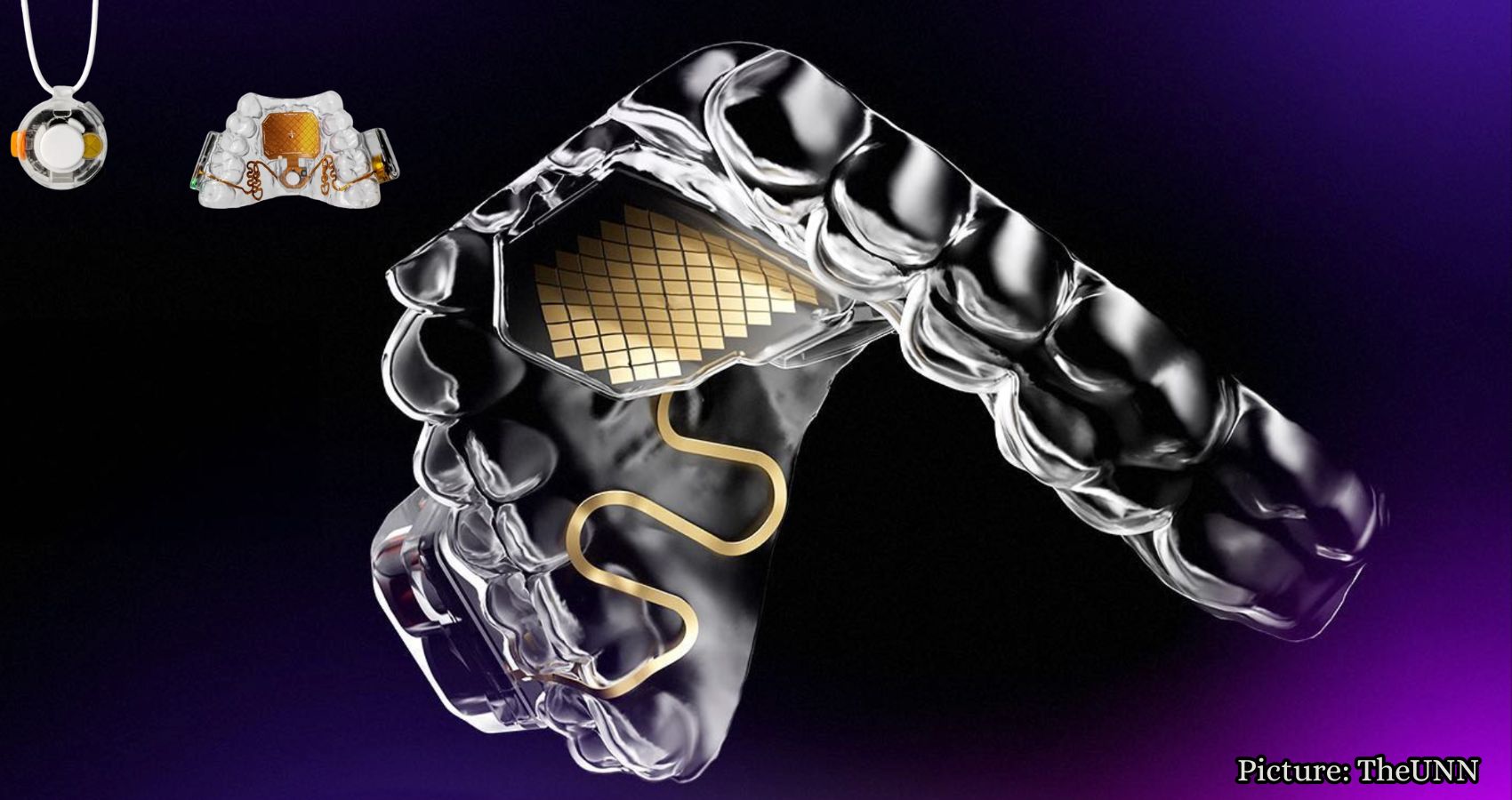
The MouthPad, a hands-free touchpad developed by Augmental Technologies, allows users to control computers and devices using their tongue or head movements, offering new accessibility options for those with limited mobility.
In an era where technology is constantly evolving, the MouthPad emerges as a groundbreaking innovation in assistive devices. Developed by San Francisco-based Augmental Technologies, this custom-fit hands-free touchpad sits comfortably inside the mouth, enabling users to control a computer, smartphone, or tablet with their tongue or head movements.
Described as the world’s first hands-free touchpad, the MouthPad resembles a slim dental retainer. However, it is equipped with advanced technology that translates subtle movements into cursor control. The primary goal of this device is to provide individuals with limited mobility a new way to interact with everyday technology. Augmental Technologies collaborated with hundreds of users with diverse abilities during the development process to ensure the MouthPad meets their needs.
So, how does the MouthPad work? The device is positioned over the upper teeth, with a pressure-sensitive touchpad resting against the roof of the mouth. Users can move their tongue across the touchpad to navigate the cursor or utilize head movements for control. Specific gestures, such as tongue presses, can perform left-clicks or click-and-drag actions, while a sip gesture can trigger a right-click. The MouthPad also supports scrolling and swiping, allowing users to perform many tasks typically handled by fingers on a mouse or trackpad.
Connecting wirelessly like a Bluetooth mouse, the MouthPad eliminates the need for a special receiver attached to the computer. It is compatible with various operating systems, including macOS, Windows, Linux, iOS, and Android. The accompanying app is available for macOS, Windows, and iOS, enabling users to pair the MouthPad with multiple devices and switch between them seamlessly. Within the app, users can adjust settings such as cursor speed, touch sensitivity, and click strength, with preferences stored directly on the MouthPad for convenience.
One of the key considerations for potential users is how the MouthPad affects speech. Augmental claims that its custom design minimizes any impact on verbal communication. Users can speak or utilize voice recognition software while wearing the device, although individual experiences may vary. Some users might require time to adjust to speaking normally with the MouthPad in place. Comfort levels can also differ, as factors such as mouth shape and usage patterns play a role. Weighing approximately 10 grams and measuring about 1 mm thick, the MouthPad is constructed from dental resin, making it lightweight and discreet.
The MouthPad boasts a battery life of over seven hours of continuous use, with a charging time of approximately 1.5 hours. It comes with a dedicated charging case and a USB cable for convenience. Augmental also offers a two-device package, allowing users to have a backup MouthPad, which can be particularly useful when one device needs charging.
However, acquiring a MouthPad is not as simple as placing an order online. Each device is custom-fitted, requiring an intraoral 3D scan from a dentist or local scanning provider. Augmental utilizes this scan to manufacture the device, with most providers charging between $50 and $150 for the scan. After receiving the scan, Augmental typically ships the finished MouthPad within six months. Once it arrives, users can configure it through the company’s online platform and complete a one-time calibration.
The MouthPad is primarily designed for individuals over the age of 18 who possess sufficient tongue dexterity to operate the device. Augmental recommends that candidates have good oral health and are not undergoing active dental or orthodontic treatment. Additionally, users must be able to open their mouths wide enough for the initial 3D scan.
Despite its focus on accessibility, the MouthPad has garnered interest from a broader audience. Over 6,300 individuals are currently on the waitlist, including both people with disabilities and professionals seeking to control devices while keeping their hands free for other tasks.
Maintaining hygiene is crucial for a device that resides in the mouth. Augmental advises users to wash the MouthPad by hand with soap and water before and after each use, ensuring it is dry before returning it to the charging case. While users can drink water while wearing the device, it should be removed before consuming anything else or sleeping, as hot liquids can affect its fit. Biting or chewing the MouthPad is discouraged, as this could damage it and void the warranty.
The cost of the MouthPad is $1,400 for a single custom-fit device, while a two-device package is available for $1,900. The additional device serves as a backup, extending the time between charging sessions. It is important to note that the dental scan is an extra expense, and the MouthPad is not currently covered by insurance, Flexible Spending Accounts (FSA), or Health Savings Accounts (HSA).
Currently, Augmental only sells and ships the MouthPad to addresses within the United States. However, the device itself is not geo-restricted, allowing it to be used outside the country once obtained.
The MouthPad exemplifies how accessibility technology can revolutionize the way individuals interact with computers. For those unable to use traditional mice or touchscreens, the ability to navigate devices through subtle mouth movements offers a new avenue for independence. While the price and custom fitting process may pose challenges for some, the technology represents a significant advancement in hands-free computing.
As Augmental continues to innovate, they are also developing Vox, a wearable microphone that detects quiet speech through vibrations in the body. This dual approach—MouthPad for cursor control and Vox for dictation—highlights the potential for technology to enhance communication and accessibility.
For those who have never considered controlling a device with their mouth, the MouthPad raises intriguing questions about accessibility and independence in technology. As the device moves from concept to consumer availability, it marks a significant milestone in the evolution of assistive technology.
Would you be comfortable controlling your phone or computer with a device inside your mouth? Share your thoughts with us at Cyberguy.com, as we explore the future of technology and accessibility.
According to Fox News, the MouthPad represents a fascinating intersection of innovation and accessibility, paving the way for new possibilities in hands-free computing.