
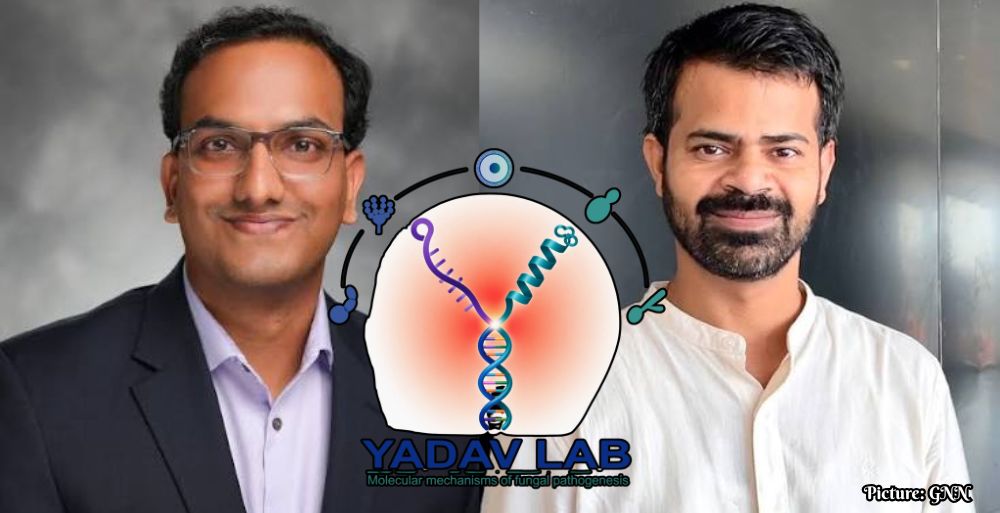
Dr. Vikas Yadav has established a new lab at the University of Minnesota to study how environmental fungi adapt to human body temperature and cause severe infections.
Indian American molecular microbiologist Dr. Vikas Yadav has recently joined the University of Minnesota Twin Cities as an assistant professor, where he has launched a new research facility within the Medical School’s Department of Microbiology and Immunology.
Announced via social media platforms X and LinkedIn, the “Yadav Lab” will focus on investigating the molecular mechanisms that allow pathogenic environmental fungi to adapt to human body temperature, potentially leading to severe health issues.
The lab’s research emphasizes understanding heat not merely as a stressor for fungi but as a dynamic factor that drives their biological evolution and pathogenicity. Dr. Yadav stated on the Yadav Lab website, “We think that heat is not just a stress that fungi adapt to, but that high temperatures reshape cell division, genome stability, and pathogenicity in fungal pathogens.”
He further explained that decoding the molecular and biochemical basis of heat response pathways will uncover the hidden biology of pathogenic fungi, which could lead to the identification of novel drug targets.
Dr. Yadav’s research aims to identify the specific cellular and molecular components involved in fungal growth at elevated temperatures. This work is expected to provide new insights into how these pathogens survive within a host, paving the way for future therapeutic developments.
Before his appointment at the University of Minnesota, Dr. Yadav built a solid scientific foundation in India. He earned his doctorate in molecular biology from the Jawaharlal Nehru Centre for Advanced Scientific Research (JNCASR) in Bengaluru.
After completing his doctoral studies, he furthered his expertise in the United States, serving as a postdoctoral associate and senior research associate in the Department of Molecular Genetics and Microbiology at Duke University School of Medicine.
His new role at the University of Minnesota Twin Cities signifies a significant step in his career, as he transitions to leading an independent academic research lab dedicated to the cellular biology of pathogenic fungi.
This innovative research initiative is expected to contribute significantly to the understanding of fungal infections and their treatment, highlighting the importance of Dr. Yadav’s work in the field of microbiology.
According to The American Bazaar, Dr. Yadav’s lab aims to make groundbreaking discoveries that could enhance our understanding of fungal pathogens and their interactions with human hosts.