
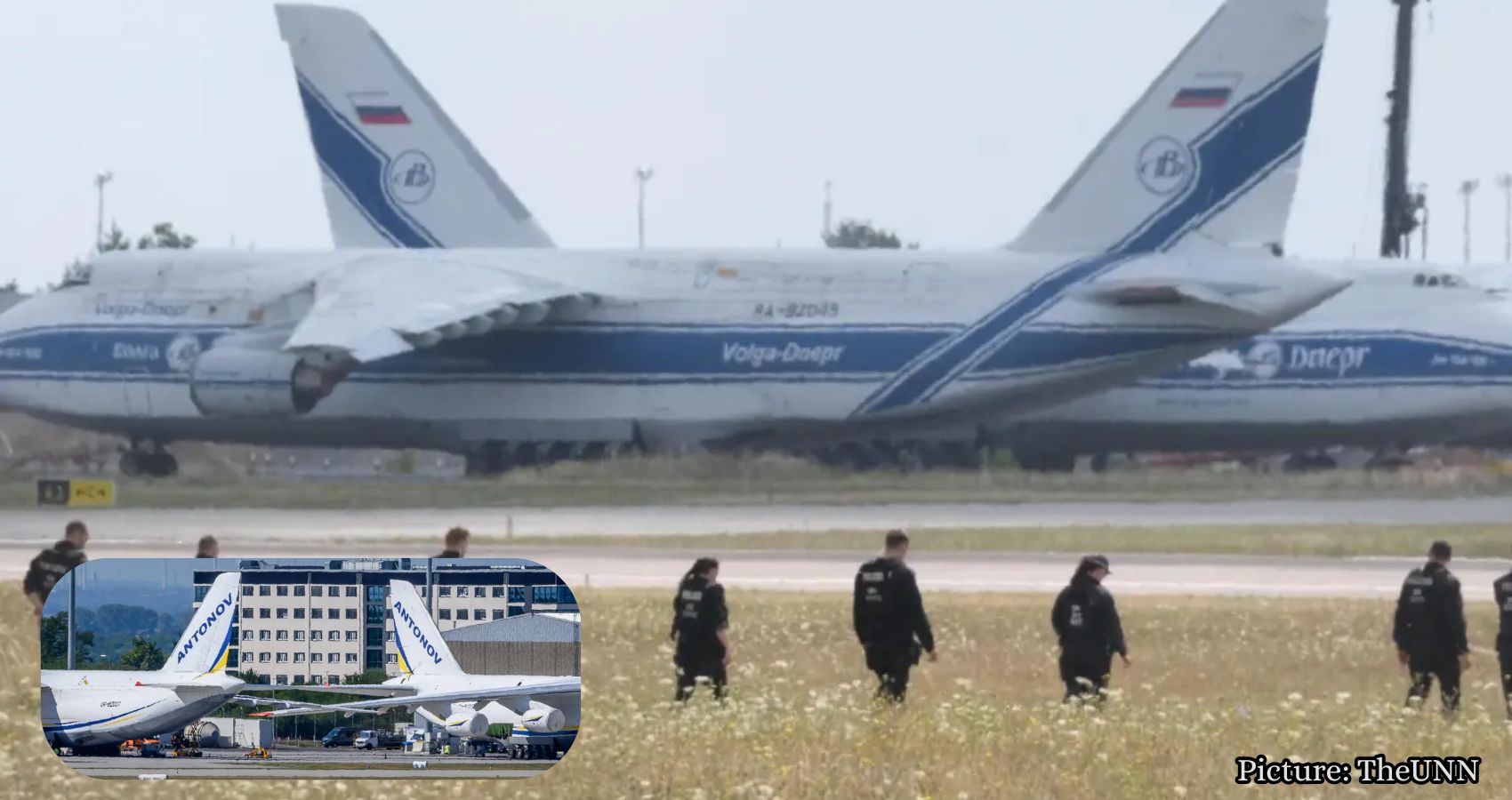
Germany has accused Russia of a failed drone attack at Leipzig/Halle Airport, leading to the closure of the Russian consulate in Bonn and heightened diplomatic tensions.
Germany has officially linked Russia to a failed drone sabotage operation at Leipzig/Halle Airport, prompting the closure of the Russian consulate in Bonn and escalating diplomatic tensions between the two nations. This announcement was made on Tuesday by German Foreign Minister Johann Wadephul, who stated that the decision follows an investigation into the August 4 incident involving a Ukrainian cargo aircraft.
According to Wadephul, forensic evidence and intelligence findings have established Russia’s involvement in the attack. Authorities discovered a drone equipped with an explosive device next to a Ukrainian Antonov cargo aircraft at the airport. Fortunately, the explosive did not detonate due to a faulty detonator. In addition, officials suspect that a second drone may have collided with a nearby cargo aircraft during the incident.
Interior Minister Alexander Dobrindt emphasized that this incident is part of what he described as Russia’s “well-established pattern of hybrid operations in Europe.” The attack has raised concerns about the security of critical infrastructure in Germany and the broader region.
In response to the allegations, the Russian Embassy in Berlin dismissed the claims as “absurd.” Foreign Ministry spokeswoman Maria Zakharova indicated that Russia would retaliate in a “mirror-image” manner to Germany’s actions. The embassy characterized Berlin’s measures as an “unprecedented escalation in Russian-German relations.”
Alongside the closure of the consulate, Wadephul announced tighter entry restrictions for Russian nationals and additional measures aimed at curtailing Russia’s shadow fleet operations. He also summoned Russia’s ambassador to Germany, Sergei Nechayev, to discuss the situation further.
This marks Germany’s first public attribution of responsibility for the airport attack. Previously, German officials had only suggested that “foreign powers” might be involved, although U.S. media had reported that American intelligence believed Russia was behind the incident.
Leipzig/Halle Airport is one of Europe’s largest cargo hubs and serves as a logistics center for Germany’s military and NATO allies. Its strategic importance is underscored by its role in supporting Ukraine’s cargo operations, particularly with the presence of Ukrainian Antonov transport aircraft.
NATO Secretary-General Mark Rutte expressed solidarity with Germany, stating on X that the evidence of Russia’s involvement is clear and welcoming the measures announced by Berlin in response to the attack.
European Commission President Ursula von der Leyen indicated that the European Union is preparing additional sanctions against Russia, while Polish Prime Minister Donald Tusk accused Moscow of escalating tensions across the region.
These developments come amid warnings from German officials about an increasing campaign of hybrid threats targeting military, transportation, and critical infrastructure. Chancellor Friedrich Merz stated last week that those responsible for hostile acts against Germany would “pay a price.”
In a separate incident, German police reported that they are investigating improvised explosive and incendiary devices found at a power substation in the eastern state of Brandenburg. This discovery followed a temporary outage caused by a damaged power line, although authorities have not yet identified who planted the devices.
The situation continues to evolve as Germany takes steps to bolster its security and respond to perceived threats from Russia, highlighting the ongoing tensions between the two nations.
According to Fox News, the implications of these actions could have far-reaching effects on diplomatic relations and regional security.