
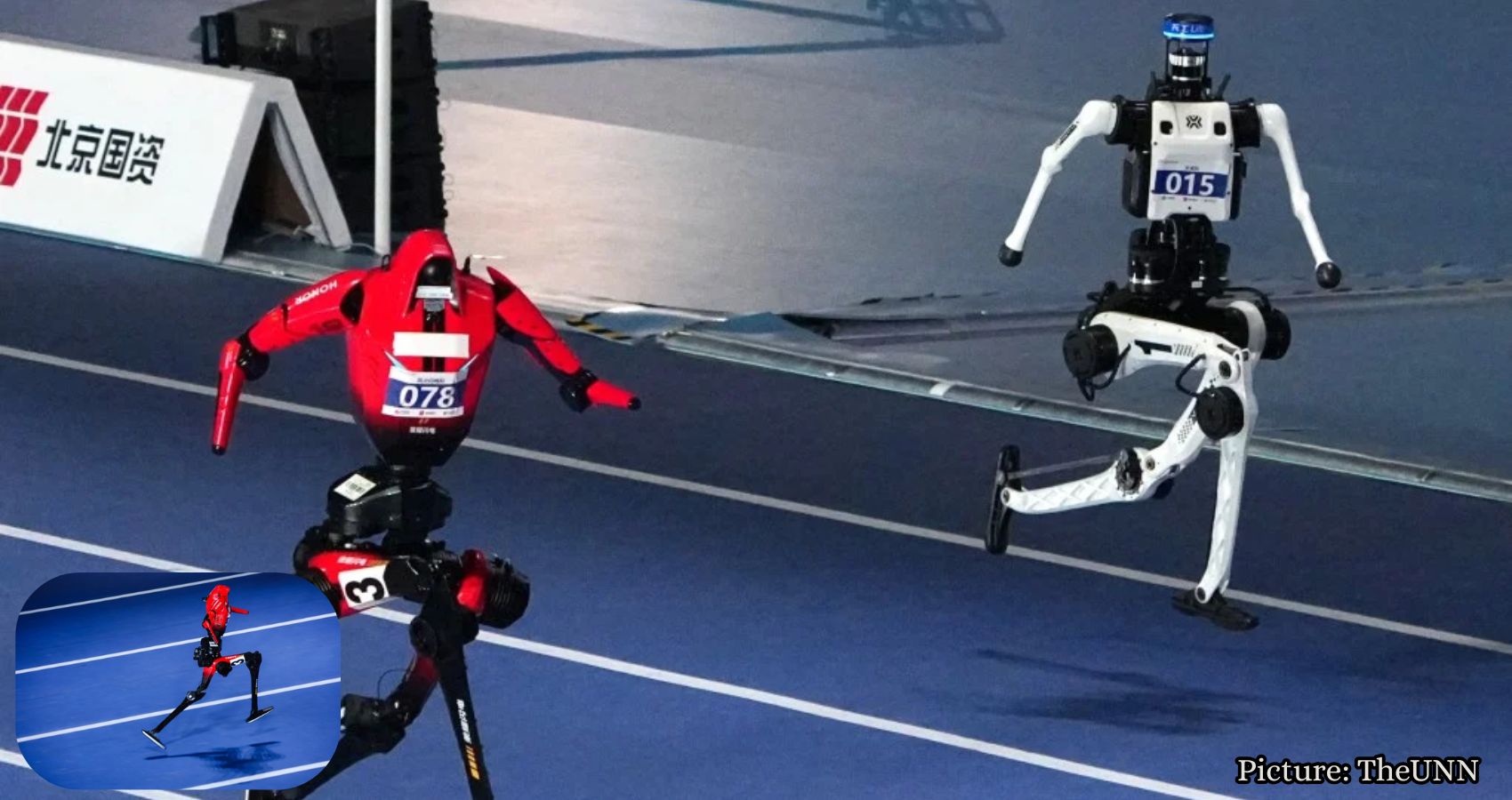
A Chinese humanoid robot has set a new record in the 100-meter sprint, surpassing Usain Bolt’s long-standing world record during the World Humanoid Robot Games in Beijing.
A Chinese humanoid robot has made headlines by breaking Usain Bolt’s 100-meter world record, showcasing the rapid advancements in robotic technology as China intensifies its focus on humanoid robotics.
The robot, named Tiangong Ultra and developed by Beijing-based X-Humanoid, completed the 100-meter sprint in an impressive 9.39 seconds at the World Humanoid Robot Games held in Beijing on August 22. This achievement eclipsed Bolt’s previous record of 9.58 seconds, which he set in 2009.
This remarkable performance occurred during the opening events of a five-day competition that features over 2,000 robots from 666 teams across 16 countries. Another Chinese humanoid robot, Lightning, developed by smartphone manufacturer Honor, also surpassed Bolt’s time, clocking in at 9.47 seconds during the final. Lightning had previously recorded a time of 9.32 seconds in a test run.
While these times are impressive, the races also highlighted some of the challenges that humanoid robots face. Tiangong Ultra, despite its record-setting speed, lost stability near the finish line and veered off the track. Similarly, Lightning struggled after completing its run and required assistance to be carried off the field. These incidents underscore the ongoing difficulties in achieving high speeds while maintaining reliable control.
The World Humanoid Robot Games aim to showcase a wide range of robotic capabilities beyond just running. The competition includes 51 events, featuring sports such as sprinting, soccer, and table tennis, as well as tasks designed to simulate real-world scenarios.
Reportedly, more than 40% of the competitions require robots to operate autonomously. Challenges include warehouse logistics, cable connections, material handling, and emergency-response scenarios, all of which test the robots’ vision, balance, coordination, and fine motor skills.
The sprint performance follows other significant advancements in humanoid robotics this year. In April, humanoid robots participated in a half-marathon in Beijing, with the winning autonomous robot completing the 21-kilometer course in 50 minutes and 26 seconds.
China has strategically positioned humanoid robotics as a key area of technological development, with companies focusing on creating machines for manufacturing, logistics, and consumer applications. This growing capability is part of a broader technology competition with the United States.
In July, the U.S. government announced plans to restrict imports of foreign-made humanoid and quadruped robots, citing national security and cybersecurity concerns. This move is expected to particularly impact Chinese manufacturers, who have emerged as significant players in the robotics sector.
The recent robot sprint not only represents a remarkable achievement in the field of robotics but also illustrates the rapid progress being made in areas such as speed, balance, and mechanical power. However, the challenges related to stability and autonomous decision-making reveal that there is still considerable work to be done before humanoid robots can reliably perform complex tasks outside of controlled environments.
According to Reuters, the advancements in humanoid robotics are a testament to the ongoing innovation and competition in this rapidly evolving field.