
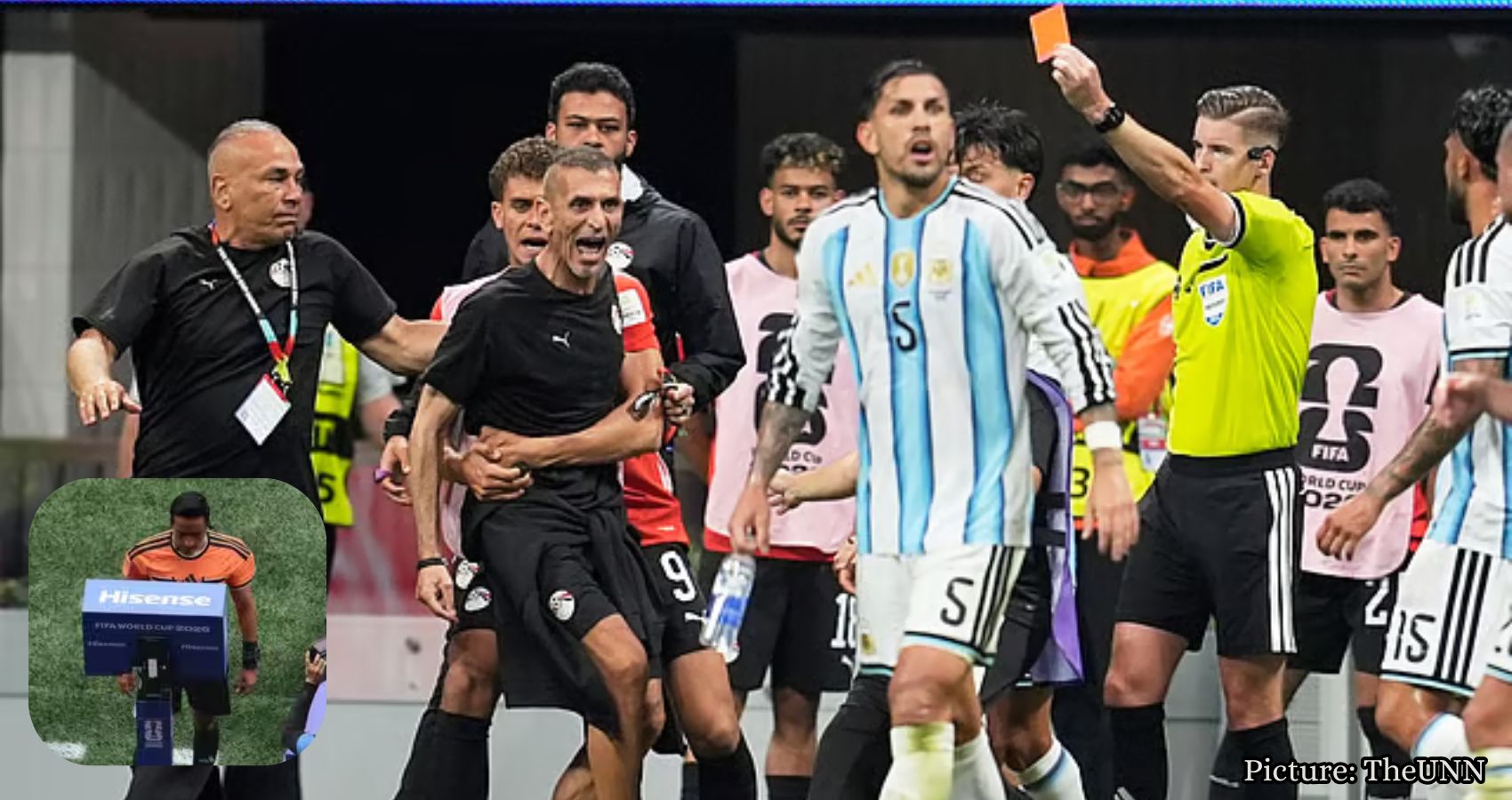
Ghana’s call for an inquiry into FIFA’s officiating highlights the need for reforms to restore fairness and trust in World Cup refereeing.
Ghana should join the growing chorus advocating for an inquiry into FIFA’s officiating practices, emphasizing the need for concrete actions to restore fairness and trust in the sport.
As a lifelong football enthusiast who grew up in Italy during the 1960s, I have witnessed the evolution of the game over more than six decades. My first World Cup experience was in 1962 in Chile, where I followed the matches on the radio, imagining the excitement from thousands of miles away.
My early football memories were shaped by legends such as Argentine-Italian star Omar Sivori, Brazilian great Jose Altafini, and Welsh icon John Charles, who all became prominent figures in Serie A during one of Italy’s golden eras. This era also featured the tactical brilliance of players like Cesare Maldini, Gianni Rivera, Sandro Mazzola, and Gigi Riva. Growing up, I developed a deep appreciation for the nuances of the game, influenced by the tactical sophistication of Italian football and the fast-paced traditions of Northern European soccer.
Even after relocating to the United States in 2000, my passion for football remained unwavering. Therefore, when the FIFA World Cup was announced to take place in the United States, Canada, and Mexico, I was ecstatic that the world’s premier sporting event would finally be hosted in my own backyard.
However, this World Cup has also brought to light a persistent issue that has plagued the beautiful game for decades: controversial officiating.
I vividly recall the frustration surrounding Italy’s controversial exit from the 2002 World Cup, where several crucial decisions went against the Azzurri, including five disallowed goals across three matches, notably against Croatia and South Korea. For many Italian fans, these moments remain some of the most painful in World Cup history.
In an effort to enhance accuracy and reduce controversies, technology was introduced to the sport. Yet, the implementation of the Video Assistant Referee (VAR) system has not resolved the debate surrounding officiating. Instead, it has sparked new questions regarding interpretation, consistency, and the application of technology.
The officiating during the recent match between Egypt and Argentina, which Argentina won 3-2 after trailing 2-0, has reignited discussions about how the biggest matches in football are controlled. FIFA’s referee chief, Pierluigi Collina, defended the organization’s stance on the officiating and VAR decisions in the Argentina-Egypt game, asserting that there was “no bias, nor malicious intent” behind the calls.
Collina, regarded as one of the greatest referees of all time, officiated the 2002 World Cup final and has built a reputation for being a strict yet fair referee. Since joining FIFA in 2017, he has been relied upon to defend contentious refereeing decisions and the use of VAR. However, even when officials act in good faith, FIFA must evaluate whether its systems apply the same standards to every team.
Bias in officiating does not always manifest as overt or intentional; often, it is unconscious, shaped by cultural norms, historical patterns, and ingrained assumptions. Sports institutions, like all human organizations, must continually scrutinize their decision-making processes. In a global competition involving nations with vastly different histories, resources, and influence, the perception of fairness is as crucial as fairness itself.
The issue transcends individual referees, VAR decisions, or specific matches. It raises the question of whether FIFA’s systems ensure that every nation competes under the same standards, regardless of its footballing history or global profile.
Ghana itself faced a refereeing controversy during its goalless draw against England. A Ghanaian attacker was brought down by the England goalkeeper just outside the penalty area, yet no foul was called, and no red card was issued. The Ghanaian players appeared either too timid or too flustered to protest effectively, and attempts to prompt a VAR review were dismissed.
A different decision in that moment could have altered not only the match’s result but also Ghana’s trajectory in the tournament. While that moment cannot be reversed, it should not be forgotten. Ghana, Egypt, and other federations concerned about officiating standards should advocate for reforms that bolster confidence in the system.
The first step toward improvement is transparency. There should be persistent demands for a full explanation of why VAR was not utilized in critical moments. FIFA should provide an official account, which should be made publicly accessible for scrutiny. The Ghana Football Association should request documentation regarding the incident and ensure it is available for future reference.
A broader review of VAR implementation is also necessary. Decisions should be analyzed across the tournament by match, team, referee, type of incident, and final outcome to identify any patterns of inconsistency.
If FIFA is unwilling to conduct such an analysis publicly, national federations and independent football experts should consider their own structured reviews using available match footage and data.
Players and officials must also adapt to the evolving landscape. Teams should be better prepared to respond when they believe significant mistakes have occurred. There are respectful yet persistent ways to seek clarification without risking unnecessary penalties. Teams can learn from those who effectively question decisions while adhering to the rules.
If evidence reveals significant inconsistencies, FIFA should undertake a comprehensive review of officiating methods. Football has become too significant for avoidable errors to dictate outcomes, even with the support of technology.
This principle applies not only to major incidents, such as potential red-card offenses, but also to smaller moments that can influence matches, including missed corners, unseen deflections, and varying interpretations of physical challenges.
Inconsistency undermines confidence among players and fans alike. The goal should not be to eliminate the human element from football but to create a system where technology enhances fairness and trust.
As the most widely watched sport globally, with an estimated following of over 3.5 billion people, protecting the integrity of football should be FIFA’s top priority. The pressing question is whether the current officiating model is adequate for the modern era. FIFA should explore whether elements from other major sports, such as additional officials and more structured video review systems, could enhance oversight without disrupting the flow of play.
While it may be premature to advocate for the adoption of NFL officiating methods in football, the ongoing commercialization and financialization of the sport will likely amplify calls for greater precision and accuracy in officiating.
No system will eradicate every mistake. Human judgment will always be a part of football, contributing to the sport’s character. However, technology should aid referees in making more accurate and consistent decisions.
In a World Cup, a single call can change the course of a match, shatter a nation’s dreams, and erode confidence in the competition. The most memorable moments in football should be defined by the brilliance of players, not by preventable officiating errors. The beautiful game deserves nothing less.
According to The American Bazaar.