
Authorities have filed charges against Indian crime boss Lawrence Bishnoi in connection with the assassination of a Sikh leader in Canada, a case that has heightened tensions between Canada and India.
Authorities announced charges on Tuesday against Lawrence Bishnoi, the leader of an Indian criminal organization, in relation to the assassination of a prominent Sikh leader in Canada. This high-profile killing has significantly strained diplomatic relations between Canada and India.
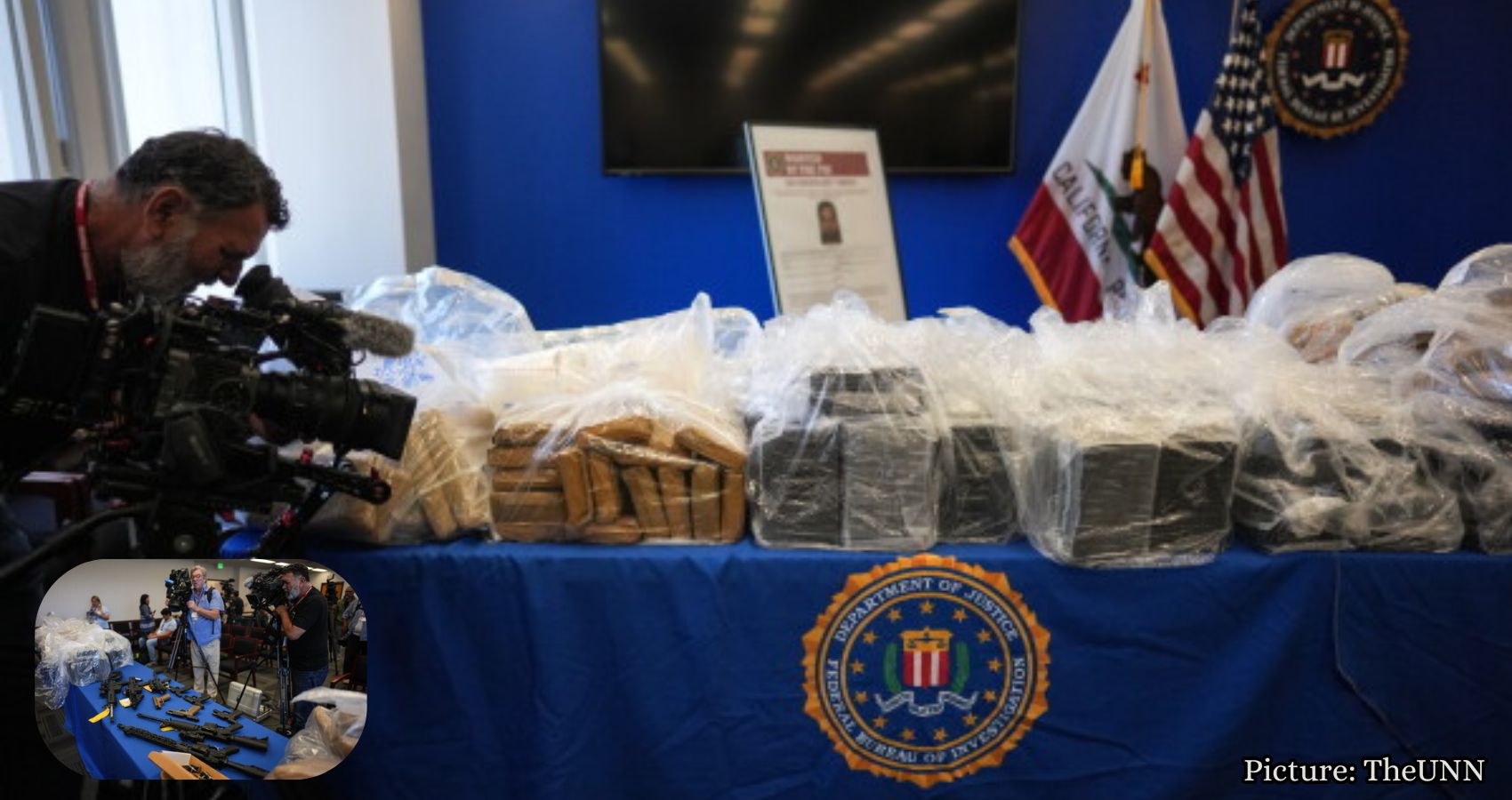
The charges were part of a comprehensive law enforcement operation that involved agencies from the United States, Canada, and Europe. U.S. Attorney Bill Essayli revealed that 37 defendants have been implicated in connection with three international crime syndicates linked to serious offenses, including kidnappings, racketeering, extortion, firearms dealing, drug trafficking, and murder. Essayli made the announcement during a news conference alongside officials from the Los Angeles Police Department, the FBI, and the Royal Canadian Mounted Police. Authorities are still actively searching for seven fugitives in the U.S., two in India, and one in Europe.
Patrick Grandy, assistant director in charge of the FBI’s Los Angeles field office, stated that these criminal groups have “fueled violence, fear, and instability within the East Indian communities throughout California and abroad.”
Bishnoi, 33, and his associate Satinderjeet Singh are accused of orchestrating the assassination of Hardeep Singh Nijjar, a well-known Sikh independence activist. Nijjar was fatally shot outside a temple in 2023, where he served as president. The killing ignited tensions between the Canadian and Indian governments, particularly after then-Canadian Prime Minister Justin Trudeau stated there were “credible allegations” of Indian government involvement in Nijjar’s death. While Bishnoi is currently in custody, Singh remains at large.
Bishnoi’s organization has been known to target prominent religious, social, and political figures with violence in exchange for substantial financial rewards.
Nijjar, who was 45 at the time of his death, was a key figure in the movement advocating for an independent Sikh homeland known as Khalistan. He was actively organizing an unofficial referendum among the Sikh diaspora through the organization Sikhs For Justice. Nijjar, a Canadian citizen originally from India, was wanted by Indian authorities prior to his assassination, which included a reward for information leading to his arrest.
The Sikh diaspora’s activism has long been a contentious issue between India and Canada. Canada is home to the largest Sikh population outside of India, and the Indian government has repeatedly accused Canada of harboring “terrorists and extremists.” The diplomatic dispute escalated to the point where both nations expelled diplomats from each other’s countries.
In addition to Bishnoi’s organization, authorities identified two other criminal groups involved in similar activities during the two-year investigation. These transnational organizations have members in various countries, including the United States, New Zealand, Australia, Portugal, and the United Kingdom. Members of these groups are also accused of stealing large quantities of drugs from rival criminal organizations in California and distributing the illicit substances throughout the U.S. and into Canada.
The indictments indicate that some defendants exploited relationships with corrupt local authorities in India to target rivals or individuals suspected of cooperating with law enforcement. In a notable case, at least one defendant is alleged to have organized criminal activities while detained at an Immigration and Customs Enforcement facility, although the specifics of how he managed to communicate without detection remain unclear.
As of Tuesday afternoon, no attorney for Bishnoi had been publicly identified.
Authorities emphasized the operation as a significant example of international cooperation in combating organized crime. “Working together, law enforcement in the U.S., Canada, Europe, and Asia are determined to target and dismantle these criminal organizations wherever they operate,” Essayli stated.
This ongoing investigation and the resulting charges against Bishnoi underscore the complexities of international crime and its far-reaching implications for diplomatic relations, particularly between Canada and India.
According to The Associated Press, the ramifications of this case will likely continue to unfold as authorities pursue remaining fugitives and work to dismantle these criminal networks.