
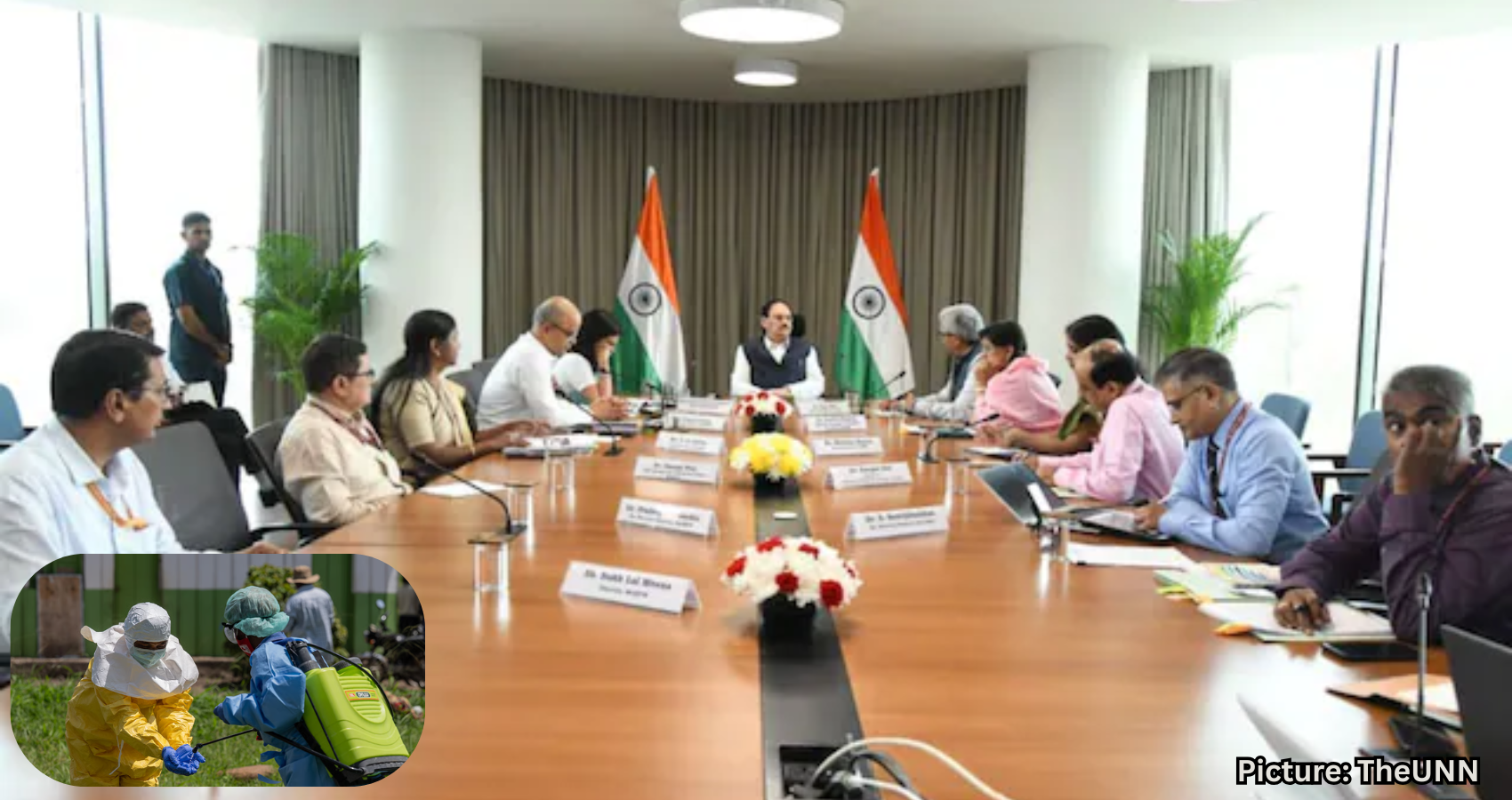
India’s Ministry of Health has heightened public health screening and surveillance in response to a traveler from East Africa, following a negative Ebola test that alleviated initial concerns in Bengaluru.
NEW DELHI — India’s Ministry of Health and Family Welfare has implemented enhanced public health screening and cross-border surveillance operations as of Monday. This action follows the precautionary isolation of a traveler from East Africa in Karnataka. The swift response aligns with updated emergency protocols from the World Health Organization (WHO) after mild symptoms were reported by an individual arriving in Bengaluru from Uganda. Although subsequent tests conducted by the National Institute of Virology confirmed a negative result for Ebola Virus Disease, both federal and state health officials have activated their emergency standby frameworks. This domestic containment strategy comes amid a growing international crisis, as global health organizations monitor an outbreak of the Bundibugyo ebolavirus strain spreading across Central and East Africa.
On Monday, federal health administrators confirmed that India’s integrated infectious disease surveillance network successfully conducted its first major real-time trial of the 2026 operational cycle. An unnamed traveler who recently returned from Uganda was admitted to a high-containment isolation ward at the state-run Epidemic Diseases Hospital in Bengaluru. The individual voluntarily sought medical attention after experiencing mild body aches and low-grade fatigue, which triggered an automated public health alert due to their travel history within active African viral hemorrhagic fever corridors.
Officials from the Karnataka Department of Health and Family Welfare reported that the patient remained stable and otherwise healthy during the observation period, showing no classic signs of advanced filovirus infection such as high fever, severe gastrointestinal distress, or external hemorrhaging.
In accordance with the Union Health Ministry’s revised standard operating procedures, clinical teams collected blood and serum specimens under biosafety level 4 (BSL-4) containment standards. The biological material was promptly transferred via a temperature-controlled cold chain to the National Institute of Virology (NIV) in Pune for testing.
Late Sunday evening, real-time polymerase chain reaction (RT-PCR) testing confirmed a negative result for all known strains of the Ebola virus. This allowed hospital officials to transition the patient to routine convalescent care and plan for an immediate discharge.
The containment operation in Bengaluru occurs against a backdrop of significant concern within the international epidemiological community. On May 17, 2026, the WHO officially declared the rapidly mutating crisis in Central Africa a Public Health Emergency of International Concern (PHEIC). The Africa Centres for Disease Control and Prevention has also elevated the situation to a Public Health Emergency of Continental Security (PHECS).
Unlike previous outbreaks primarily associated with the Zaire ebolavirus strain, the current epidemic is driven by the Bundibugyo virus (Orthoebolavirus bundibugyoense). This marks only the third major recorded appearance of the Bundibugyo variant in human history, following its discovery in western Uganda in 2007 and a subsequent outbreak in the Democratic Republic of the Congo (DRC) in 2012.
The primary challenge with this strain is the lack of specialized prophylactic interventions. While effective monoclonal antibodies and licensed vaccines exist for Zaire strain outbreaks, there are currently no approved vaccines or specific treatments for the Bundibugyo strain. Containment relies on early detection, physical isolation, supportive fluid therapy, and aggressive contact tracing.
Data from global field operations reveals a concerning gap between confirmed laboratory metrics and the actual situation on the ground. In an emergency statement shared on social media, WHO Director-General Dr. Tedros Adhanom Ghebreyesus warned that the formal epidemiological curve reflects only a fraction of the actual biological threat.
For instance, while the DRC has reported 101 laboratory-confirmed infections and 10 deaths, international investigative teams are tracking over 900 suspected cases and 220 unexplained community deaths. This discrepancy is exacerbated by ongoing localized conflicts, community resistance, and a complex network of informal healthcare facilities in volatile provinces like Ituri, North Kivu, and South Kivu.
Simultaneously, Uganda has seen a rise in cross-border transmission clusters, with seven confirmed infections reported, including two new cases among healthcare workers at the Mulago Isolation Treatment Unit in Kampala. The targeting of medical personnel has raised concerns within the WHO about potential hospital-amplified transmission events due to inadequate personal protective equipment (PPE) in rural areas.
In India, the Union Ministry of Health and Family Welfare has leveraged the negative diagnostic result from Bengaluru to enforce permanent upgrades to national border defenses. This structural enhancement follows a high-priority travel advisory urging Indian citizens to avoid all non-essential travel to the DRC, Uganda, and South Sudan until further notice.
Under the leadership of Director General of Health Services (DGHS) Dr. Atul Goel, international airports in major entry points, including Delhi, Mumbai, Bengaluru, and Chennai, have activated dedicated health counters operated by the Airport Health Organization (APHO).
The revised framework mandates that all inbound passengers arriving via multi-leg flights from East and Central Africa undergo mandatory thermal scanning and submit a detailed digital health declaration outlining their itineraries over the past 21 days—the maximum incubation period for filovirus replication.
To enhance local monitoring, data collected at international airports is integrated into the Integrated Disease Surveillance Programme (IDSP) digital dashboard. This system automatically alerts district-level surveillance officers if anyone under the active 21-day observation window develops unexplained febrile symptoms.
As domestic health authorities strengthen early detection systems, the federal government has coupled these structural security measures with a robust public communication strategy. The Ministry of Health has warned citizens against panic and cautioned against the spread of unverified medical information on social media. Public health officials emphasized that sensationalizing isolated, negative triage events undermines the integrity of national health infrastructure and causes unnecessary economic disruption.
“India remains fundamentally vigilant and operationally equipped given shifting global disease patterns,” a senior health ministry epidemiologist stated during an internal review in New Delhi. “Our immediate priority is ensuring that state-level diagnostic networks remain closely coordinated with federal resources. The rapidity with which the Bengaluru sample was isolated, transported, and verified negative by the National Institute of Virology demonstrates that our protective perimeter functions as designed.”
The ministry concluded with assurances that domestic stockpiles of personal protective equipment, dedicated biocontainment transit vehicles, and specialized isolation infrastructure across regional medical colleges are undergoing systematic inventory audits. By aligning local containment protocols with the WHO’s evolving International Health Regulations, India aims to maintain its status as a zero-case zone while remaining actively prepared throughout the ongoing African emergency cycle, according to Source Name.