
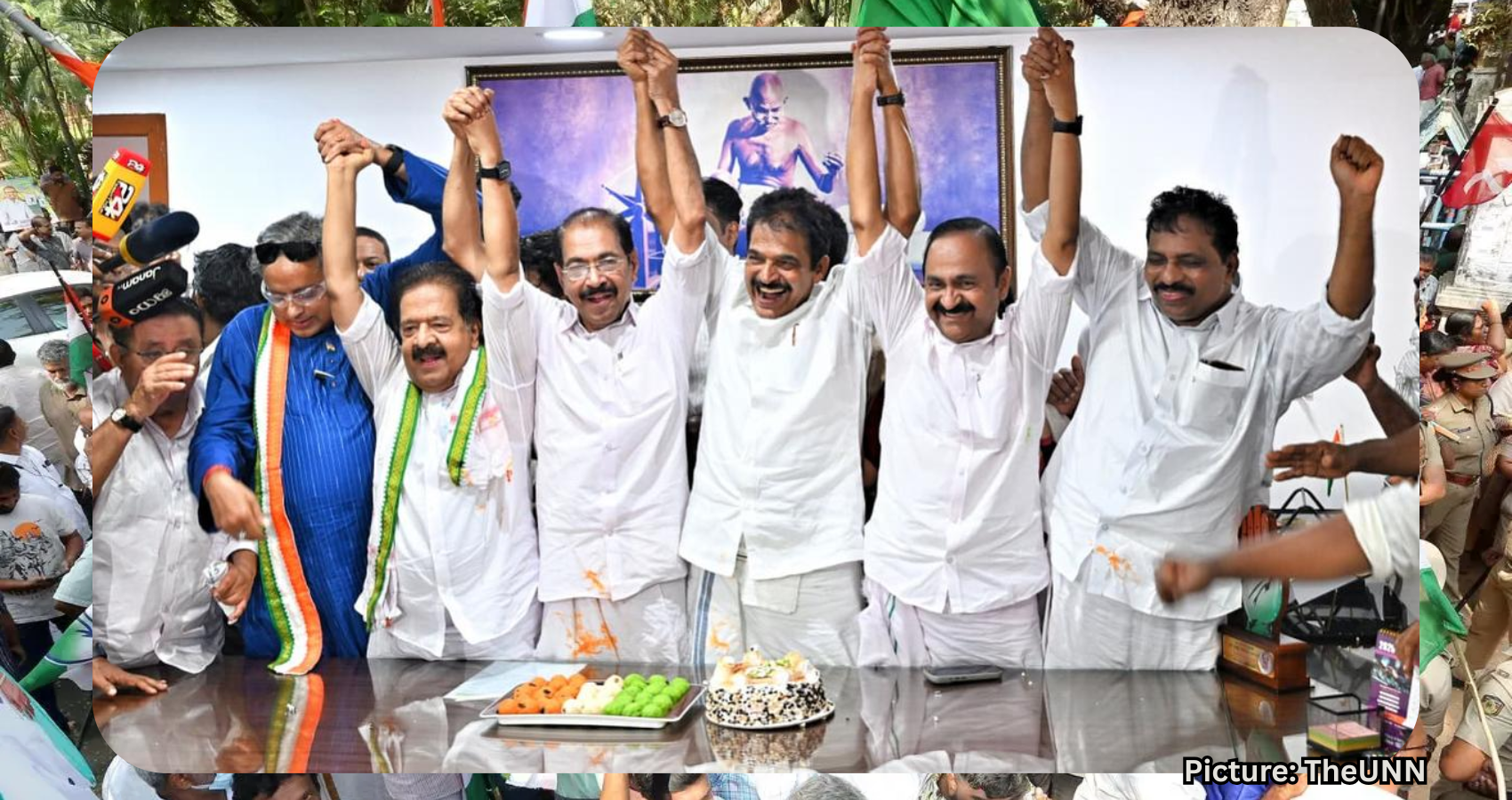
Kerala’s recent electoral victory for the UDF presents a pivotal opportunity for new leadership to redefine the state’s economic direction and address persistent challenges.
Kerala has delivered a decisive mandate in favor of the United Democratic Front (UDF), affirming its authority in the state. However, this electoral victory raises a critical question: what direction will the new leadership take?
For decades, Kerala has witnessed a cycle of changing governments without a corresponding shift in economic direction. While the state has achieved notable social outcomes, it continues to face significant challenges, including high unemployment rates among educated youth and a troubling trend of talent migration. This situation is not coincidental; it stems from an economic framework that has failed to adapt to evolving realities.
Having known VD Satheeshan since our college days at Sacred Heart College, Thevara, where we were debate teammates, I have always regarded him as a capable and intelligent leader. This moment is crucial, as the scale of the mandate offers an opportunity to break free from entrenched patterns and establish a new economic direction for Kerala.
Kerala’s development narrative often highlights its social achievements, which are indeed commendable. However, this narrative overlooks the pressing issues of limited industrial growth and persistent unemployment. Both major political fronts have operated within similar economic frameworks for too long, emphasizing control and regulation while the government has played a central role in economic activity. This approach has reached its limits, and the people are increasingly focused on jobs, income, and the ability to build a life in Kerala.
To identify effective solutions, we can look to regions that have successfully fostered sustained prosperity. These areas prioritize enabling individuals to build their futures, reducing bureaucratic friction, and trusting enterprise to flourish. While government involvement remains essential, it should focus on setting direction rather than micromanaging every aspect of economic activity.
Kerala possesses the talent, education, and global exposure through its diaspora, yet it has not consistently created an environment where this potential translates into local opportunities. This gap highlights the need for significant policy changes.
One area ripe for reform is the real estate sector. High registration costs and rigid pricing systems distort transactions and deter investment. By aligning these costs with market realities and lowering transaction fees, Kerala can enhance transparency and attract investment.
Moreover, the process of doing business in Kerala remains cumbersome. Approvals need to be expedited, and bureaucratic systems simplified to encourage investment. Small and medium-sized enterprises, which are vital for job creation, require a more conducive environment. Reducing compliance burdens and ensuring predictable local processes can significantly impact their growth.
State-level charges and local levies also play a crucial role in business decisions. Streamlining these fees will enable Kerala to compete more effectively with other states. Additionally, labor frameworks must strike a balance between worker protection and flexibility to ensure that industries do not seek alternatives elsewhere.
Kerala’s government should focus on enabling growth rather than imposing additional layers of control. This includes reducing property registration costs to realistic levels and eliminating artificial pricing systems that encourage dishonesty. If government responses to business approvals are not timely, they should be deemed granted after a set period, thus improving the investment climate.
Furthermore, the number of clearances required for small and medium enterprises should be minimized. Many businesses could operate under a self-certification model, allowing them to commence operations without lengthy delays.
Taxes and fees should incentivize activity rather than penalize it. A broader tax base with lower rates can stimulate growth more effectively than a narrow base with high taxes. Labor regulations must protect workers while also facilitating business operations, as job creation stems from enterprises willing to expand.
Leadership in Kerala must embrace a forward-thinking approach. Satheeshan represents a generation capable of reimagining the state’s economic strategy. However, the challenge lies in breaking away from familiar patterns and embracing new ideas.
The political landscape in Kerala has traditionally been dominated by two major fronts, providing stability but limiting policy diversity. However, recent electoral outcomes suggest a shift toward growth and enterprise is beginning to take root. Figures like Rajeev Chandrasekhar have introduced a sharper focus on economic direction and enterprise-driven growth into the political discourse, emphasizing the need for the government to prioritize these issues.
Although the 20-20 initiative led by Sabu Jacob garnered attention, it struggled to translate that into electoral success, highlighting the complexities of transitioning from local influence to statewide politics. Building a business and establishing a political movement require distinct strategies.
Even a small opposition can influence the debate if it remains focused on innovative ideas. Unfortunately, the current Marxist-led Left Democratic Front (LDF) does not provide this balance, placing the onus on the three-member BJP presence in the Assembly, led by Rajeev Chandrasekhar.
A balanced system thrives on diverse ideas that challenge one another, ultimately leading to improved outcomes. Kerala has lacked this balance in economic thinking, contributing to the slow pace of change. A stronger articulation of alternative economic ideas can help foster this balance.
As economic questions gain prominence, voters in Kerala may begin to rethink their traditional political affiliations. This shift could lead to a clearer distinction in policy formulation, prioritizing opportunity, growth, and the role of government over party loyalty.
Kerala is not short on talent or ambition. What it lacks is a consistent economic framework that allows individuals to build their futures within the state. The next phase of Kerala’s development hinges on creating an environment conducive to opportunity.
Continuing with the status quo will not yield different results. Kerala has the resources it needs; what remains is the willingness to think differently and act decisively.
As someone who has known you since our early days, Satheeshan, I express this with respect and hope. This is your moment to lead not just politically but directionally. Kerala stands at a crossroads, and you have the opportunity to guide it toward a brighter future.
Ultimately, the direction you choose will shape the state’s future.
The insights presented here reflect the ongoing discourse surrounding Kerala’s economic challenges and opportunities, emphasizing the need for transformative leadership and innovative policies.