
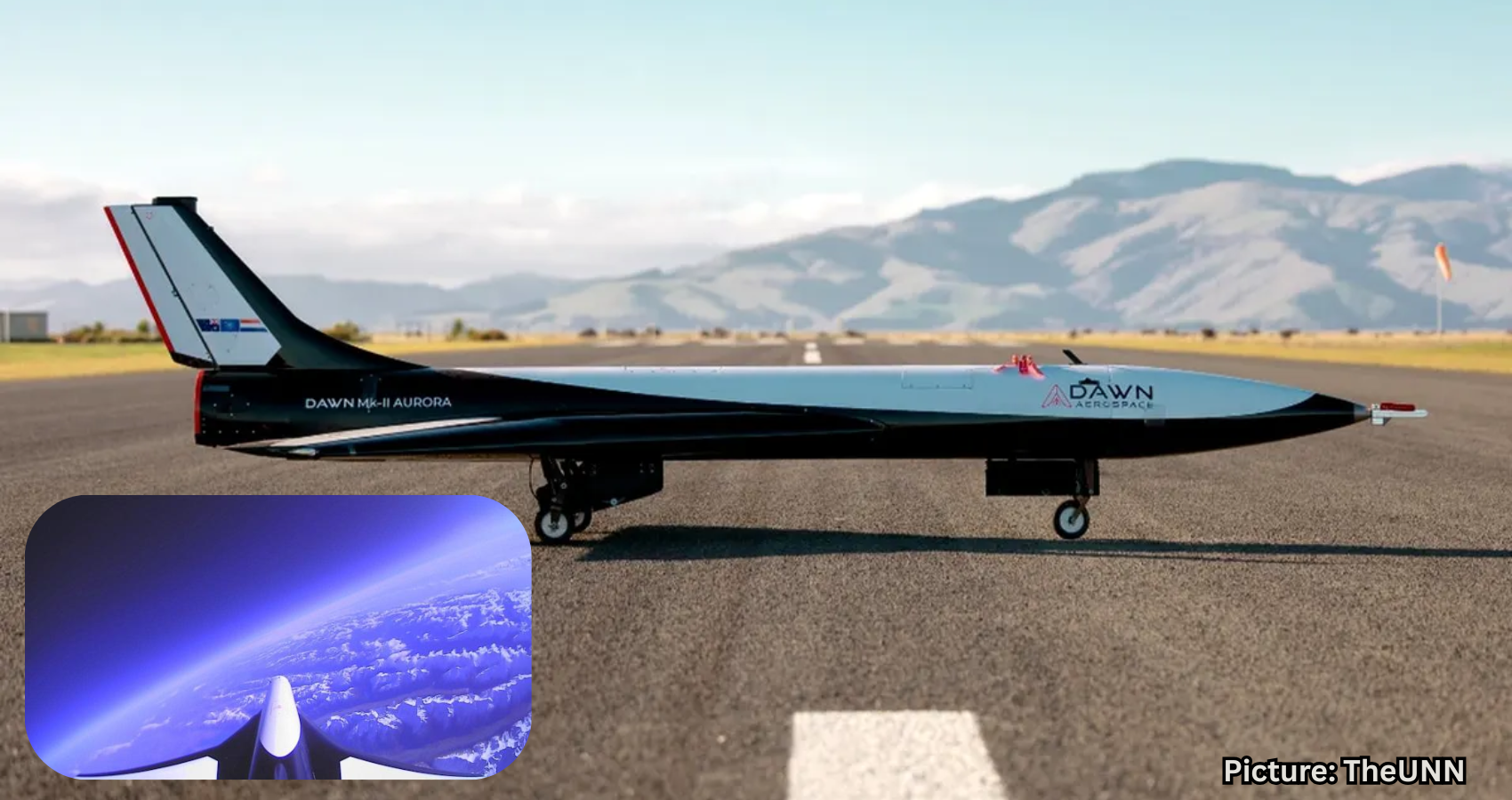
A new U.S. competition, the Runway-to-Space Challenge, aims to revolutionize space research by allowing teams to fly payloads on a reusable spaceplane, enabling rapid access to microgravity.
For years, the process of getting payloads into space has been characterized by high costs and lengthy preparation times. Researchers often spend months or even years readying their experiments, only to have a single opportunity to execute them. If something goes awry, they face additional delays before they can try again. However, a new initiative is set to change this paradigm.
The Runway-to-Space Spaceplane Challenge is a U.S. competition that offers a novel approach to space research. Rather than depending on traditional rocket launches, teams will utilize a reusable spaceplane capable of taking off and landing on a runway. This innovative method could significantly alter the landscape of space research.
The program centers around the Aurora spaceplane developed by Dawn Aerospace, which operates from the Infinity One Oklahoma Spaceport. The Aurora is designed to reach the edge of space, achieving speeds exceeding Mach 3.5 and altitudes of approximately 62 miles. During each flight, payloads can experience a brief window of microgravity lasting just over two minutes.
While this may sound similar to other suborbital missions, the Aurora’s rapid turnaround capability sets it apart. The spaceplane can land, be prepared for another flight, and take off again much more quickly than traditional launch systems. This efficiency addresses one of the most significant bottlenecks in space research.
Having already completed over 60 missions, the Aurora aims to make access to the edge of space more routine and scalable. “Meaningful access to microgravity typically means going to orbit, which is expensive, slow, and often out of reach for early-stage ideas,” said Stefan Powell, CEO of Dawn Aerospace. “Aurora changes that by giving teams a fast, lower-cost way to access microgravity and iterate within months. It’s not a substitute for long-duration missions, but it enables experiments that would otherwise never leave the ground, turning ideas that might never have flown into viable missions that can ultimately progress to orbit.”
The concept of rapid iteration is a key feature of this program. It allows researchers to test their concepts, make adjustments, and return to flight without the long delays typically associated with traditional space missions.
Former NASA Administrator Jim Bridenstine emphasized the broader implications of this competition. “This competition is about capturing the imagination of scientists, engineers, and researchers, while also enabling a new way of working, where research can move faster, iterate more frequently, and strengthen U.S. leadership in space-enabled science and industry.”
To illustrate the potential of this approach, consider how commercial aviation operates. Planes can land, refuel, and take off again within hours. This same rhythm is now being applied to space access. Instead of designing a perfect experiment for a single launch, researchers can test, refine, and fly again, creating a more flexible process where ideas can evolve in real time.
This shift is crucial because many early-stage concepts fail to reach space due to the high costs and complexities involved. With a reusable system, smaller teams have a better chance to test innovative ideas without enduring years of waiting between attempts. While it does not replace long-duration missions in orbit, it fills a significant gap that has persisted for decades.
The Oklahoma Space Industry Development Authority is spearheading the challenge, aiming to enhance the state’s role in the expanding space economy. Significant investments are being made to upgrade the spaceport, including new infrastructure tailored specifically for spaceplane missions.
Programs like the Runway-to-Space Challenge reflect a broader initiative to accelerate space research and make it more responsive. When teams can test their ideas more frequently, progress tends to follow. The timeline for this initiative is ambitious, with applications opening in April 2026 and closing in September, while flights are anticipated to commence in 2027. This timeline allows teams ample opportunity to prepare their payloads as the necessary infrastructure continues to develop.
Participation in the program is primarily structured around Oklahoma institutions, although broader collaboration is encouraged. Applications must be led by an Oklahoma-based university or research institution, but out-of-state partners can join as collaborators. The application window will open on April 16, 2026, and close on September 25, 2026, at 5 p.m. CT.
Selected teams will have the opportunity to fly payloads weighing up to 33 pounds. Each mission can reach altitudes of about 62 miles, exceed Mach 3.5, and provide up to 127 seconds of microgravity. Flights are expected to begin in mid to late 2027, giving teams approximately a year to prepare.
Even for those not directly involved in aerospace, this shift in access to space could have far-reaching implications. As space becomes more accessible and flexible, innovation is likely to accelerate. Research that once took years can progress in shorter cycles, influencing various fields from materials science to weather forecasting.
This initiative also signals a significant shift in the approach to space exploration. The focus is moving away from rare, high-stakes missions toward a model that supports routine experimentation. This transition is expected to foster increased competition and more rapid breakthroughs, many of which may eventually translate into everyday technology, even if the connections are not immediately apparent.
Spaceflight has always pushed the boundaries of what is possible, but the process has remained slow for an extended period. The Runway-to-Space Challenge points to a future where reaching the edge of space becomes more practical and repeatable. This change could unlock a wealth of ideas that have been sidelined for too long. If space begins to operate more like aviation, the pace of discovery could transform in ways that extend far beyond the aerospace sector.
As the landscape of space research evolves, it raises an intriguing question: How quickly can we expect new technologies to transition from experimental phases to everyday applications? For further insights, readers are encouraged to share their thoughts at CyberGuy.com.
According to Fox News.