
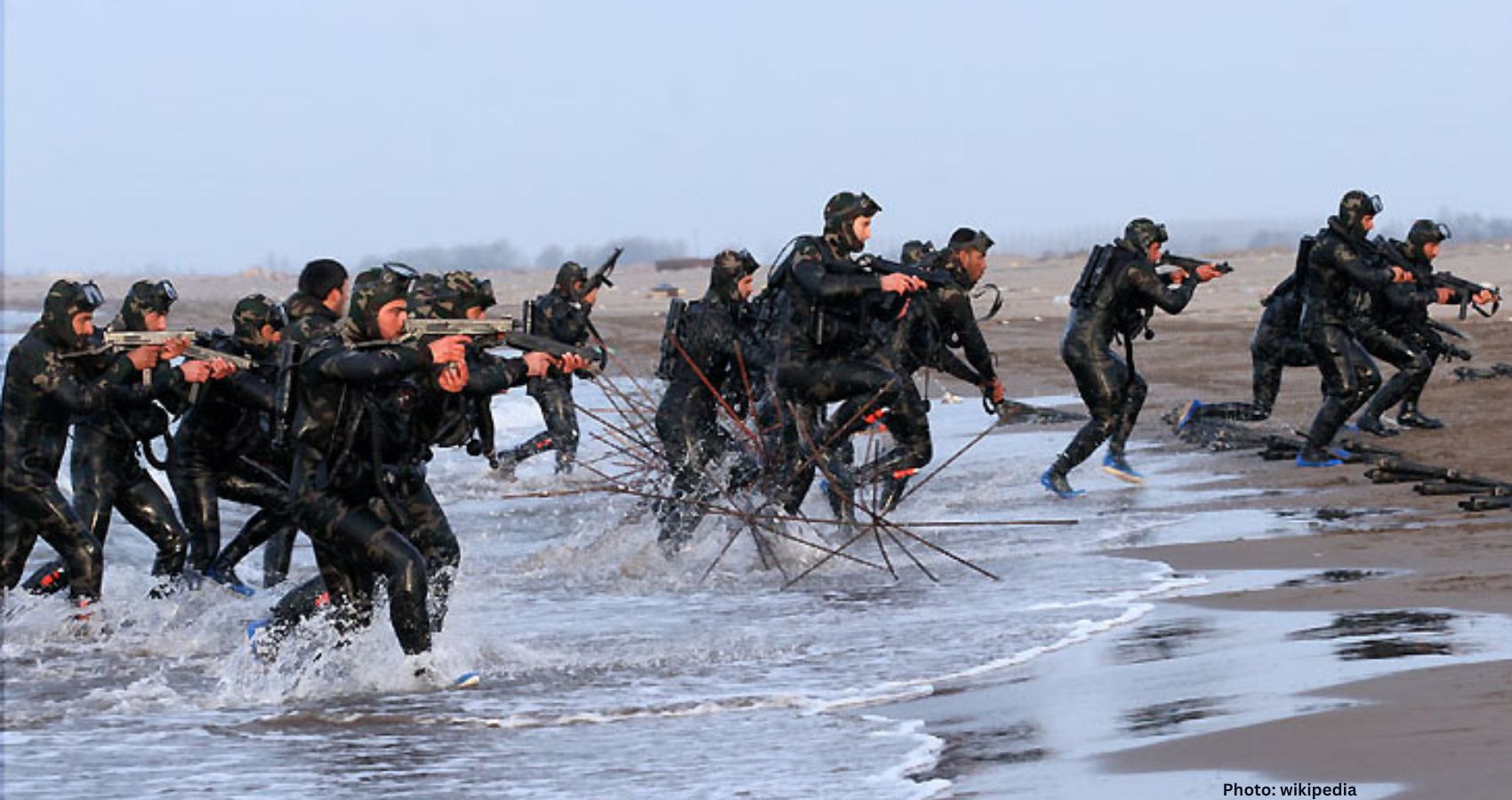
Iran’s Islamic Revolutionary Guard Corps has effectively sidelined President Masoud Pezeshkian, consolidating military control over key state functions amid rising tensions and a political deadlock.
Iran’s Islamic Revolutionary Guard Corps (IRGC), the elite branch of the Iranian Armed Forces, has reportedly taken significant control over state functions, effectively sidelining President Masoud Pezeshkian and blocking his appointments, according to a recent report by Iran International.
The IRGC has erected what sources describe as a security cordon around Supreme Leader Mojtaba Khamenei, further consolidating its grip on power. Behnam Ben Taleblu, senior director of the Iran program at the Foundation for Defense of Democracies, noted, “It was always a matter of when, not if, the IRGC was going to step forward even more than it has in the last three decades.”
Pezeshkian is now facing a “complete political deadlock,” as tensions between his administration and military leadership escalate. Analysts warn that a more powerful IRGC could lead to a more confrontational stance from Iran, making it less willing to compromise in negotiations with the United States and more likely to escalate military actions in the region.
With U.S.-Iran negotiations already faltering and uncertainty surrounding Tehran’s participation in upcoming talks, the rise of the IRGC raises questions about who is truly making decisions in Iran and whether any civilian official can still represent the regime. Ben Taleblu cautioned against viewing this situation as a coup, stating, “This has been the process in Iran for years now, as the regime has chosen conflict over cooperation and emboldened its security forces at every juncture.”
Pezeshkian’s recent attempt to appoint a new intelligence minister was thwarted by direct pressure from IRGC commander Ahmad Vahidi. Sources indicated that all proposed candidates, including former Defense Minister Hossein Dehghan, were rejected. Vahidi insisted that, under current wartime conditions, all critical positions must be filled and managed directly by the Revolutionary Guard until further notice.
Vahidi is considered a radical even within the regime’s hardline elite, and his ascendance signals that Tehran’s military apparatus is now calling the shots. Under Iran’s political system, the president typically nominates an intelligence minister only after receiving approval from the supreme leader. However, with the current condition and whereabouts of Mojtaba Khamenei unclear, the IRGC appears to be operating with increasing autonomy, free from civilian oversight.
Reports suggest that Pezeshkian has sought an urgent meeting with Mojtaba Khamenei but has been unable to establish contact. Instead, a “military council” composed of senior IRGC officers now controls access to the center of power, effectively isolating Khamenei from the elected government and preventing critical government reports from reaching him.
Analysts argue that this power struggle reflects a broader trend in Iran, where the IRGC has steadily expanded its influence over politics, the economy, and national security. Ben Taleblu emphasized that Pezeshkian’s apparent sidelining should not be interpreted as a dramatic shift, as the president has never wielded significant independent authority.
“Those who worry about Pezeshkian’s potential sidelining need to consider what he realistically was or wasn’t able to do mere months ago when the regime slaughtered 40,000 Iranians in the streets,” he said.
Pezeshkian, who was elected in 2025 on a platform of moderation and reform, has consistently found himself constrained by the security establishment and clerical leadership. The latest developments indicate that this dynamic has intensified as Iran grapples with growing external pressures and internal uncertainties.
One particularly striking claim involves Ali Asghar Hejazi, a powerful security official within the office of the supreme leader. Reports indicate that some of Mojtaba Khamenei’s associates are attempting to push Hejazi out due to his opposition to Mojtaba succeeding his father. Hejazi has allegedly warned members of the Assembly of Experts that Mojtaba lacks the qualifications to assume the role of supreme leader and that hereditary succession would violate principles established by Ali Khamenei.
Hejazi’s warnings suggest that placing Mojtaba in power would effectively hand control of the country to the Revolutionary Guard, permanently sidelining civilian institutions. This scenario increasingly appears to reflect the current reality in Iran.
The IRGC, originally established after the 1979 Islamic Revolution to defend the regime, has evolved into a powerful entity that controls significant sectors of Iran’s economy, oversees the country’s missile and nuclear programs, and exerts influence across nearly every branch of government. Analysts contend that the latest developments indicate the IRGC is no longer operating behind the scenes but is now openly asserting itself as the dominant force in Tehran.
Iran’s mission to the United Nations has declined to comment on these developments.
According to Iran International, the implications of this shift could resonate far beyond Iran’s borders, affecting regional stability and international relations.